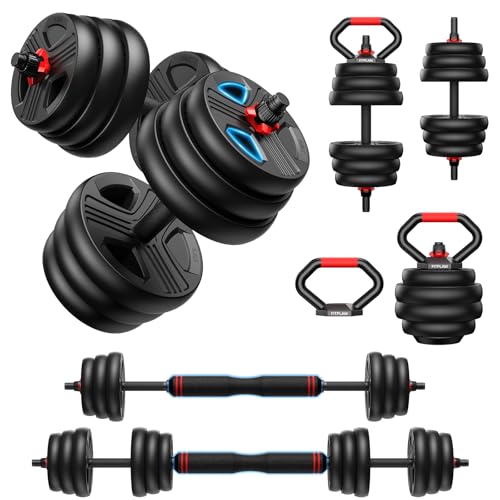
 Related pick
Kettlebells excel for dynamic, ballistic moves like swings and snatches, boosting cardio and explosive power. Dumbbells are superior for isolated strength training and precise muscle targeting. Your choice depends on whether you prioritize functional movement and endurance or controlled hypertrophy and specific muscle growth.
When it comes to home gym equipment, few debates are as enduring as kettlebell versus dumbbell. Both are versatile, compact, and effective, but they serve different purposes. This guide breaks down the honest differences to help you decide which tool belongs in your routine based on your goals, experience, and training style.
Key Differences in Design and Mechanics
The first thing you notice between a kettlebell and a dumbbell is the shape. A kettlebell has a handle attached to a weighted ball, while a dumbbell is a short bar with equal weight on each end. This difference changes how the weight sits in your hand and affects your movement patterns.
With a kettlebell, the center of gravity extends beyond your grip, requiring more stabilizing effort from your shoulders, core, and hips. This makes kettlebell exercises inherently more dynamic and challenging to balance. Dumbbells keep the weight centered, allowing for more controlled, isolated movements. For example, a bicep curl feels stable and precise with a dumbbell, while a kettlebell swing demands full body coordination.
Practically, this means kettlebells are better for ballistic and swinging exercises, while dumbbells shine in traditional strength training like presses, rows, and curls. Your choice should align with whether you want more stability or more dynamic instability in your workouts.
Cardiovascular and Metabolic Benefits
Kettlebells are famous for their ability to spike your heart rate quickly. Exercises like swings, snatches, and cleans are high intensity and keep your body in motion, making them excellent for metabolic conditioning. Kettlebell swings are widely cited in strength and conditioning research as one of the more calorie-intensive resistance exercises, with energy expenditure comparable to moderate-pace running in some studies.
Dumbbells can also be used for metabolic work, but the nature of dumbbell exercises often requires higher volumes or circuit formats to achieve the same heart rate elevation. A dumbbell thrusters or complex, for instance, can get your blood pumping, but it lacks the continuous momentum of a kettlebell chain.
For pure cardio and calorie burn, kettlebells generally win. However, dumbbells offer more flexibility if you want to combine strength with short cardio bursts, especially if you include movements like dumbbell jump squats or clean and presses.
Strength and Muscle Building Potential
When it comes to hypertrophy (muscle growth), dumbbells are often superior. Their design allows for a full range of motion, and you can easily isolate specific muscles. Exercises like dumbbell bench press, lateral raises, and hamstring curls target muscles precisely, which is key for building size and symmetry.
Kettlebells, while capable, are less efficient for isolation. Their instability makes it harder to load a single muscle group without compensating. However, kettlebells excel at building functional strength and core stability. Compound moves like the Turkish get up engage multiple joints and muscles, improving overall body control and strength in a way dumbbell exercises often don’t.
In short: if your primary goal is bigger biceps, stronger pecs, or more defined quads, dumbbells are your tool. For full body, core intensive strength that translates to real world activities, kettlebells have an edge.
Skill Level and Learning Curve
Dumbbells are generally beginner friendly. Most exercises mimic natural movements and require minimal technique. Picking up a dumbbell and doing a bicep curl is intuitive, and there’s low risk of injury if you use proper form. For that reason, beginners often start with dumbbells.
Kettlebells, on the other hand, demand more practice. The kettlebell swing, for instance, isn’t a squat or a deadlift; it’s a hip hinge that takes time to learn correctly. Mistakes can lead to lower back pain or shoulder issues. However, once you master the basics, kettlebells offer a rewarding challenge that dumbbells may lack.
If you’re willing to invest time in learning technique, kettlebells can provide a deeper workout experience. But if you want to get moving quickly with minimal instruction, dumbbells are the safer bet.
Space, Cost, and Versatility for Home Gyms
Both kettlebells and dumbbells take up space, but kettlebells are generally more compact. One kettlebell can allow for dozens of exercises, including swings, goblet squats, presses, and carries. Dumbbells, especially adjustable ones, also save space, but a full set can be bulky.
In terms of versatility, dumbbells offer more variety for specific muscle groups. You can do more isolation exercises with dumbbells than with kettlebells. However, kettlebells are superb when you want to combine strength and cardio in one tool. Many trainers argue that a single kettlebell is enough for a full body workout, whereas dumbbells often require pairs or multiple weights.
Ultimately, if you have limited space and want a single tool that does it all, go with a kettlebell. If you prefer traditional weight training and have room for several dumbbells, that may be better. For most home gyms, a combination of both offers the most flexibility.
Frequently asked questions
Can I build muscle with kettlebells as effectively as with dumbbells?
Yes, but it's harder to isolate specific muscles. Kettlebells build functional strength and core stability, while dumbbells allow targeted hypertrophy. For maximum muscle growth, dumbbells are generally more efficient.
Which burns more calories: kettlebells or dumbbells?
Kettlebells typically burn more calories due to the ballistic, continuous nature of exercises like swings and snatches. Dumbbell circuits can also burn plenty but require more volume.
Are kettlebells harder to learn than dumbbells?
Yes, kettlebells have a steeper learning curve, especially for swings and cleans. Dumbbell exercises are more intuitive and safer for beginners.
Should I buy a kettlebell or dumbbell for a home gym?
If you want a single tool for full body workouts with cardio, choose a kettlebell. For isolated strength training and muscle building, go with dumbbells. A mix of both offers the best versatility.
Looking to buy? See our Dumbbells Weights guides for tested picks.