 Related pick
Transform your small apartment into a home gym with bodyweight exercises, resistance bands, and compact tools like a jump rope or yoga mat. Focus on compound movements (push ups, squats, planks) and use chairs or walls for support. No machines needed.
Living in a small apartment does not mean you have to give up on your fitness goals. With a bit of creativity and the right approach, you can create an effective home gym that takes up minimal space and requires no bulky machines. Whether you are into strength training, cardio, or flexibility work, these ideas will help you build a workout routine that fits your space and your life. The key is to focus on bodyweight exercises and a few versatile, compact tools that store easily under a bed or in a closet. Let’s explore practical, no machine gym ideas for your small apartment.
Maximize Your Floor Space with Bodyweight Exercises
Bodyweight exercises are the foundation of any no machine home gym. They require no equipment and use your own weight for resistance, making them perfect for small apartments. Squats, lunges, push ups, planks, and burpees are all effective moves that target multiple muscle groups. You can do them in a space as small as a yoga mat. To increase intensity, try variations like single leg squats, decline push ups (feet on a couch), or side planks with leg lifts. These exercises improve strength, endurance, and balance without needing extra gear.
For a full body workout, create a circuit of 5 to 8 exercises performed back to back with minimal rest. For example, do 15 squats, 10 push ups, 20 lunges (10 each leg), 30 second plank, 15 glute bridges, and 10 burpees. Repeat the circuit 2 to 3 times. This routine takes about 20 minutes and can be done in a 6×6 foot area. Bodyweight training also allows you to progress by adjusting reps, tempo, or range of motion. You are in control, not the machine.
Incorporate Resistance Bands for Versatile Strength Training
Resistance bands are a small apartment game changer. They take up almost no space, weigh nothing, and can provide a wide range of resistance levels. Loop bands are great for glute work like banded walks, clamshells, and glute bridges. Tube bands with handles allow you to do rows, chest presses, bicep curls, and tricep extensions. You can anchor them to a door, a sturdy piece of furniture, or even step on them. Bands mimic the feel of cable machines without the bulk.
To get the most from bands, focus on controlled movements and full range of motion. For example, attach a band to a door anchor at chest height and do standing rows. For lower body, place a loop band above your knees and do lateral walks or squats. Bands also work well for pulling exercises that bodyweight cannot replicate, like face pulls and lat pulldowns. With just a set of bands (light, medium, heavy), you can perform dozens of exercises and progress over time. Store them in a drawer or hang them on a hook. This equipment is truly essential for small space strength training.
Use Small Accessories: Jump Rope, Yoga Mat, and Dumbbells
Adding a few compact accessories can diversify your workouts without taking up much room. A jump rope is one of the best cardio tools for small apartments. It burns calories fast, improves coordination, and can be used indoors if you have enough ceiling height. Use a lightweight speed rope and do intervals: jump for 1 minute, rest 30 seconds, repeat 10 times. You can also mix in moves like high knees, boxer steps, and double unders. A jump rope rolls up easily and fits in a bag.
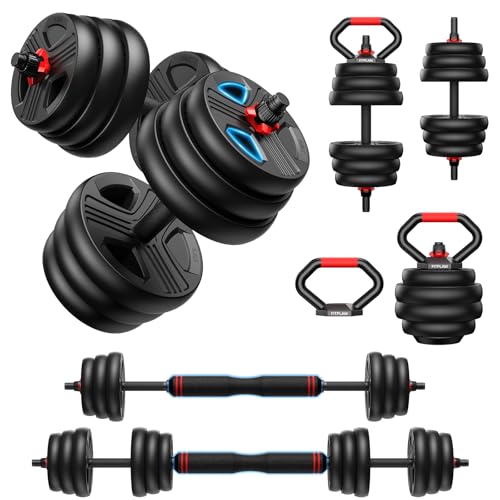
A high quality yoga mat provides cushioning for floor exercises and helps define your workout zone. Use it for stretching, yoga, pilates, and ab work. For those who want some extra resistance, a pair of adjustable dumbbells (like 5 to 20 lbs each) or kettlebells (8 to 16 kg) can be stored on a shelf. They allow for exercises like goblet squats, dumbbell rows, and overhead presses that target muscles more directly. Even one or two pairs of dumbbells can cover many exercises. If space is extremely tight, opt for an adjustable set that replaces several pairs. These items are affordable and easy to move around.
Get Creative with Furniture and Wall Space
Your apartment furniture and walls can double as workout equipment. A sturdy chair can be used for step ups, tricep dips, Bulgarian split squats, and decline push ups. A couch or bench can support glute bridges and inclined planks. Walls are great for wall sits, handstand holds, and wall angels to improve posture. Even a door frame can be used for pull up bars if you install a removable one that does not damage the frame. But you do not need a bar: use a towel over the door for rows or use the door itself for lat pulldowns with a band.
For core work, use a sofa to anchor your feet while doing sit ups or Russian twists. A coffee table can be a platform for step ups if it is stable and the right height. Towels slide on hard floors for mountain climbers and glute ham raises. Get creative with what you have. The point is to use your environment to add variety and challenge. Always check stability before using furniture for support. This approach keeps your home gym integrated into your living space without clutter.
Design a Routine that Fits Your Space and Schedule
Consistency matters more than the size of your gym. Design a simple routine that you can stick to, considering the space you have. Aim for 3 to 5 workouts per week, combining strength, cardio, and flexibility. For example, do a full body strength workout on Monday, Wednesday, Friday using bodyweight and bands. On Tuesday and Thursday, do 20 minutes of jump rope and core exercises. On any day, add a 10 minute stretch or yoga flow. Keep workouts under 45 minutes to maintain focus and fit busy schedules.
To avoid boredom, rotate exercises every few weeks. For instance, replace regular squats with jump squats or curtsy lunges. Progress by adding more reps, sets, or intensity. Track your workouts in a notebook or app. Remember, even 15 minute high intensity interval sessions can be effective if you push hard. The best home gym is the one you actually use. Keep your equipment visible but neatly stored to remind yourself to move. Small space, big results possible with the right mindset and methods.
Frequently asked questions
Can I build muscle without machines in a small apartment?
Yes, you can build muscle using bodyweight exercises, resistance bands, and dumbbells. Progressive overload through increased reps, sets, or difficulty (like single leg movements) will stimulate muscle growth.
What are the best cardio options for a small apartment?
Jump rope is excellent for cardio in small spaces. Also try high knees, burpees, mountain climbers, and stair climbing if you have stairs. All require minimal room.
How can I store exercise equipment in a small apartment?
Use under bed storage bins for bands, jump rope, and small weights. Hang a hook on the back of a door for a yoga mat or band loops. Keep dumbbells on a shelf or in a closet.
Is it possible to do pull ups without a pull up bar?
Yes, you can use a doorway with a towel for rows or a sturdy table for inverted rows. Resistance band pull aparts also target back muscles. For strict pull ups, consider a removable doorframe bar if allowed.
Looking to buy? See our Strength Training guides for tested picks.