 Related pick
Dumbbells are best for progressive overload and building strength with stable, quantifiable resistance. Resistance bands excel for portability, joint-friendly resistance, and variable tension. Both can build muscle, but dumbbells offer easier weight progression; bands provide unique accommodation for different movement ranges.
Choosing between dumbbells and resistance bands can be confusing. Both have distinct advantages and limitations. This guide breaks down how each tool works, their pros and cons, and which suits your goals, space, and budget. Whether you are a beginner or seasoned lifter, understanding these differences helps you train smarter.
How the Resistance Works
Dumbbells provide constant resistance. The weight is the same throughout the entire movement. This makes it straightforward to track progress and build strength: if you can lift 30 pounds for 8 reps, you know exactly what you did. The resistance is greatest at the start of the motion because of gravity, and can be less at the top of some exercises (like a bicep curl).
Resistance bands provide variable resistance. The tension increases as you stretch the band. This means the movement becomes harder at the top, where the band is most stretched. This matches the natural strength curve of many exercises, where you are stronger at the end range. For example, a band chest press gets harder as you squeeze, engaging more muscle fibers at the peak contraction.
Which is better? It depends on your goal. For pure strength and measurable overload, dumbbells are clear. For activating muscles through full range and accommodating weakness, bands shine. Both can build muscle; dumbbells may be simpler for progressive overload.
Safety and Joint Health
Dumbbells carry a higher risk if dropped or used with improper form. A heavy dumbbell falling can injure feet or damage floors. Free weight exercises often require stabilization, which is good for core strength but can strain joints if the weight is too heavy. Beginners may find it hard to control the momentum, especially on exercises like lunges or overhead presses.
Resistance bands are generally safer. They cannot be dropped. The resistance is gentle on joints because it ramps up gradually. This makes bands excellent for rehabilitation, older adults, or those with arthritis. You can mimic many dumbbell moves without the impact. However, bands can snap if worn or stretched too far, so inspect them regularly. The biggest safety tip: always anchor bands securely and avoid near the face.
For long-term joint health, bands offer a low-impact option. Dumbbells, when used with control and appropriate weight, are also safe. If you have existing joint issues, start with bands.
Versatility and Exercise Range
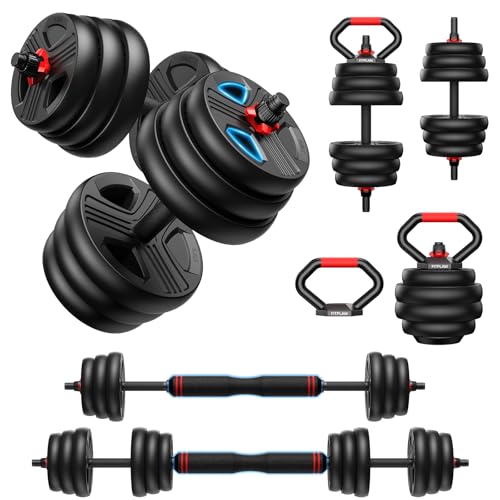
Dumbbells can perform virtually every standard strength exercise: presses, rows, curls, lunges, squats, deadlifts, and more. With one pair of adjustable dumbbells, you can train all major muscle groups. The range of motion is usually full and natural. However, dumbbells are limited by the weight increments you have. Micro-loading is harder (requires fractional plates) but possible.
Resistance bands are also versatile but different. They allow you to train in multiple planes, especially helpful for lateral movements, functional patterns, and rehabilitation. You can attach bands to a door anchor or pole to do cable-style exercises like face pulls, woodchops, and kickbacks. Bands also let you perform moves like banded walks or pull-aparts that are hard with dumbbells. But some exercises, like heavy squats, are less practical with bands because the resistance is too low at the bottom.
Winner depends on preferences. For a complete gym in a small space, adjustable dumbbells plus a few bands is ideal.
Progressive Overload and Measuring Gains
Progressive overload is key for muscle growth. Dumbbells make it easy: simply pick a heavier pair. You know exactly how much weight you lifted last week. This clarity helps drive strength gains. You can also do drop sets, negatives, and other intensity techniques reliably. The downside is cost; adding weight means buying heavier dumbbells.
Resistance bands use resistance levels (light, medium, heavy, extra heavy) but the tension depends on how much you stretch the band. Two people using the same band at the same exercise may get different resistance if their range of motion differs. This makes tracking progress less precise. You can combine bands or buy stronger ones, but increments are broader. Bands are excellent for accommodating resistance, where you add bands to dumbbells to increase challenge at the top.
For simple strength progression, dumbbells win. Bands can be used for variety and for muscle endurance.
Portability and Storage
Dumbbells are heavy and bulky. A full set takes up significant floor space. Adjustable dumbbells save space but are still heavy and not easily transportable. If you live in a small apartment or travel often, they can be a burden. You typically keep them in one spot.
Resistance bands are light, compact, and portable. A full set fits in a small bag. You can take them to the park, on trips, or to the office. Bands are perfect for maintaining a routine while traveling or for home users with limited space. The tradeoff is that they offer less maximum resistance for lower body strength training than heavy dumbbells.
If you value convenience and minimalism, bands are the clear choice. If you prioritize heavy strength work and have space, dumbbells are a staple.
Frequently asked questions
Can resistance bands build as much muscle as dumbbells?
Yes, but it requires more effort to progressively overload. Bands can build muscle effectively, especially for endurance and hypertrophy, but ramping up tension beyond a certain point may need stacking bands or combining with dumbbells.
Are dumbbells or bands better for beginners?
Bands are often better for beginners because they are safer, cheaper, and allow learning proper form without heavy weight. Dumbbells are great once you have basic strength and want to add measurable overload.
Can I do a full body workout with only bands?
Absolutely. With door anchors and varied tensions, bands can hit all major muscle groups. You can perform rows, presses, squats, deadlifts, and more. For legs, use heavy bands or double up.
Which equipment is more cost-effective for home gyms?
Resistance bands are far cheaper than dumbbells. A set of bands costs a fraction of a pair of adjustable dumbbells. However, heavy bands for legs may cost more. Dumbbells are a larger upfront investment but last indefinitely.
Looking to buy? See our Dumbbells Weights guides for tested picks.