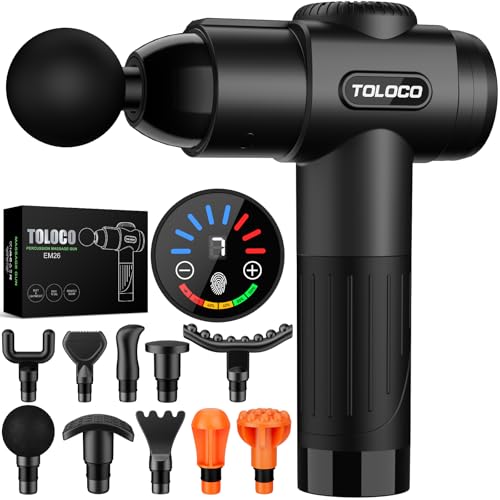
Premium massage guns offer quieter motors, longer battery life, and better build quality, while budget models provide adequate percussive therapy at lower cost. Muscle stimulators (EMS/TENS) show less variability between price tiers, with electrode pad quality being the main differentiator. Choose based on usage frequency and desired features, not price alone.
Walk into any gym or scroll through fitness social media, and you will see massage guns and muscle stimulators everywhere. Prices range from budget-friendly to premium. But what do you actually get when you spend more? This guide cuts through marketing hype to explain the real differences that matter for your recovery.
Motor Power and Stall Force
Both budget and premium massage guns use brushless motors, but the quality differs. Budget guns often lack consistent torque under pressure. When you push the gun into a tight muscle, a budget model may stall or slow down, reducing effectiveness. Premium guns maintain speed and force even when you apply body weight.
Stall force is a key spec. It measures how much pressure the gun can handle before stopping. Budget guns typically have stall forces around 30-40 lbs, while premium models reach 50-60 lbs or more. For deep tissue work, higher stall force means better penetration. However, for light use after a workout, budget models are often sufficient.
Motor longevity also differs. Premium brands use higher quality bearings and cooling systems. A budget gun may overheat with continuous use over 15-20 minutes, while premium units can run 2-3 hours nonstop. If you share a device with family or use it daily, premium build pays off.
Battery Life and Charging
Battery capacity is a major differentiator. Budget massage guns often last 2-4 hours on a single charge, while premium models can run 4-8 hours. This matters if you travel or forget to charge regularly. Charging time also differs: budget guns may take 3-4 hours, premium ones often charge faster (1-2 hours) via USB-C.
Battery degradation is another factor. Premium batteries maintain capacity over hundreds of cycles, while budget batteries may lose 20-30% capacity after a year. Some premium models offer replaceable batteries, extending the device lifespan. For muscle stimulators, battery life is less variable, but premium units often use larger, higher quality cells.
Consider your routine. If you use the gun only twice a week post-workout, budget battery life is fine. For daily use or professional athletes, premium battery reliability becomes important.
Noise and Vibration Isolation
Noise level is a practical difference you notice immediately. Budget massage guns often run 55-70 dB, similar to a vacuum cleaner or blender. Premium guns have better dampening and quieter motors, operating at 40-55 dB. This makes a big difference if you use the gun in shared spaces or while watching TV.
Vibration transmission to your hands also varies. Budget guns may have more vibration at the handle, causing hand numbness after a few minutes. Premium guns use better isolation materials and balanced motors, reducing hand fatigue. If you use the gun for longer sessions (10+ minutes), premium comfort matters.
Muscle stimulators are quieter overall, but electrode clip noise and device rattle can be annoying on budget units. Premium stimulators have silent operation and no loose parts.
Build Quality and Durability
Materials make a clear difference. Budget massage guns use plastic housings that feel hollow and may crack after a drop. Premium guns often use aluminum or reinforced polymer, with better ergonomics and grip texture. Weight distribution also varies: budget guns may be front-heavy, causing wrist strain.
Attachment quality differs. Budget guns come with 4-6 basic heads that wear down quickly. Premium guns offer 6-10 heads made of silicone or high-density foam, with better shape retention. Some premium attachments are designed for specific muscle groups like the glutes or feet.
For muscle stimulators, electrode pad quality is critical. Budget pads lose stickiness after 10-15 uses, while premium pads last 30-50 uses. Premium units also have stronger clip connectors and reinforced wires. If you use stimulators frequently, invest in better pads to avoid replacement costs.
Smart Features and App Integration
Technology integration varies widely. Premium massage guns often include bluetooth connectivity with apps that suggest routines, track usage, and adjust intensity based on feedback. Some have force sensors that map pressure zones. Budget models lack these features or offer barebones apps.
Premium muscle stimulators may have multiple pre-programmed modes (for recovery, pain relief, strength training) and adjustable pulse parameters. Budget stimulators typically have 4-6 fixed modes. However, many users find they only use 2-3 modes regularly, so extra options may not be essential.
Screen quality also differs. Premium devices have OLED screens with clear feedback, while budget ones use simple LEDs or small LCDs. If you value guided recovery or want to track progress, premium smart features add value. For simple on/off use, budget simplicity works fine.
Frequently asked questions
Does a more expensive massage gun actually work better?
Yes, but only if you need higher stall force, quieter operation, or longer battery life. For occasional light use, budget models provide adequate percussion. The main benefits of premium guns are durability and comfort during extended use.
Are premium muscle stimulators worth the extra money?
Not as much as massage guns. Muscle stimulators are simpler devices; the main advantage of premium units is better electrode pad longevity and more program options. For most users, a mid-range stimulator offers excellent value.
How long should a massage gun battery last?
Budget models typically provide 2-4 hours of use per charge, while premium models offer 4-8 hours. Consider your usage frequency: daily users may prefer premium battery life to avoid frequent charging.
Can a budget massage gun cause injury?
No more than a premium one if used properly. However, budget guns may stall under pressure, leading to improper technique. Premium guns are less likely to overheat or malfunction, but both require following safety guidelines.
Looking to buy? See our Balance Recovery guides for tested picks.