 Related pick
Yoga socks typically have full foot coverage with grip dots across the sole for stability in standing poses, while Pilates socks often have an open toe and heel or a bar across the top to allow barefoot sensation and foot articulation for reformer use. Yoga socks prioritize warmth and hygiene, Pilates socks emphasize range of motion and breathability.
When you step into a studio for yoga or Pilates, you might notice some practitioners wearing socks that look similar but have different designs. Yoga socks and Pilates socks are both non-slip socks, but they serve slightly different purposes based on the demands of each practice. Understanding the differences can help you choose the right pair for your workouts, whether you’re holding downward dog or working on the reformer. Let’s break down the key distinctions in grip, coverage, cushioning, and overall design.
Grip Patterns and Traction
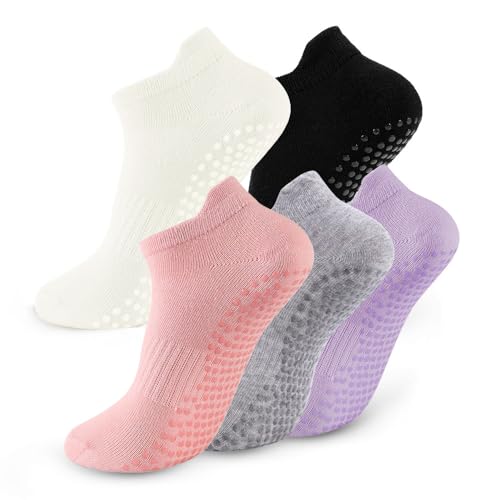
Both yoga socks and Pilates socks feature grip on the sole, but the pattern and placement differ to suit each activity. Yoga socks typically have grippy dots or a full-bottom silicone print that covers the entire sole, including the heel, ball of the foot, and toes. This provides maximum stability in standing poses like tree pose or warrior, where you need your foot to stay firmly planted on the mat. The grip helps prevent slipping, especially if you tend to sweat or practice on a mat that isn’t sticky enough.
Pilates socks often have grip dots concentrated on the heel and ball of the foot, with an open toe or a strap that exposes the toes. This design allows your toes to spread and grip the reformer carriage or the mat naturally. Some Pilates socks have a full bottom with a split toe or a bar across the top, but the key is that the grip is less dense in the arch area to allow for smooth sliding when needed. The traction is there for stability but not so much that it hinders the dynamic movements typical of Pilates.
Coverage and Toe Design
Yoga socks are usually full-toed, covering each toe individually or having a closed toe box. This full coverage keeps your feet warm and protected, which is helpful in cooler studios or if you are sensitive to the mat’s texture. The closed design also prevents the sock from shifting around during poses. Some yoga socks have individual toe slots like toe socks, which can help with toe alignment in balancing poses, but most are simple closed-toe styles.
Pilates socks, on the other hand, often have an open-toe design or a cutout that leaves the toes exposed. This allows for better articulation of the foot, which is crucial in Pilates exercises that involve pointing and flexing the feet. The open toe gives you a barefoot feel while still providing grip where you need it. Some Pilates socks have a strap that goes over the top of the foot to keep the sock in place, while others are more like a half-sock that covers just the heel and ball.
Cushioning and Thickness
Yoga socks tend to have more cushioning, especially in the heel and forefoot. This extra padding can be comfortable for floor poses where your feet are bearing weight, such as downward dog or plank. The cushion also provides a bit of shock absorption if you jump or transition quickly. However, too much thickness can reduce your proprioception, so yoga socks usually balance cushion with a thin enough sole to feel the ground.
Pilates socks are generally thinner, with minimal padding. This allows you to feel the equipment and the floor better, which is important for precise movements on the reformer or chair. The thin sole also makes it easier to slide your feet in exercises like the sliding pike. Some Pilates socks have a terry cloth or looped cotton interior for light moisture absorption but overall thickness is kept to a minimum for better feedback.
Breathability and Material
Yoga socks are often made from cotton blends or bamboo viscose, which are soft and breathable but can absorb sweat. They may have mesh panels or moisture wicking treatments to keep feet dry during a hot yoga class. The material is chosen for comfort and warmth, with some socks having a seamless toe to prevent irritation during long holds.
Pilates socks frequently use synthetic blends like nylon, spandex, or polyester with moisture-wicking properties. These materials dry quickly and offer a snug fit that doesn’t bunch up. Many Pilates socks have a very low cut or are almost like a ballet slipper shape, so breathability is enhanced by the open areas. The synthetic materials also help the grip dots adhere better and last longer through repeated washings.
When to Wear Which
Choose yoga socks if you practice yoga in a cooler environment or prefer full foot coverage for warmth and hygiene. They are also ideal if you have sensory preferences against barefoot contact with a shared mat. Yoga socks work well for slower paced classes or restorative practice where you are not moving your feet rapidly. They can also be used for barre or stretching.
Opt for Pilates socks if you do reformer or mat Pilates and need to feel the carriage or floor with your toes. The open toe design helps with foot articulation in exercises like the foot series or leg circles. Pilates socks are also a good choice for any workout that involves sliding or quick footwork, as the thinner sole allows better control. For hot Pilates, the breathable materials will keep your feet drier.
Frequently asked questions
Can I wear yoga socks for Pilates?
Yes, you can wear yoga socks for Pilates, but they may not be ideal if they have full toe coverage because you lose the ability to articulate your toes. The extra cushioning might also hinder sliding movements on the reformer.
Do Pilates socks work for yoga?
Pilates socks can work for yoga, especially if they have grip on the heel and ball. However, the open toe design may leave your toes cold or exposed during long holds, and the thinner sole offers less cushioning for weight bearing poses.
Are there socks that work for both yoga and Pilates?
Some hybrid socks have a full sole with grip but also an open toe or cutouts. Look for socks that are thin yet padded in the heel, with silicone dots over the entire bottom and a toe opening. These can transition between both practices.
How should I care for my non slip socks?
Wash them inside out in cold water and hang them to dry to preserve the grip pattern. Avoid fabric softeners, which can coat the silicone and reduce traction. Replace them when the grip starts to peel or wear thin.
Looking to buy? See our Yoga guides for tested picks.