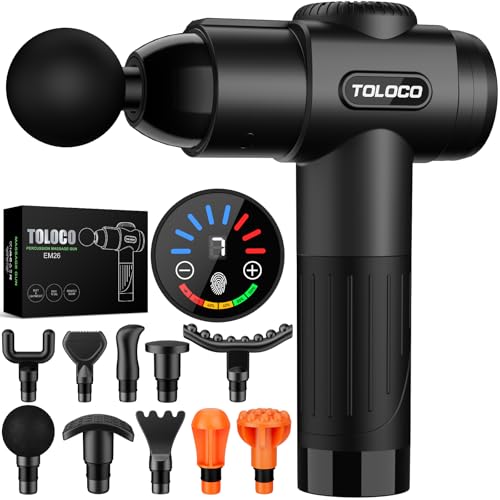
Focus on percussive therapy features like stall force, amplitude, speed range, and noise level for massage guns. For muscle stimulators (EMS/TENS), look for intensity levels, pad quality, program variety, and portability. Battery life and build quality matter for both.
Massage guns and muscle stimulators have become popular tools for muscle recovery and pain relief. But with so many options on the market, it is easy to get overwhelmed by features and claims. This buyer’s guide will help you cut through the noise and focus on what truly matters for your needs, whether you are an athlete, a desk worker, or someone dealing with chronic muscle tension.
Key Specifications for Massage Guns
When shopping for a massage gun, the most important technical specs are stall force, amplitude, speed range, and noise level. Stall force refers to the amount of pressure you can apply before the motor stops. A higher stall force (around 30 to 60 pounds) means you can press harder without the gun stalling, which is essential for deep tissue work. Amplitude is the distance the head travels in and out, typically measured in millimeters. A larger amplitude (12 16 mm) reaches deeper muscles, while a smaller amplitude (8 10 mm) is better for surface muscles and sensitive areas.
Speed range, measured in percussions per minute (PPM), should offer both low and high settings. Low speeds (around 1200 PPM) are for warming up or sensitive spots, while high speeds (up to 3200 PPM) are for deep stripping. Noise level is often overlooked. A gun that sounds like a jackhammer can be disruptive, especially if you plan to use it during meetings or while watching TV. Look for models with noise ratings under 60 dB at high speed.
Battery life is another practical concern. Most guns offer 2 to 6 hours of use on a charge. Consider how often you travel or if you want a gun that lasts a full week without recharging. Also check the charger type: USB C is now common and convenient, while proprietary chargers can be a hassle if lost.
Key Features for Muscle Stimulators (EMS/TENS)
Muscle stimulators use electrical impulses to contract muscles (EMS) or block pain signals (TENS). For recovery, EMS modes are most common. The three key specs to evaluate are intensity levels, program variety, and pad quality. Intensity is measured in milliamps (mA). A device with at least 60 mA will be effective for most users. More intensity levels (20 or more) give you finer control, so you can find the exact level that feels strong but not painful.
Programs matter because different goals require different pulse patterns. Look for modes like tap, knead, roll, and stretch, as well as dedicated TENS programs for pain relief. Higher end devices offer pre set routines for specific body parts like shoulders, back, or quads. Pad quality and size also affect comfort and effectiveness. Larger pads spread the current over a wider area, which reduces sharpness. Reusable gel pads that last 15 to 30 uses are standard, but some brands offer replacement packs at reasonable cost.
Portability is a plus for muscle stimulators. Many are small enough to clip onto a waistband and have wireless remotes or app control. Battery life is typically 8 to 20 hours per charge. If you plan to use it during movement (e.g., walking on a treadmill), look for models with adhesive pads that stay put and a secure clip.
Build Quality and Ergonomics
Both massage guns and stimulators should feel solid and comfortable in your hand. For massage guns, weight and handle design matter. A gun that is too heavy (over 2.5 pounds) can fatigue your arm during long sessions. Conversely, very light guns often have weaker motors. The sweet spot is around 1.5 to 2.2 pounds. Handle shape should allow you to reach your back without contorting. A 90 degree grip or a convertible handle helps. Also consider the shape of the head attachments: round for large muscles, bullet for trigger points, and fork for spine or calf areas.
For muscle stimulators, the main ergonomic factor is the remote interface. Buttons should be easy to press while looking at the screen, and the screen should be readable in various lighting. Some devices use a phone app for control, which can be more intuitive but adds the hassle of pairing. Check if the stimulator has a belt clip or comes with a carrying case. The pads should be soft and flexible enough to conform to curved body parts like the shoulder or knee.
Battery, Noise, and Maintenance
Battery technology has improved, but you still need to consider real world usage. Lithium ion batteries are standard. For massage guns, check if the battery is removable. Removable batteries extend the product life because you can replace a failing battery instead of the whole unit. Some guns offer battery packs that can be swapped out. For stimulators, most have built in batteries that last several years. Avoid devices that require AAA batteries unless you are okay with frequent replacements.
Noise is a bigger factor for massage guns than stimulators, but stimulators can make clicking or buzzing sounds. Look for a gun that advertises a brushless motor; these are typically quieter and more durable. Stimulators with digital pulse generation are quieter than old school analog models. Maintenance for both is straightforward. Massage guns need occasional cleaning of the head and ventilation grills. Stimulator pads need to be kept sticky; wipe them with a damp cloth and let them air dry. Replace pads when they lose adhesion or cause irritation.
Intended Use and Body Parts
Your choice should match the body parts you plan to treat. For large muscle groups like quads, glutes, and back, a massage gun with high stall force and amplitude works best. For smaller areas like forearms, neck, or shins, a stimulator may be more precise and comfortable. Many users find that owning both devices is ideal: a gun for quick, deep work and a stimulator for targeted, sustained relief or for use while doing chores. If you are on a budget, consider which tool addresses your primary pain points. For general recovery after workouts, a massage gun is more versatile. For chronic pain like a stiff neck or lower back, a TENS unit is more effective.
Frequently asked questions
Can I use a massage gun every day?
Yes, you can use a massage gun daily as long as you listen to your body and avoid bony areas. Limit sessions to 2 minutes per muscle group to prevent bruising.
Are muscle stimulators safe for home use?
Muscle stimulators are safe when used according to the manual. Do not use over the heart, head, or neck, and start with the lowest intensity to gauge your sensitivity.
What is the difference between TENS and EMS?
TENS blocks pain signals to the brain, while EMS causes muscle contractions to strengthen or relax muscles. Many devices offer both functions.
How long do massage gun batteries last?
Most massage gun batteries last 2 to 6 hours of continuous use, depending on the speed. Rechargeable lithium ion batteries typically endure 300 to 500 charge cycles before significant degradation.
Looking to buy? See our Balance Recovery guides for tested picks.