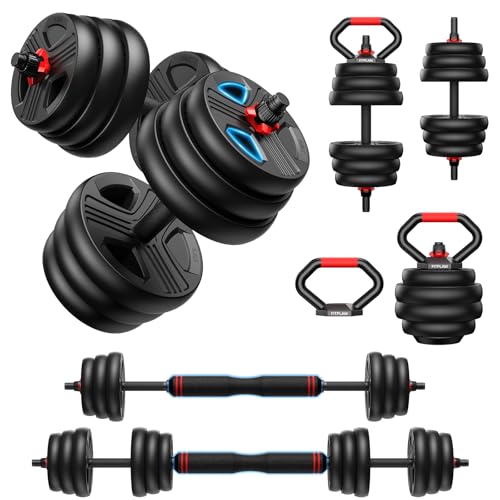
 Related pick
Rubber dumbbells are quieter, gentler on floors, and generally safer if dropped, making them ideal for home gyms. Cast iron dumbbells offer a more traditional feel, take up less space, and typically cost less per pound, but can damage floors if dropped.
Choosing between rubber and cast iron dumbbells is a common dilemma for anyone setting up a home gym. Each material has distinct trade-offs in noise, floor protection, durability, and feel. This guide breaks down the practical differences so you can pick the right set for your training space and budget.
Material and Construction Differences
Rubber dumbbells are typically made from a cast iron core encased in a layer of vulcanized rubber or urethane. The coating can range from thin, paint-like rubber to thick, durable layers that absorb impact. Cast iron dumbbells are solid metal, usually coated with a thin layer of black paint or powder coating to prevent rust.
The shape of these dumbbells also differs. Many rubber dumbbells have a hexagonal design that prevents rolling, while cast iron dumbbells are often round or octagonal. Hex shapes are safer for floor storage and during exercises like renegade rows, as they won’t roll away.
Weight accuracy can vary. Premium rubber dumbbells tend to be precisely calibrated, but cheaper options may have slight deviations. Cast iron dumbbells, especially older or budget sets, can also have weight inconsistencies. In general, higher cost correlates with better accuracy in both types.
Noise and Floor Protection
Rubber dumbbells are significantly quieter than cast iron. The rubber coating deadens the sound when you set them down, place them on a rack, or accidentally clank them together. This is a major advantage if you work out in an apartment, above a neighbor, or while others are sleeping.
Floor protection is another key factor. Dropping a cast iron dumbbell can dent hardwood, crack tiles, or leave black marks on concrete. Rubber dumbbells are much gentler, especially thick rubber models that can be dropped from waist height onto rubber mats without causing damage. However, thin rubber coatings can still mar floors if the edge of the metal core hits hard.
If you plan to do dynamic movements like dumbbell snatches or throws, rubber is the safer choice for both your floor and your equipment. Cast iron is better suited for controlled lifts where you can lower the weight gently.
Durability and Longevity
Cast iron dumbbells are extremely durable. With proper care, they can last a lifetime. The paint may chip over decades, but the metal itself won’t crack or degrade. They resist humidity better than rubber, which can develop a permanent musty smell if stored in a damp basement.
Rubber dumbbells are durable but have specific failure points. Over time, rubber can dry out, crack, or peel away from the core, especially in hot or dry environments. Low-quality rubber may develop a sticky or oily surface. However, high-quality urethane dumbbells are very resistant to wear and ozone cracking, lasting many years.
For commercial gyms, rubber dumbbells often get replaced sooner due to cosmetic wear. In a home gym, either type can last extremely long if you avoid dropping them excessively and store them in a climate-controlled area.
Feel, Grip, and Weight Selection
Cast iron dumbbells have a classic, solid feel. The bare iron or painted surface can be rougher on the hands, which some lifters prefer for grip feedback. They are also slimmer than rubber dumbbells for a given weight, meaning you can fit more weight in the same hand size. This is important for heavy lifts like dumbbell rows.
Rubber dumbbells are thicker due to the coating. This can make heavy weights harder to grip for people with small hands. The rubber surface provides more friction, but can also be grippy to the point of causing calluses or skin irritation. Some rubber dumbbells have knurling molded into the rubber, but it’s rarely as sharp as metal knurling.
Weight progression is another difference. Cast iron sets often come in smaller increments (2.5 or 5 lbs) and are easier to find in odd weights. Rubber dumbbells are commonly sold in pairs or sets with larger jumps (5 or 10 lbs). For gradual progressive overload, cast iron offers more flexibility.
Space Efficiency and Storage
Cast iron dumbbells have a smaller footprint. Because they are more compact, they take up less space on a rack or shelf. For a home gym with limited real estate, this can be a deciding factor. They also stack neatly on standard A-frame dumbbell racks.
Rubber dumbbells are bulkier. A pair of 50 lb rubber dumbbells can be significantly wider than their cast iron counterparts. This means you need a wider rack and more floor space. Additionally, the rubber smell can be strong for the first few weeks, though it fades over time.
For adjustable dumbbells, the comparison shifts. Rubber-coated adjustable dumbbells (like Bowflex or PowerBlock) are more compact than fixed rubber dumbbells, but still bulkier than fixed cast iron. Ultimately, if space is your primary constraint, cast iron is more efficient. If noise and floor protection are priorities, rubber wins.
Frequently asked questions
Are rubber dumbbells better for floors?
Yes, rubber dumbbells are much less likely to damage floors than cast iron. The rubber coating absorbs impact and prevents scratches, dents, and marks, especially on hardwood, laminate, or tile.
Which type of dumbbell lasts longer?
Cast iron dumbbells can last virtually forever with basic care, while rubber dumbbells may degrade over 10-20 years depending on quality and storage. Humidity can also cause rubber to deteriorate faster.
Do rubber dumbbells smell?
Some rubber dumbbells have a strong rubber odor when new, especially cheaper ones. The smell usually fades within a few weeks. Cast iron dumbbells have no odor.
Are cast iron dumbbells more affordable?
Generally, cast iron dumbbells are less expensive per pound than rubber dumbbells. Rubber adds manufacturing cost. However, pressed steel or urethane dumbbells can be even more expensive than basic rubber.
Looking to buy? See our Dumbbells Weights guides for tested picks.