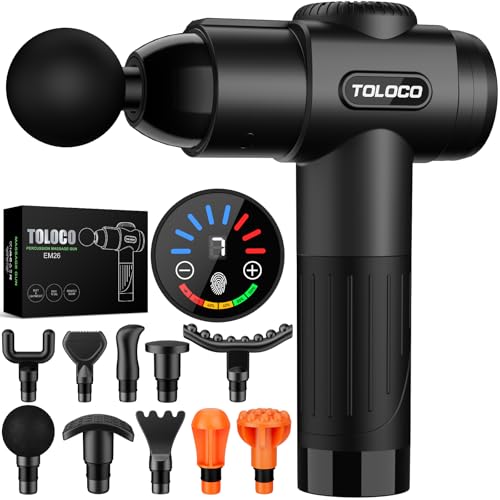
Massage guns use rapid percussive therapy to relieve muscle knots and soreness, while muscle stimulators use electrical impulses to contract muscles for recovery or strengthening. Beginners should start with low settings, target major muscle groups, and avoid bones or joints. Both aid post-workout recovery but serve different needs.
Welcome to the world of recovery tools. If you are new to massage guns and muscle stimulators, it can feel overwhelming with all the options and claims. This guide strips away the hype and gives you the honest, practical facts you need to decide if these tools fit your routine, and how to use them safely and effectively.
Massage Guns vs. Muscle Stimulators: What Is the Difference?
Massage guns, also known as percussion massagers, deliver rapid, concentrated bursts of pressure into your muscle tissue. They feel like a deep, fast tapping that helps release knots, reduce soreness, and increase blood flow. You control the speed and pressure, moving the device over your muscles.
Muscle stimulators, often called EMS (electrical muscle stimulation) units, use sticky pads placed on your skin to send electrical impulses that make your muscles contract involuntarily. They are used to reduce muscle spasms, prevent atrophy, or even strengthen muscles when you cannot exercise. Unlike a massage gun, you stay still while the device does the work.
Your choice depends on your goal: for warming up, relieving tension, or post workout soreness, a massage gun is more intuitive. For targeted recovery or injury prevention, a muscle stimulator may be worth exploring. Many people own both for different purposes.
How to Choose Your First Massage Gun
When shopping for your first massage gun, focus on three things: stall force (how hard it pushes without stopping), battery life, and noise level. A good beginner gun has adjustable speed settings so you can start low and gradually increase. Avoid cheap models that are loud and weak; they can be frustrating.
Look for a device with multiple head attachments. A flat head for large muscles, a rounded head for general use, and a bullet head for trigger points are essential. If you are primarily using it on your legs or back, prioritize stall force over speed. Also, check the weight; you will be holding it in awkward positions, so 2 to 3 pounds is ideal.
Do not get fooled by high speed numbers alone. More speed does not equal better recovery. You will likely use medium or low settings most of the time. Stick to reputable brands that offer a warranty and good customer service.
How to Choose Your First Muscle Stimulator
Muscle stimulators come in two main types: TENS (transcutaneous electrical nerve stimulation) for pain relief and EMS for muscle contraction. Many units offer both. For recovery and light strengthening, get a combo unit. You will want at least 2 to 4 channels so you can treat multiple muscle groups at once.
Pads matter a lot. Look for units with hydrogel pads that stick well and last many sessions. Cheaper pads lose adhesion quickly and give inconsistent stimulation. Also, ensure the unit has adjustable intensity levels with clear increments. Start at the lowest setting and never go to the point of pain.
Programs can be confusing. For beginners, a simple manual mode where you set frequency and pulse width is better than pre programmed routines you cannot adjust. Frequency around 20 to 50 Hz is good for muscle recovery; 2 to 10 Hz for pain relief. But do not stress; most quality units come with a guide.
How to Use Massage Guns Safely and Effectively
Always start on the lowest speed and work your way up. Move the gun slowly over each muscle group for 30 to 60 seconds. Do not stay on one spot for more than two minutes to avoid bruising or nerve irritation. Focus on the belly of the muscle, not on bones, joints, or the spine.
Use massage guns before a workout to warm up or after to reduce soreness. For warm up, use a faster speed for about 30 seconds per muscle. For recovery, use a slower speed for a minute or two. Drink water after a session to help flush out metabolic waste.
Avoid using the gun on bruises, open wounds, or areas of acute injury. If you have a blood clotting disorder, are pregnant, or have a pacemaker, skip the massage gun altogether. Listen to your body; a little discomfort is okay, but sharp pain is a stop signal.
How to Use Muscle Stimulators Safely and Effectively
Clean your skin before applying the pads. Place the pads at least one inch apart on the same muscle, avoiding direct contact with bone. Turn the device on before placing it on your body? actually, always place pads first, then turn on and slowly increase intensity. You should feel a strong but comfortable tingling or pulsing, not painful pinching.
Use the stimulator for 15 to 30 minutes per session, once or twice a day. Do not use it while driving, sleeping, or in water. Never place pads on your neck, chest, or over the eyes. For recovery, use a low frequency (20 to 50 Hz) for relaxation; for strengthening, higher frequency (50 to 100 Hz) but check your unit’s manual.
Replace pads every few weeks or when they lose stickiness. Store them on the plastic sheet in a cool place. If you have any medical condition, especially heart issues, epilepsy, or you are pregnant, ask your doctor before using a muscle stimulator.
Frequently asked questions
Can I use a massage gun every day?
Yes, you can use a massage gun daily, but limit each muscle group to a few minutes total. Overuse can lead to bruising or muscle damage, so listen to your body and take rest days if you feel tenderness.
Are muscle stimulators effective for building muscle?
They can help with muscle activation and maintaining mass during immobilization, but they are not a substitute for weight training. For significant growth, you still need resistance exercise.
Which one is better for soreness after a workout?
A massage gun is generally more effective for immediate relief from muscle tightness and soreness. Muscle stimulators can help with recovery but are better for pain relief or strengthening, not direct soreness.
Do I need to use gel with a massage gun?
No, massage guns work through your skin and clothes with the attachments. Using a thin layer of lotion can sometimes help the gun glide, but it is not necessary and may cause slipping.
Looking to buy? See our Balance Recovery guides for tested picks.