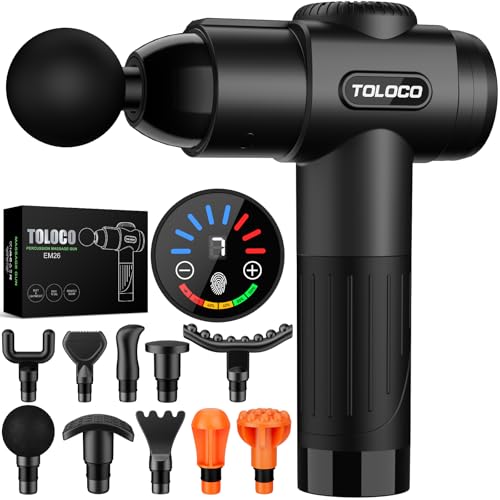
Massage gun attachments, or heads, each target different muscle tissues. The round ball is for large muscle groups, the flat head for deep tissue, the fork for spine and calves, the bullet for trigger points, and the air cushion for sensitive areas. Choose based on your pain or tightness area.
Massage guns have become a staple in many athletes’ and fitness enthusiasts’ recovery toolkits. But the real magic isn’t just in the device itself, it’s in the attachments. Swap the head, and you change the entire massage experience. Here’s an honest, no fluff breakdown of every common massage gun attachment, what it does, and when to use it.
The Round Ball (Universal Head)
The round ball is the most common attachment and the one you will use the most. It is usually made of foam or slightly firm rubber, designed for general use across large muscle groups. Think of it as your all purpose option for the quads, hamstrings, glutes, and lats.
This head distributes pressure evenly, so it is good for warming up muscles before a workout or for a post workout flush. It is also the safest choice if you are new to massage guns. Because it spreads the force, it is less likely to cause bruising or deep soreness.
One tip: if you have a specific knot or tight band, the round ball might not be precise enough. It is better for broad work. Use it with a gliding motion over the muscle belly, not directly on bone or joints.
The Flat Head (Deep Tissue)
The flat head looks like a small disc and is firmer than the round ball. Its purpose is to mimic a deep tissue massage. The flat surface delivers concentrated pressure to a smaller area, making it ideal for breaking up fascia and reaching deeper muscle layers.
Use this attachment on thicker muscle areas like the glutes, thighs, and calves. It can be intense, so start with a lower speed and increase as needed. Avoid using the flat head on bony areas like the shins or spine, as it can be painful and cause injury.
If you have chronic tightness in your hamstrings or upper back, the flat head can be your go to. Just be mindful of the pressure and never force it into a spot that feels sharp or stabbing. A little discomfort is fine, but sharp pain means back off.
The Fork (U Shaped Head)
The fork attachment, also called the U shaped head, is designed for specific areas where you need to avoid bone. Its two prongs straddle the spine, Achilles tendon, or calf muscles, allowing for targeted massage without direct pressure on the vertebrae or tendon.
This attachment is excellent for the erector spinae muscles along your spine, the neck muscles, and the calves. You can also use it on the forearms. The fork works by applying pressure to the muscle tissue on either side of a central line, which is great for releasing tension without hitting the bone.
A common mistake is using the fork directly on the spine. Do not do that. Always position it so the prongs are on the muscle, not the bone. For the neck, use it with caution and low speed, as the neck is sensitive. This attachment is also helpful for the IT band area, though that can be tender.
The Bullet (Trigger Point Head)
The bullet attachment is a small, pointed head that delivers very focused, intense pressure. It is designed for trigger points, knots, and areas of deep tension that need direct attention. Think of it as a deep tissue tool for pinpoint accuracy.
Use the bullet on specific spots like a knot in your shoulder blade, a tight spot in your glute, or the arch of your foot. It is also good for the plantar fascia. Because the contact area is small, the pressure is high, so use the lowest speed setting first and work gradually.
Do not use the bullet on areas with thin muscle coverage over bone, such as the shins, collarbone, or the side of the knee. It can cause bruising or nerve irritation. Also, avoid using it on the neck or spine. The bullet is a precision tool, so use it sparingly and only where you need deep focused work.
Air Cushion (Sensitive Head)
The air cushion attachment is a soft, somewhat squishy head that feels like a mini air bag. It is designed for sensitive areas, beginners, and people who bruise easily. It delivers a gentler massage with less percussive force.
This head is ideal for bony areas like the shins, the top of your shoulders, and the spine (if used carefully). It is also good for the feet and hands. The air cushion absorbs some of the impact, making it a comfortable choice for those new to massage guns or for post surgery recovery (with doctor approval).
While the air cushion is gentle, it may not be effective for deep muscle work. It is best for a light, soothing massage or for getting used to the sensation of a massage gun. Some people use it for lymphatic drainage or to reduce soreness after a light workout. If you want deep tissue, stick with the flat or bullet head.
Frequently asked questions
Can I use a massage gun attachment on my spine?
No, you should never use any attachment directly on your spine or bony areas. The fork attachment can straddle the spine, but the prongs should rest on the muscles on either side.
How do I choose the right attachment for my neck?
For the neck, use the round ball or air cushion at a low speed. Avoid the bullet and flat head as they are too intense for the delicate neck muscles.
Should I use the same attachment for every muscle?
No, each attachment serves a different purpose. Use the round ball for large muscles, the flat head for deep work, the fork for spine and calves, the bullet for knots, and the air cushion for sensitive areas.
How do I clean my massage gun attachments?
Most attachments are made of EVA foam or rubber. Wipe them with a damp cloth and mild soap, then air dry. Do not submerge them in water or use harsh chemicals.
Looking to buy? See our Strength Attachments guides for tested picks.