 Related pick
For beginners, a few basic items are enough: resistance bands, a pair of dumbbells, and a stability ball. These tools allow you to perform compound movements, build strength safely, and progress without overwhelming complexity or cost.
Starting strength training can feel like stepping into a foreign country where everyone speaks another language. The rows of barbells, machines, and cables at the gym, or the endless options online, can easily confuse a beginner. But here is the honest truth: you do not need a lot of fancy equipment to start building strength. In fact, too much gear can hold you back. This guide will cut through the noise and tell you exactly what equipment you need, what you can skip, and how to use each piece effectively.
The Minimalist Starter Kit: What You Actually Need
When you are just starting out, your body weight is your most valuable tool. Before buying anything, master basic bodyweight moves like squats, push-ups, and planks. This builds a foundation of strength, balance, and mind-muscle connection. Once these become too easy, it is time to add external resistance.
The first piece of equipment I recommend is a set of resistance bands. They are cheap, portable, and versatile. Get a set with light, medium, and heavy bands. Use them for rows, presses, glute bridges, and assisted pull-ups. The light band helps with form, the medium adds moderate challenge, and the heavy band pushes you to failure.
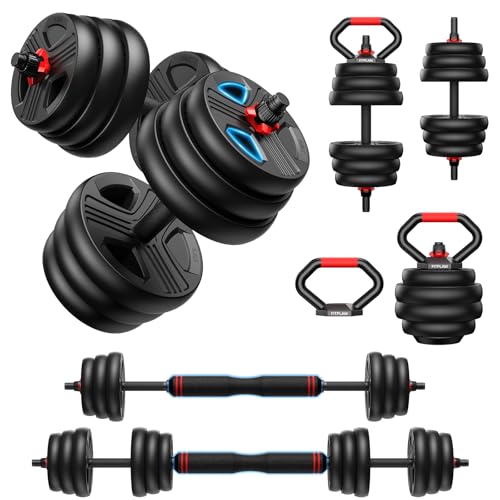
Next, buy a pair of adjustable dumbbells or a few fixed-weight pairs. Start with weights where you can perform 10-12 reps with good form, but the last two reps feel hard. For most women, that is 5-15 lb per hand; for men, 10-25 lb. You can later add heavier sets as you get stronger.
Finally, a stability ball. It forces your core to engage during exercises like ball push-ups, hamstring curls, and crunches. It also doubles as a bench for dumbbell presses. That is it. You do not need a squat rack, barbell, or complex cable machine to see real results.
Resistance Bands: Your Best First Investment
Resistance bands are often overlooked, but they are arguably the most beginner-friendly tool. They provide variable resistance – the band gets harder to stretch as you move through the range of motion. This challenges your muscles differently than dumbbells and helps build strength at every point of the lift.
Use bands for warm-ups, main exercises, and even stretching. For instance, banded glute bridges activate your glutes before squats. Band rows target your upper back without heavy load, reducing injury risk. And band pull-aparts improve posture – a common weakness in beginners who sit all day.
To progress, you can combine bands with dumbbells or move to thicker bands. Always inspect bands for tears before use, and avoid fast releases that could snap them back. Store them away from direct sunlight.
Dumbbells vs. Kettlebells vs. Barbells: Which Should Beginners Choose?
Dumbbells are the best choice for beginners. They allow independent limb movement, which helps identify and correct strength imbalances. You can do a vast array of exercises: presses, rows, lunges, deadlifts, and more. They are also easy to store and adjust.
Kettlebells have a shifted center of gravity that challenges stability and demands more core engagement. They are excellent for dynamic moves like swings, but they require good technique to avoid injury. Beginners can hurt their lower backs if they rush into kettlebell swings without proper form.
Barbells are efficient for loading heavy weight – but beginners rarely need that much weight. Learning proper deadlift and squat form with a barbell needs coaching or careful study. I advise new lifters to start with dumbbells, then consider a barbell after 3-6 months of consistent training.
Machines and Cables: When (and When Not) to Use Them
Gym machines like leg press, chest press, and lat pulldown seem safe because they guide your motion. But they fix you in a set path that may not match your body’s natural movement. This can lead to poor recruitment of stabilizer muscles and, over time, imbalanced strength.
Cable machines, on the other hand, allow more free movement because the cables pull in a straight line regardless of your body position. They are excellent for beginners learning how to coordinate movements and feel muscle activation. If you have access to cables, use them for rows, chest flies, and face pulls.
My advice: use free weights (bands, dumbbells) for most of your workout, then add one or two machine exercises for isolation or as a finisher. This gives you the benefits of both stability and functional strength.
Don't Forget These: Mats, Mirror, and a Logbook
You may not think of these as equipment, but they matter greatly. A good exercise mat (thick enough for floor work) protects your spine during lying exercises and gives you a non-slip surface. Look for a 1/2-inch thick mat.
A mirror is optional but helpful for checking your form. Position it so you can see your side profile during squats and your front during presses. Do not rely on it for every rep, though – your body’s feel is a better teacher.
A training logbook – paper or app – is critical. Write down the exercises, sets, reps, and weight you used. Record how the session felt. Over time, this data shows you what works and keeps you accountable. Without a log, you are guessing your progress.
Frequently asked questions
How much weight should a beginner start with?
Start with a weight that lets you do 10-12 reps with good form, where the last 2 reps are challenging but not impossible. For example, 5-15 lb dumbbells for most women, 10-25 lb for most men. You can always add more weight as you get stronger.
Do I need to join a gym to start strength training?
No. A set of resistance bands and a pair of dumbbells at home is enough for the first few months. You can do full-body workouts without any machines. Once you outgrow those weights, a gym offers more options, but it is not required at the start.
Can I use resistance bands alone to build noticeable muscle?
Yes, especially for beginners. Bands provide progressive overload if you use thicker bands or do more reps. They build muscular endurance and some size, but for significant hypertrophy, you will likely need heavier dumbbells or barbells down the line.
What about weightlifting belts, gloves, or straps?
Skip them at first. Belts are for heavy compound lifts over 85% of your max, which beginners never do. Gloves reduce grip strength development; chalk or bare hands are better. Straps help with grip fatigue during high-rep pulls, but you do not need them until you are pulling very heavy.
Looking to buy? See our Strength Training guides for tested picks.