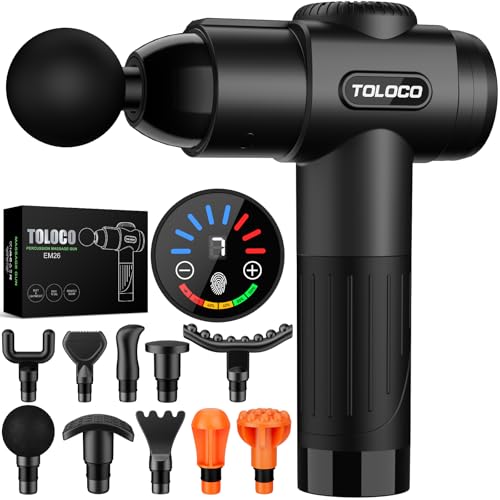
The biggest mistakes are buying based on price alone, ignoring noise levels, choosing attachments for the wrong body area, overlooking warranty and support, and assuming all devices are equally effective. Focus on your specific muscle recovery needs rather than marketing hype.
Massage guns and muscle stimulators have become go to tools for recovery. But with so many options on the market, it is easy to make a buying mistake that leaves you with a device you rarely use. This guide highlights the most common pitfalls and how to avoid them, so you can choose a device that actually helps your muscles recover.
1. Buying Based on Price Alone
It can be tempting to grab the cheapest massage gun or the most affordable muscle stimulator. But price often reflects build quality, motor power, battery life, and durability. A very low cost model may have a weak motor that stalls under pressure, a battery that dies quickly, or a plastic build that feels cheap. On the other hand, the most expensive option is not always the best. The sweet spot is a mid range device from a reputable brand that offers good torque, multiple speed settings, and a solid warranty.
When comparing prices, look at what you get for the money. Check the stall force, battery capacity, noise level, and included attachments. Spend enough to get a reliable device, but do not assume that higher price equals better performance. Read reviews from real users to see if the device holds up over time.
2. Ignoring Noise Levels
Many buyers focus on power and speed but forget about noise. A loud massage gun can be disruptive if you want to use it while watching TV or in a quiet room. Some cheap models produce a high pitched whine or loud rattle that makes them unpleasant to use. High quality brushless motors tend to be quieter and more efficient. Check the decibel rating if available, or look for user comments about noise.
If you plan to use the device at home around others, a quieter gun is worth the extra cost. Muscle stimulators (TENS/EMS units) are generally silent, but the electrodes can make crackling noises if they are poorly made. Test the sound before buying, or order from a place with a good return policy.
3. Choosing the Wrong Attachments or Pads
Massage guns come with various head shapes, and muscle stimulators have electrode pads of different sizes. A common mistake is buying a device with attachments that do not suit your needs. For example, a bullet head is good for deep tissue on glutes and thighs, but too sharp for bony areas. A flat head works well for larger muscles. If you need to target trigger points, look for a fork head or a round ball head. Check what attachments are included and whether replacements are easy to find.
For muscle stimulators, pad size and quality matter. Small pads can cause discomfort because current is concentrated, while larger pads distribute it more evenly. Some cheap pads lose stickiness quickly and need frequent replacement. Make sure the brand sells replacement pads and that they are compatible with your unit.
4. Overlooking Battery Life and Charging
A massage gun with a short battery life can be frustrating. Many budget guns last only 1 to 2 hours on a full charge, which may not be enough if you share the device or travel. Look for a battery capacity of at least 2000mAh for decent runtime. Also consider charging convenience: does it use USB C, a barrel plug, or a proprietary cable? USB C is standard and easier to replace.
Some devices promise long battery life but degrade after a few months. Read long term reviews to see if users report battery issues. For muscle stimulators, batteries are usually small and rechargeable. If the device uses disposable batteries, you will spend more over time. A built in lithium ion battery is better, but check if it is replaceable after it wears out.
5. Neglecting Warranty and Customer Support
Fitness devices get used hard, and mechanical parts can fail. Buying from a brand that offers at least a one year warranty (two years is better) gives you peace of mind. Some cheap online brands have no warranty, or require you to ship the device overseas. If you have a problem, you may be stuck. Stick with brands that have a US based support team or a simple return process.
Also consider the return policy. If you buy from a store, you can test it. If online, make sure you can return it within 30 days if it does not meet your expectations. Some companies offer a money back guarantee. This is important because the feel of a massage gun is subjective, and you may not know if it works for you until you try it.
Frequently asked questions
Which is better for muscle recovery: a massage gun or a muscle stimulator?
It depends on your goal. A massage gun provides percussive therapy for sore muscles and knots, while a muscle stimulator uses electrical impulses to contract muscles and reduce pain. Many people use both for different purposes.
How many speeds do I need in a massage gun?
Look for at least 3 to 5 speed settings. A low speed is good for sensitive areas, medium for general use, and high for deep tissue. Too many speeds can be overwhelming, but too few limits versatility.
Can I use a massage gun on my neck or spine?
No. Avoid using massage guns on bony areas like the spine, neck, or skull. Stick to large muscle groups like thighs, calves, glutes, and shoulders. Using it on bones can cause injury.
How long should I use a massage gun per session?
Limit use to 1 to 2 minutes per muscle group. Overuse can cause bruising or muscle soreness. The device is meant for recovery, not extended treatment.
Looking to buy? See our Balance Recovery guides for tested picks.