
The overall winner is the Marc Pro Plus because of its clinical validation, durability, and owner satisfaction. For a more affordable alternative with versatile programs, the Compex Wireless USA 2.0 is the best choice.
Check price on AmazonNeuromuscular electrical stimulation (NMES) devices use low-voltage electrical impulses to contract muscles, aiding recovery, strength, and pain management. With dozens of models on the market, we compared the top-rated units based on owner reviews, clinical evidence, and feature sets.
Our ranking considers electrode size, program variety, intensity range, portability, battery life, and build quality. All picks have strong owner satisfaction and are backed by research for muscle recovery or rehabilitation.
How we rank
We compared owner reviews, clinical studies, and brand reputation to rank these devices by overall value, performance, and reliability. See our method.
Quick picks
| Best for | Product | Who it suits |
|---|---|---|
| Best Overall | Marc Pro Plus | serious athletes and clinical recovery |
| Best Value | Compex Wireless USA 2.0 | versatile training and recovery |
| Best for Pain Relief | Omron Max Power Relief | chronic pain and joint issues |
| Best Lightweight | PowerDot 2.0 Duo | travel and portability |
| Best for Rehabilitation | BrainBox NeuroTrac Rehab | post-surgery or injury recovery |
| Best Budget | Sensica RejuvaBoost | budget-conscious users seeking basic NMES |
| Best for Beginners | Therabody PowerDot Recovery | first-time NMES users |
The picks, compared
Marc Pro Plus
The Marc Pro Plus is the top-rated NMES device for recovery, using patented low-frequency stimulation to reduce lactate and muscle soreness. It has 7 preset programs and a separate strength mode. Owners consistently report faster recovery times and high build quality.
What owners say: Owners praise its durability and clinical results, with many noting decreased soreness after workouts. Some mention the electrode pads need replacement every few weeks with regular use.
- Clinical validation for recovery
- Rugged, reliable design
- 7 recovery programs plus strength mode
- Expensive compared to consumer models
- Electrode pads wear out quickly

Compex Wireless USA 2.0
The Compex Wireless USA 2.0 offers 12 programs for warm-up, recovery, strength, and pain relief, with wireless electrodes for freedom of movement. It is one of the most researched NMES devices, with an FDA-cleared strength program. Owners appreciate the intuitive app and long battery life.
What owners say: Reviewers note the wide program variety and effective muscle activation. Some find the electrode gel pads lose stickiness after several uses.
- 12 programs including strength
- Wireless electrode pods
- App integration with guided sessions
- Higher price than basic units
- Pods can disconnect during intense movement
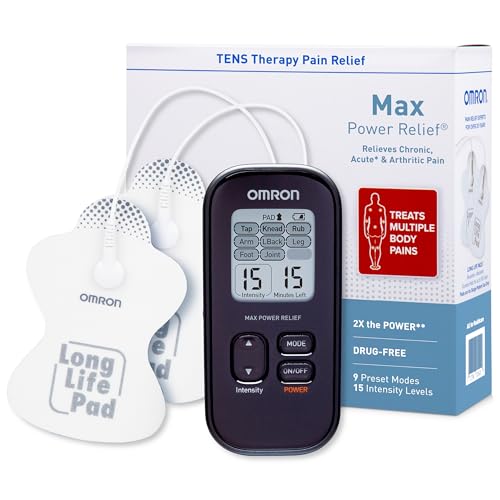
Omron Max Power Relief
The Omron Max Power Relief uses transcutaneous electrical nerve stimulation (TENS) combined with NMES to target pain. It has 10 intensity levels and a large LCD screen with easy controls. Owners report significant pain reduction for back, knee, and shoulder conditions.
What owners say: Users with chronic pain find it effective for daily relief, especially for back pain. Some wish the electrode pads were larger.
- Combines TENS and NMES
- Large, easy-to-read display
- Affordable price point
- Limited to 2 channels
- Not as strong for deep muscle recovery
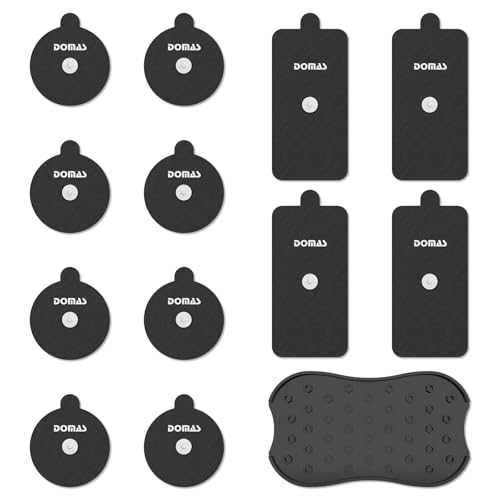
PowerDot 2.0 Duo
The PowerDot 2.0 Duo is a compact, app-controlled NMES device with Bluetooth connectivity. It offers 12 programs and can be controlled via smartphone for customized sessions. Owners love its small form factor and intuitive interface.
What owners say: Many users appreciate the small size and easy app control for on-the-go use. Some note the adhesive pads require frequent replacement.
- Ultra-compact and portable
- App-based controls with guided sessions
- 12 programs for various needs
- Requires phone for full functionality
- Pads lose adhesion over time
BrainBox NeuroTrac Rehab
The BrainBox NeuroTrac Rehab is designed specifically for rehabilitation, with preset protocols from physical therapists. It has 6 programs for muscle re-education, atrophied muscles, and range of motion. Owners recovering from surgeries find it highly effective.
What owners say: Users recovering from ACL or rotator cuff surgery report improved muscle activation. Some find the interface less intuitive than competitors.
- Clinical rehabilitation programs
- CE certified for medical use
- Includes reusable self-adhesive pads
- Fewer programs than general NMES devices
- Slightly bulkier design
Sensica RejuvaBoost
The Sensica RejuvaBoost offers 5 intensity levels and 4 preset programs for muscle relaxation and toning. It is the most affordable option in the roundup, with a straightforward design. Owners say it is good for light recovery and relaxation.
What owners say: Users like the low cost and simplicity, but some wish for more programs and higher intensity. The pads are smaller and may not cover large muscles well.
- Very affordable
- Easy to use with simple buttons
- Compact and lightweight
- Limited intensity range
- Only 4 programs
Therabody PowerDot Recovery
The Therabody PowerDot Recovery pairs with the Therabody app to guide beginners through recovery sessions. It has 4 programs with session lengths from 10 to 60 minutes. Owners appreciate the step-by-step instructions and gentle start.
What owners say: New users find the app helpful for learning proper pad placement. Some more experienced users desire more manual control and higher intensity levels.
- App-guided sessions ideal for beginners
- Good integration with Therabody ecosystem
- Rechargeable with long battery life
- Limited to 4 programs
- Requires app for custom settings
How to choose
- Program Variety. Look for devices that offer multiple programs for recovery, strength, pain relief, and endurance. More programs allow you to target specific goals like post-workout soreness or muscle building.
- Intensity Range. A wider intensity range (mA) ensures you can adjust the stimulation from gentle to strong. Higher maximum intensity is beneficial for larger muscle groups or deeper tissue penetration.
- Channel Count. Dual-channel (2) devices let you treat two areas simultaneously, while single-channel units limit you to one area. Quad-channel (4) devices like the Compex Wireless offer more versatility.
- Electrode Pad Quality. Self-adhesive pads with good conductivity and durability reduce the need for frequent replacements. Larger pads cover more surface area and are better for large muscles like quads or back.
- Portability and Battery. Consider battery type (rechargeable vs. disposable) and device size if you plan to use it on the go. Rechargeable lithium-ion batteries are convenient and long-lasting.
Frequently asked questions
What is neuromuscular electrical stimulation (NMES)?
NMES uses electrical impulses to cause muscle contractions, which can aid in recovery, strength, and pain relief. It is often used by athletes to reduce soreness or by patients in rehabilitation.
Are NMES devices safe for home use?
Yes, most NMES devices are FDA-cleared for home use when used as directed. It is important to follow instructions, avoid using on injured or irritated skin, and not exceed recommended intensity.
How often should I use an NMES device?
Frequency depends on your goals. For recovery, 20-30 minutes after exercise is common. For strength, 3-5 times per week with rest days between sessions. Consult a professional for a tailored plan.
Can NMES help build muscle mass?
Yes, specific high-intensity programs can stimulate muscle growth, though it is more effective for muscle activation and recovery. For hypertrophy, combine NMES with resistance training.
Do NMES devices work for pain relief?
Many devices have TENS modes that can temporarily relieve pain. NMES itself may reduce pain by relaxing muscles and increasing blood flow. Clinical studies support its use for back and joint pain.
What is the difference between NMES and TENS?
NMES targets muscle contraction for strengthening or recovery, while TENS focuses on pain relief by stimulating sensory nerves. Some devices combine both functions, like the Omron Max Power Relief.
The verdict
The Marc Pro Plus is the overall best for serious recovery with clinical backing. For versatility and value, the Compex Wireless USA 2.0 excels. Beginners should start with the Therabody PowerDot Recovery for guided sessions.