
The FluidStance Plane wins on the combination that matters most for all-day use: a slim, under-desk-friendly profile with a smooth 360-degree wobble that doesn’t fight you. If the price is a stretch, the Vremi Balance Board delivers a quieter, more budget-friendly version of the same idea.
Check price on AmazonStanding all day at a desk trades one problem for another, less sitting, but more static load on your feet, knees, and lower back. Balance boards fix that by keeping your legs making small, constant adjustments instead of locking into one position for eight hours straight.
We compared tilt style, under-desk clearance, surface grip, and weight capacity across balance boards built for standing-desk use, prioritizing boards low enough to slide under a desk and gentle enough to actually use for full workdays, not just short workout sessions.
How we rank
We analyzed owner reviews from major retailers and fitness forums, and compared specifications to rank boards on stability, build quality, and user satisfaction. See our method.
Quick picks
| Best for | Product | Who it suits |
|---|---|---|
| Best Overall | FluidStance The Plane | Anyone seeking a low-profile, wobble-enabled board for full-day standing |
| Best Value | Vremi Balance Board | Budget conscious users who still want a sturdy board |
| Best for Core Engagement | Yes4All Wooden Wobble Board | Users wanting a more challenging core workout while standing |
| Best Lightweight | Aipex Balance Board | Users who need a portable board to move between desks or rooms |
| Best Premium | Kore Balance Board | Users who want a high quality, durable board with a modern look |
| Best for Beginners | Gaiam Balance Board | New users who want a gentle introduction to balance boards |
| Best Compact | Revolution Balance Board | Those with small desk footprints or limited storage |
The picks, compared
FluidStance The Plane
A domed-bottom board built specifically for standing-desk use, low enough to slide under most desks and shaped to give a smooth, natural wobble rather than an abrupt tilt. The cork top adds real grip without feeling artificial underfoot.
What owners say: Stability through long work sessions is the recurring theme, several owners specifically report less lower-back fatigue by end of day compared to standing flat. It costs more than the other picks here, which shows up consistently as the main hesitation in reviews.
- Slim profile easily slides under desk
- Smooth, natural wobble movement
- Eco-friendly cork top
- Higher price than some alternatives
- Not for vigorous rocking
Vremi Balance Board
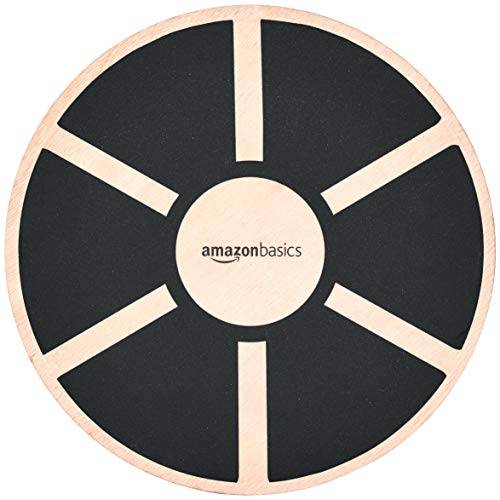
A flat-top, curved-bottom board that trades the more dramatic wobble of a dome design for a gentler, quieter tilt, better suited to an open office where a loud rocking motion would be distracting. The 350 lb weight capacity is on the higher end for boards this size.
What owners say: Quiet operation comes up repeatedly, useful context if you’re in a shared workspace. Several reviews specifically call it more stable than expected given the price.
- Affordable without sacrificing quality
- Non slip rubber surface
- High weight capacity
- Limited tilt range compared to wobble boards
- Surface may show wear over time
Yes4All Wooden Wobble Board
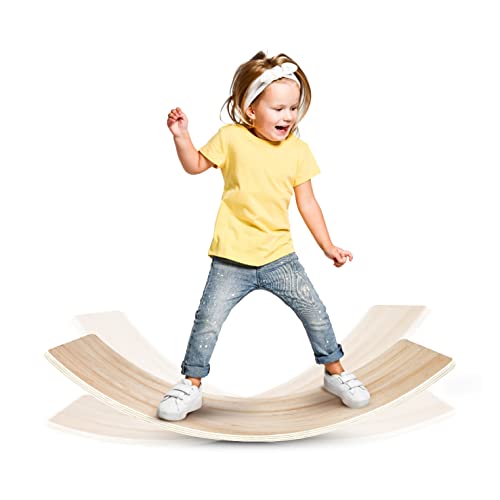
A higher-dome rocker design than the other picks here, meaning noticeably more instability and more real core engagement, at the cost of a genuine learning curve if you’re new to balance boards. The birch construction and textured surface hold up well to daily use.
What owners say: Core engagement is what owners consistently point to as the differentiator from flatter boards. New users report a real adjustment period, expect a few days before it feels natural rather than tippy.
- Challenging instability for core work
- Durable birchwood construction
- Textured surface prevents slipping
- Higher learning curve for beginners
- Takes up more floor space
Aipex Balance Board
A lightweight plastic board with a cushioned top, built for portability first, easy to pick up and move between desks or take home rather than staying permanently under one desk. The trade-off for that light weight is a looser, less planted feel than the wood-based picks here.
What owners say: Portability is the main draw in reviews, owners specifically mention moving it between a home and office setup. The looser movement reads as less stable to some reviewers coming from a firmer board.
- Lightweight and portable
- Cushioned top for comfort
- Non slip bottom prevents sliding
- Looser movement may feel less stable
- Plastic construction may not last as long as wood

Kore Balance Board
The premium pick here, a bamboo-topped board with an adjustable rocker mechanism that lets you dial in stability level rather than being locked into one tilt range. It’s built to look intentional in an office, not like gym equipment that wandered in.
What owners say: Build quality and the adjustable rocker are what owners mention most, several specifically like being able to change difficulty without buying a second board. The price is the clear trade-off, this is the most expensive pick on the list by a meaningful margin.
- Adjustable rocker for custom stability
- Premium bamboo surface
- Anti slide bottom stays put
- Very expensive
- Heavier than other boards
Gaiam Balance Board
A low-dome rocker with a wide, stable base, built as a genuine entry point rather than a board you’ll outgrow in a week, though experienced users likely will. The mild tilt range is exactly the point for someone standing on a balance board for the first time.
What owners say: Ease of getting started is the consistent theme, several owners specifically mention it as their first board and not feeling unstable transitioning to a standing desk. Experienced balance-board users may find the tilt range too mild to stay interesting long-term.
- Gentle learning curve
- Wide, stable base
- Affordable price point
- Limited tilt range
- May not challenge experienced users

Revolution Balance Board
The smallest footprint on this list, built for desks with genuinely limited floor clearance, with a rounded bottom that still delivers full wobble motion despite the compact size. The trade-off for that small footprint is less room for your feet to shift position.
What owners say: Fitting under small desks is the most common reason owners give for choosing it. Reviews split on stability, some find the compact size makes it feel tippier at first, others specifically prefer the more focused wobble.
- Very compact for small spaces
- Full wobble motion
- Durable plastic construction
- Limited foot room
- May feel tippy at first
How to choose
- Stability and Rocker Type. Choose between flat rocker boards that tilt side to side and wobble boards that move 360 degrees. Flat rockers are easier for beginners, while wobble boards offer more core engagement.
- Dimensions and Desk Clearance. Measure the space under your standing desk. Boards need to slide easily in and out. Typical lengths range from 20 to 28 inches, and heights from 2 to 5 inches.
- Surface Texture and Grip. A non slip surface is essential to prevent your feet from sliding, especially in socks. Cork, rubber, or textured plastic provide good grip.
- Weight Capacity. Ensure the board can support your weight. Most boards hold between 250 and 400 pounds. Overloading can cause cracking or instability.
- Portability. If you plan to move the board between rooms or take it to an office, consider weight and whether it has a handle. Lightweight boards under 5 pounds are easier to transport.
Frequently asked questions
Can you use a balance board all day at a standing desk?
Yes, many users stand on balance boards for entire workdays. Start with short sessions and gradually increase to allow your muscles to adapt. Some boards are designed specifically for all day use.
Do balance boards help with posture?
Research and owner reports suggest balance boards can improve posture by engaging core muscles and promoting micro movements. They prevent slouching and reduce pressure on the lower back.
Are balance boards safe for standing desks?
Generally yes, but start cautiously. Choose a board with a non slip bottom and a stable design. Avoid boards that feel too tippy if you have balance issues.
What is the difference between a wobble board and a rocker board?
A rocker board tilts in one plane (side to side), while a wobble board allows 360 degree movement. Rocker boards are easier for beginners; wobble boards provide a greater challenge.
Can balance boards help with plantar fasciitis?
Some owners report relief from foot pain as the board encourages gentle movement, which may improve circulation and reduce static pressure. Consult a doctor for specific conditions.
How much space do I need under my desk for a balance board?
You need at least 24 inches of width and 18 inches of depth. Measure your desk's clearance height too, as some boards are up to 5 inches tall.
The verdict
The FluidStance Plane is worth the higher price if you’re standing on it most of the workday, the low profile and smooth wobble genuinely hold up over hours. If budget matters more, the Vremi Balance Board gets you most of the same experience for less. And if your desk has tight clearance, the Revolution is the one built specifically for that constraint.