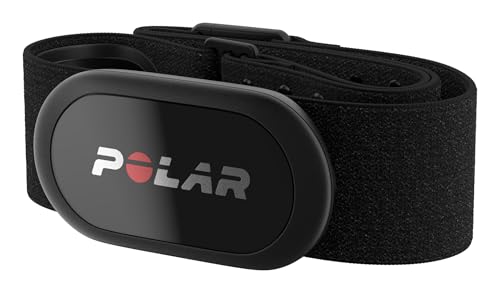
The Polar H10 remains the accuracy benchmark, ECG-grade chest-strap sensing that pairs over Bluetooth directly to your Apple Watch. If you want running-specific metrics layered on top of accurate heart rate, the Garmin HRM-PRO Plus adds that.
Check price on AmazonOne detail that matters for Apple Watch specifically: it has no ANT+ radio at all, only Bluetooth. Every monitor here also supports ANT+ for pairing with Garmin devices or bike computers, but that’s irrelevant to an Apple Watch pairing, Bluetooth is the only connection method that actually works with it.
We compared sensor type, accuracy during high-intensity training, and comfort across seven monitors, since the Apple Watch’s built-in optical sensor is genuinely fine for casual use but tends to lag or drift during intervals and heavy lifting, exactly the scenarios where a dedicated monitor earns its keep.
How we rank
Our ranking is based on cross-referencing owner reviews, expert ratings from fitness sites, and comparing accuracy, comfort, battery life, and connectivity features for each model. See our method.
Quick picks
| Best for | Product | Who it suits |
|---|---|---|
| Best Overall | Polar H10 Heart Rate Sensor | Serious athletes wanting gold-standard accuracy for HR monitoring with Apple Watch. |
| Best for Runners | Garmin HRM-PRO Plus | Runners who want running dynamics and accurate HR data on Apple Watch. |
| Best Value | Wahoo TICKR X | Fitness enthusiasts wanting a reliable, affordable chest strap with built-in accelerometer. |
| Best Budget Armband | Scosche Rhythm24 | Users who prefer an armband over a chest strap for comfort and convenience. |
| Best Lightweight | Polar Verity Sense | Swimmers and triathletes needing a lightweight, versatile optical HR monitor. |
| Best Budget Chest Strap | Garmin HRM-Dual | Budget-conscious users wanting a reliable chest strap for accurate HR on Apple Watch. |
| Best for Beginners | Polar OH1+ | Newcomers to external HR monitors who want simplicity and comfort without high cost. |
The picks, compared
Polar H10 Heart Rate Sensor
An ECG-grade chest strap built around precision rather than extra features, pairing over Bluetooth to Apple Watch just as reliably as it pairs to Garmin devices via ANT+.
What owners say: Tracking that several owners compare favorably to medical-grade equipment, with fewer dropouts than optical sensors, is the consistent praise. The strap can slip during especially intense movement, worth double-checking the fit before a hard session.
- Highest accuracy among consumer HR monitors
- Compatible with most apps via Bluetooth and ANT+
- Long battery life (up to 400 hours)
- Chest strap may be uncomfortable for some
- No running dynamics or advanced metrics
Garmin HRM-PRO Plus
Adds running dynamics, ground contact time and vertical oscillation, on top of accurate heart rate sensing, useful data even without owning a Garmin watch since it pairs to Apple Watch over Bluetooth.
What owners say: The running-specific metrics paired with accurate HR are what owners point to specifically, useful even without a Garmin device to pair it to. The sensor module runs bulkier than the simpler chest straps here.
- Provides running dynamics
- Dual transmission (ANT+ &
- Bluetooth)
- Comfortable strap
- Sensor can be bulky
- Battery life shorter than Polar H10 (up to 1 year)

Wahoo TICKR X
A built-in accelerometer adds cadence and running-metric tracking to standard heart rate sensing, with onboard memory for workouts recorded without a phone or watch present.
What owners say: Reliable Bluetooth pairing with Apple Watch alongside the bonus cadence tracking are the recurring praise. Some owners report durability concerns after roughly a year of regular use.
- Accurate HR with accelerometer for running metrics
- Onboard memory stores workouts
- Great value for features
- Durability concerns over time
- Strap may irritate sensitive skin

Scosche Rhythm24
An optical armband built specifically for people who don’t want a chest strap at all, with onboard memory and genuine 50-meter water resistance.
What owners say: Comfort for all-day wear without the chest-strap feel is the entire draw here. Accuracy trails chest straps during rapid heart rate swings, occasional dropouts during genuinely high-intensity intervals are the recurring complaint.
- Comfortable armband design with no chest strap
- Onboard memory and rechargeable battery
- Waterproof to 50m
- Optical sensor less accurate than chest straps
- Battery life only up to 30 hours
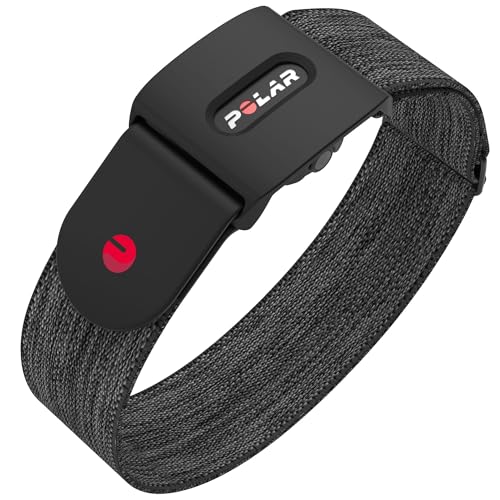
Polar Verity Sense
An ultra-lightweight optical monitor built for swimmers and triathletes specifically, worn on the arm or temple rather than the chest, with genuinely long battery life at 600 hours.
What owners say: Comfort for long sessions and reliable in-water performance are the specific, repeated praise from swimmers. Accuracy during rapid heart rate changes runs behind chest straps, an inherent limitation of optical sensing rather than a flaw unique to this device.
- Lightweight and comfortable
- Excellent battery life (600 hours)
- Works well in water
- Optical sensor may be less accurate during rapid HR changes
- No running dynamics
Garmin HRM-Dual
A stripped-down, affordable chest strap that skips running dynamics and onboard memory in favor of reliable core heart rate sensing at a lower price.
What owners say: The upgrade in accuracy over a wrist-based sensor at a genuinely low price is what owners point to specifically. Strap durability over time is the recurring complaint, a fair trade-off given the price.
- Affordable price
- Dual transmission (Bluetooth &
- ANT+)
- Reliable HR accuracy
- No advanced metrics
- Strap durability concerns

Polar OH1+
A simple, Bluetooth-only optical armband built as an entry point for someone trying external heart rate monitoring for the first time, with onboard memory for standalone use.
What owners say: Ease of setup and day-to-day comfort are the consistent praise from first-time users specifically. Accuracy during interval training lags behind chest straps, expected given the optical sensor and beginner-focused positioning.
- Simple, comfortable armband design
- Onboard memory for standalone use
- Good battery life (up to 12 hours)
- Optical accuracy lags behind chest straps
- No ANT+ connectivity
How to choose
- Accuracy. Chest straps like the Polar H10 use ECG technology for the highest accuracy. Optical sensors (armbands) are less accurate during rapid HR changes. Choose based on your activity: if you do interval training, a chest strap is best.
- Comfort. Chest straps can be uncomfortable for some, especially during long sessions. Armband models like the Scosche Rhythm24 or Polar Verity Sense offer a more comfortable alternative, though they may compromise on accuracy.
- Connectivity. Ensure the HR monitor supports Bluetooth to pair with Apple Watch. Some also offer ANT+ for use with other devices. Dual transmission allows simultaneous connection to a watch and a phone or bike computer.
- Battery Life. Replaceable coin cell batteries (e.g., Polar H10) can last hundreds of hours, while rechargeable models (e.g., Scosche Rhythm24) need charging every 30 hours. Consider your usage frequency when choosing.
- Additional Features. Some monitors offer running dynamics, onboard memory, or water resistance for swimming. Decide if you need extra metrics like cadence or stride length, or if basic HR data is sufficient.
Frequently asked questions
Can I use any heart rate monitor with my Apple Watch?
Most Bluetooth-enabled HR monitors work with Apple Watch. You need to pair the monitor in the Settings app under Bluetooth. Some monitors also require a compatible fitness app to view data.
Is a chest strap more accurate than an armband for Apple Watch?
Yes, chest straps like the Polar H10 are generally more accurate because they measure electrical signals from the heart. Armband optical sensors can be affected by movement and sweat, though they are more comfortable.
Do I need a heart rate monitor if I have an Apple Watch?
The Apple Watch's optical sensor is adequate for casual use, but for high-intensity training or more precise HR data, a dedicated monitor offers better accuracy and reliability.
How do I pair an external heart rate monitor with my Apple Watch?
Put the HR monitor in pairing mode, then on your Apple Watch go to Settings > Bluetooth and select the monitor. Open a compatible app like Workout or Strava to see your heart rate.
Can I use a heart rate monitor for swimming with my Apple Watch?
Yes, some HR monitors like the Polar Verity Sense are waterproof and can be used for swimming. However, Bluetooth does not transmit through water, so data is stored on the monitor and synced later.
What is the best budget heart rate monitor for Apple Watch?
The Garmin HRM-Dual is a reliable and affordable chest strap option. For a budget armband, the Polar OH1+ is a good choice. Both offer solid accuracy and compatibility.
The verdict
The Polar H10 is the right default for accuracy, especially during intervals or lifting where the Apple Watch’s own sensor tends to lag. Choose the Garmin HRM-PRO Plus if running metrics matter to you specifically, or the Polar Verity Sense if a chest strap is a dealbreaker and swimming is part of your training.