The Polar H10 stands out as the best overall heart rate monitor, offering exceptional accuracy and reliability for diverse training needs. For athletes seeking advanced running dynamics and swim data, the Garmin HRM-Pro Plus is an excellent alternative, providing comprehensive metrics to elevate performance.
Check price on AmazonUnderstanding your heart rate is a fundamental aspect of optimizing any fitness routine, whether you are an elite athlete or just beginning your wellness journey. A precise heart rate monitor provides crucial insights into your body’s response to exercise, allowing you to train within target zones, improve cardiovascular health, and prevent overtraining. In 2026, the market offers a sophisticated array of devices, from traditional chest straps known for their accuracy to convenient armbands utilizing optical sensors, each designed to meet specific needs and preferences.
Selecting the right heart rate monitor involves considering various factors like accuracy, comfort, connectivity, and battery life, all of which significantly impact your training experience. Reliable data empowers you to make informed decisions about your workouts, track progress over time, and achieve your fitness goals more effectively. This roundup aims to simplify your choice by identifying the top performers in the current landscape, ensuring you find a device that seamlessly integrates into your active lifestyle and provides the accurate feedback you need.
How we rank
We compared dozens of the most popular heart rate monitors based on accuracy, comfort, battery life, connectivity, and extensive user reviews to establish our rankings. See our method.
Quick picks
| Best for | Product | Who it suits |
|---|---|---|
| Best Overall | H10 Heart Rate Sensor | accurate, reliable heart rate tracking for any sport |
| Best for Triathletes | HRM-Pro Plus Heart Rate Monitor | multi-sport athletes needing advanced running dynamics and swim data |
| Best Premium | WHOOP 4.0 | comprehensive daily physiological tracking and recovery insights |
| Best Value | TICKR X Heart Rate Monitor | athletes seeking a feature-rich chest strap without a premium price |
| Best Lightweight | Verity Sense Optical Heart Rate Sensor | versatile wear options and freedom from a chest strap |
| Best for Gym Classes | MZ-Switch Heart Rate Monitor | engaging and motivating group fitness experiences with flexible wear |
| Best for Runners | Heart Rate Monitor | runners seeking a simple, comfortable, and accurate arm-worn solution |
The picks, compared
H10 Heart Rate Sensor
The Polar H10 remains a benchmark for heart rate accuracy, leveraging ECG measurement that many consider the gold standard. It provides exceptional signal stability and interference resistance, ensuring consistent data even during intense workouts. Its dual Bluetooth and ANT+ connectivity allows seamless pairing with a wide array of fitness apps, smartwatches, and gym equipment. The strap itself is comfortable and uses soft textile material with silicone dots to prevent slipping, making it ideal for extended wear across various activities.
What owners say: Owners report consistent and highly accurate heart rate readings across all types of exercise, from weightlifting to endurance sports. Reviewers note its reliable connectivity with multiple devices and appreciate the long battery life, reducing the frequency of replacements.
- Unrivaled ECG accuracy
- Robust dual ANT+ and Bluetooth connectivity
- Comfortable and secure textile strap
- Requires chest strap wear
- No internal memory for standalone workouts without a connected device
HRM-Pro Plus Heart Rate Monitor
The Garmin HRM-Pro Plus is engineered for serious athletes, offering not only highly accurate heart rate data but also advanced running dynamics. It captures metrics such as vertical oscillation, ground contact time, stride length, and cadence, which are crucial for improving running efficiency. This monitor also stores heart rate data during swims and automatically forwards it to a compatible Garmin device once out of the water. Its compact and lightweight design ensures minimal interference during demanding training sessions.
What owners say: Owners praise its consistent performance in complex multi-sport activities, particularly for its ability to track data both in and out of the water. Reviewers highlight the value of detailed running metrics for performance analysis and injury prevention.
- Provides advanced running dynamics
- Stores heart rate data for swimming
- Compact and lightweight design
- Requires a compatible Garmin device for full features
- Strap material can be less soft than some competitors
WHOOP 4.0
The WHOOP 4.0 is more than just a heart rate monitor; it is a holistic fitness and recovery tracker that provides 24/7 physiological monitoring. It tracks heart rate, heart rate variability, sleep, and respiratory rate to deliver personalized insights into strain, recovery, and sleep quality. The device is small, lightweight, and can be worn on the wrist, bicep, or within compatible apparel, offering discreet and comfortable wearability. Its subscription-based model focuses on long-term data trends to guide training adjustments and optimize overall well-being.
What owners say: Owners consistently report significant improvements in understanding their body's recovery needs and sleep patterns. Reviewers note the detailed daily reports help them adjust their training intensity and prioritize rest, leading to better performance and reduced burnout.
- Comprehensive recovery and sleep analytics
- Versatile wear options beyond the wrist
- Highly accurate optical heart rate sensor
- Requires an ongoing membership subscription
- Primarily designed for continuous wear, not just workouts
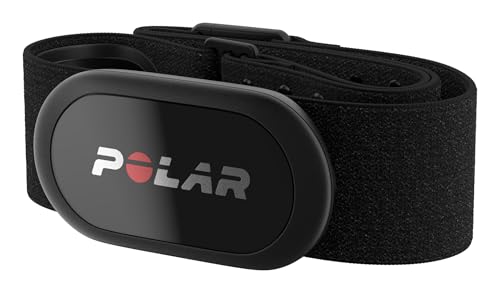
TICKR X Heart Rate Monitor
The Wahoo TICKR X offers an impressive balance of features and affordability, making it an excellent value proposition. Beyond accurate heart rate tracking, it includes onboard memory for up to 50 hours of workout data, allowing you to train without a phone or watch. It also provides running analytics such as cadence, vertical oscillation, and ground contact time, similar to higher-priced models. The strap is designed for comfort, featuring a slim profile and integrated sensor, which helps maintain a secure fit during dynamic movements.
What owners say: Owners appreciate its robust feature set for its price point, often highlighting the reliability of its heart rate tracking. Reviewers find the onboard memory particularly useful for activities where carrying a device is inconvenient, and its connectivity with various apps is highly regarded.
- Integrated memory for standalone workouts
- Offers running dynamics metrics
- Dual Bluetooth and ANT+ connectivity
- Running dynamics are less comprehensive than some Garmin models
- Battery life is good but not best in class
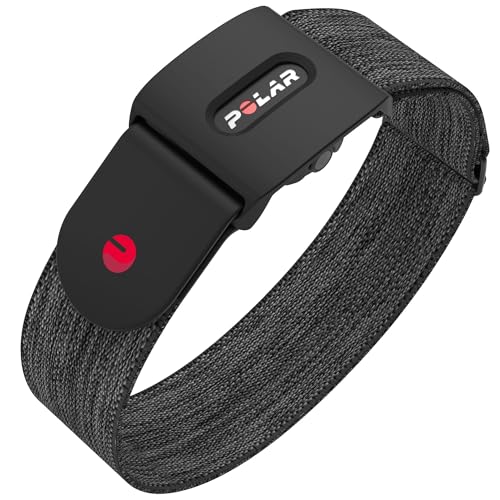
Verity Sense Optical Heart Rate Sensor
The Polar Verity Sense is an incredibly versatile optical heart rate sensor that can be worn on the arm, temple (with swim goggles), or clipped to tight-fitting clothing. Its small, lightweight design makes it almost unnoticeable during activity, providing comfort for long training sessions. The device offers excellent accuracy from its optical sensor and features onboard memory for up to 600 hours of training data, allowing for independent workouts. It is an ideal choice for those who dislike chest straps but still demand precise heart rate monitoring.
What owners say: Owners highly value its comfort and adaptability, often reporting that they forget they are wearing it. Reviewers commend its reliable optical heart rate accuracy for an armband and the convenience of its internal storage for recording sessions without a phone.
- Extremely versatile wear locations
- Excellent optical heart rate accuracy
- Built-in memory for offline workouts
- Battery life is shorter than chest straps
- Optical sensors can be less accurate than ECG in specific conditions
MZ-Switch Heart Rate Monitor
The Myzone MZ-Switch offers unique flexibility with its ability to be worn on the chest, wrist, or forearm, adapting to different activities and preferences. It uses ECG technology when worn on the chest for maximum accuracy and switches to optical (PPG) when worn on the wrist or arm. Myzone's core appeal lies in its ecosystem, which converts heart rate data into Myzone Effort Points (MEPs), providing a clear measure of effort and motivation within its social platform. This makes it particularly popular in gym environments and for group challenges.
What owners say: Owners frequently mention how the MEPs system enhances their motivation and engagement in workouts, especially in group settings. Reviewers appreciate the multiple wear options, finding it convenient for varied activities from swimming to weightlifting.
- Multiple wear locations (chest, arm, wrist)
- Combines ECG and optical heart rate technology
- Engaging Myzone Effort Points (MEPs) system
- Full benefit requires engagement with Myzone ecosystem
- Accuracy on the wrist/arm may vary by individual
Heart Rate Monitor
The Coros Heart Rate Monitor is a sleek and minimalist armband designed specifically with runners in mind. It uses a multi-channel optical sensor to deliver highly accurate heart rate data from the arm, providing a comfortable alternative to a chest strap. The low-profile design and soft textile band ensure it stays secure without chafing, even during long runs. Its robust battery life and simple operation make it a straightforward and reliable choice for athletes focused on tracking their cardiovascular effort.
What owners say: Owners report exceptional comfort and a secure fit, often noting they barely notice it during their runs. Reviewers consistently praise its optical heart rate accuracy, finding it comparable to chest straps for steady-state activities, making it a favorite among the running community.
- Excellent comfort for running
- Reliable optical accuracy from the arm
- Slim and discreet design
- Lacks advanced metrics of some competitors
- No internal storage for standalone workouts
How to choose
- Evaluate Accuracy Needs. Chest strap monitors, which use electrocardiogram (ECG) technology, are generally considered the most accurate for capturing rapid heart rate changes. Optical sensors, typically found in armbands or smartwatches, offer great convenience but can sometimes show slight delays or inaccuracies during very high-intensity or irregular movements.
- Consider Comfort and Fit. The design and material of your heart rate monitor significantly impact comfort during extended wear. Chest straps should be made of soft, flexible materials that sit securely without chafing, while armbands need to be snug enough for accurate optical readings but not constricting. Think about where you prefer to wear the device and how it might interfere with your chosen activities.
- Check Connectivity Options. Most modern heart rate monitors support both Bluetooth and ANT+ protocols, allowing them to connect with a wide range of devices including smartwatches, cycling computers, smartphones, and gym equipment. Confirming compatibility with your existing fitness tech ecosystem is crucial for seamless data integration. Some devices also offer multi-device pairing for added convenience.
- Assess Battery Life. Heart rate monitors vary significantly in battery type and life. Chest straps often use replaceable coin-cell batteries that can last for months or even a year, while optical armbands typically feature rechargeable batteries with a lifespan of 15 to 30 hours per charge. Your usage frequency and preference for recharging versus replacing batteries should guide your decision.
- Look for Specific Features. Beyond basic heart rate tracking, some monitors offer advanced features like onboard memory to store workout data, running dynamics (cadence, ground contact time), or multi-sport modes for swimming. If you engage in specialized training or desire deeper insights into your performance, prioritize models that offer these additional functionalities relevant to your specific needs.
Frequently asked questions
Why do I need a heart rate monitor?
A heart rate monitor provides precise data about your body's physiological response to exercise, allowing you to train within specific heart rate zones to achieve different fitness goals. It helps optimize workouts, monitor cardiovascular health, track progress, and prevent overtraining or undertraining by providing objective feedback.
Are chest strap monitors more accurate than armbands?
Generally, chest strap monitors, which use ECG technology to detect electrical signals from your heart, are considered more accurate and responsive than optical armbands. While armbands offer convenience and comfort, chest straps often provide quicker and more reliable readings, especially during sudden changes in intensity or erratic movements.
Can heart rate monitors track calories burned?
Yes, most heart rate monitors can estimate calories burned during exercise. This calculation is based on your heart rate data, personal metrics like age, weight, and sex, and the duration and intensity of your workout. While not perfectly precise, it offers a useful estimate for managing energy expenditure.
How do I connect my heart rate monitor to other devices?
Most modern heart rate monitors use Bluetooth and/or ANT+ wireless technologies. You typically enable the monitor, open the settings on your compatible device (smartwatch, phone, bike computer, fitness app), and search for available sensors to pair. Follow the on-screen prompts, which usually involve selecting your monitor from a list.
What's the difference between ANT+ and Bluetooth?
ANT+ and Bluetooth are wireless communication protocols for fitness devices. ANT+ allows multiple receivers to pick up a signal from one sensor, often favored in cycling. Bluetooth typically connects one sensor to one device but is more widely supported by smartphones and general fitness apps. Many modern monitors offer both for broader compatibility.
How often should I replace my heart rate monitor?
The lifespan of a heart rate monitor varies. Chest straps might need a battery replacement every few months to a year, and the strap itself may wear out after a couple of years of regular use. Optical armbands with rechargeable batteries might see battery degradation over several years. Regular cleaning and proper storage can extend the life of any monitor.
The verdict
For those prioritizing unparalleled accuracy and broad compatibility, the Polar H10 stands out as the top choice among heart rate monitors. Athletes focused on advanced training metrics and multi-sport performance will find the Garmin HRM-Pro Plus to be an exceptional companion. Meanwhile, for users seeking comfort, versatility, and the freedom from a chest strap, the Polar Verity Sense offers a highly reliable optical solution.