 Related pick
A balance disc is a soft, air-filled cushion that provides unstable support to challenge ankle and core stability, ideal for beginners and rehabilitation. A wobble board is a rigid platform with a hemispherical base that offers greater instability and difficulty, better suited for advanced balance training and sports performance.
When it comes to improving balance, core strength, and stability, you have two popular options: the balance disc and the wobble board. Both tools create instability to force your muscles to work harder, but they differ significantly in design, difficulty, and best use cases. This article breaks down the key distinctions to help you choose the right tool for your fitness goals, whether you’re recovering from an injury, a beginner looking to improve stability, or an athlete wanting to up your game.
What is a Balance Disc?
A balance disc, also called a balance cushion or stability disc, is a circular, inflatable pad made of flexible PVC or rubber. It looks like a flattened air cushion, typically 13 to 14 inches in diameter and about 2 inches thick when fully inflated. You fill it with air using a pump, and you can adjust the firmness to customize the challenge.
The disc’s surface is slightly textured for grip, and it works by creating an unstable surface that your body must constantly adjust to. Because it is soft and pliable, the instability is more in your ankles and feet, making it excellent for training proprioception (your body’s sense of position) and improving ankle stability. It’s commonly used in physical therapy for ankle rehab, as well as for standing exercises, single-leg balances, and core work.
What is a Wobble Board?
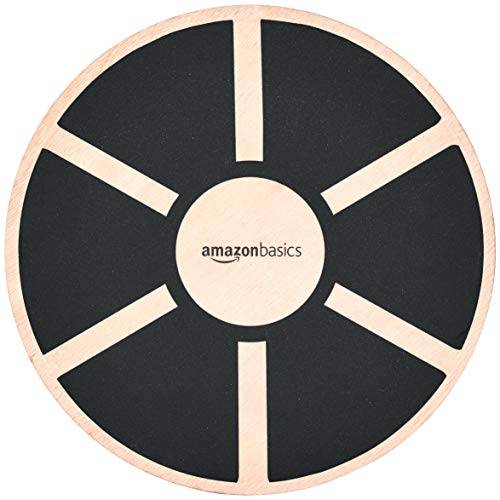
A wobble board consists of a rigid circular platform (usually wood or hard plastic) attached to a hemispherical base, like a dome. The platform tilts in all directions as you shift your weight. The board’s diameter ranges from 16 to 20 inches, and the dome height varies, affecting difficulty.
Unlike the disc, the wobble board provides a much more challenging instability because the dome creates a fulcrum point that can tip in any direction. This forces your entire lower body, from ankles to hips and core, to engage continuously to maintain balance. Wobble boards are popular for advanced balance training, sports conditioning, and injury prevention, especially for the knees and hips. They also allow for more dynamic movements like controlled tilting, circle rotations, and even exercises like squats and push-ups on the board.
Key Differences in Design and Difficulty
The fundamental difference lies in the type of instability. A balance disc is pliable, so it compresses and wobbles in a more localized way, primarily challenging your ankles and feet. It’s gentler and easier to control, making it ideal for beginners or those in rehab. A wobble board, with its rigid platform and dome base, creates a larger, more erratic range of motion that demands more from your hips and core. It is significantly harder to balance on, especially for extended periods.
Another design difference: the balance disc is portable, lightweight, and can sit on a chair for seated core work. The wobble board is bulkier and heavier. In terms of difficulty progression, you start with a balance disc (underinflated for easier, fully inflated for harder) and move to a wobble board as your balance improves. Some wobble boards have adjustable dome heights to increase challenge.
Best Use Cases and Who They're For
Balance Disc: This is your go to for ankle rehabilitation, improving standing balance, and building a foundation of stability. It’s excellent for seated core activation (sit on it at your desk) and for single-leg stance training. Physical therapists often prescribe it for sprained ankles or after surgery. Beginners, older adults, and anyone with low back pain who needs gentle core engagement will benefit from the disc. It’s also a good tool for improving posture when standing on one foot.
Wobble Board: The wobble board is for those with solid balance who want to push further. Athletes in sports like basketball, soccer, skiing, and surfing use it to train dynamic stability and reactive control. It’s excellent for advanced exercises such as squats, push-ups, and even lunges on the board. The wobble board also strengthens the knees and hips by forcing them to stabilize against unpredictable tilts. If you can stand on a balance disc for 60 seconds without wobbling, you’re ready for a wobble board.
Which One Should You Choose?
Your choice depends entirely on your current ability and goals. If you are new to balance training or recovering from an ankle injury, start with a balance disc. It is safer, more forgiving, and allows you to progress gradually from sitting to standing. For general fitness and core stability, the disc is more than sufficient for most people.
If you have a good foundation and want to challenge your balance further, especially for sports performance, invest in a wobble board. It will provide a tougher workout for your legs, hips, and core. Remember that safety matters: always use these tools near a wall or sturdy object to catch yourself if you lose balance. Both tools can add variety to your workouts, but they serve different roles in the journey from basic stability to advanced athletic conditioning.
Frequently asked questions
Can a balance disc help with ankle sprain recovery?
Yes, a balance disc is commonly used in physical therapy for ankle sprain rehab. It helps restore proprioception and strengthen the stabilizing muscles around the ankle.
Is a wobble board harder than a balance disc?
Yes, a wobble board is significantly harder because its rigid platform and pivot dome create more instability. It requires greater control from your ankles, knees, hips, and core.
Can I use both a balance disc and a wobble board in my routine?
Absolutely. Start with the balance disc for foundational balance and progress to the wobble board for advanced training. Using both can provide a comprehensive approach to stability.
Are these tools safe for older adults?
The balance disc is safer for older adults due to its lower difficulty and soft surface. Always use it near support and consult a doctor before starting any new exercise program.
Looking to buy? See our Balance Boards guides for tested picks.