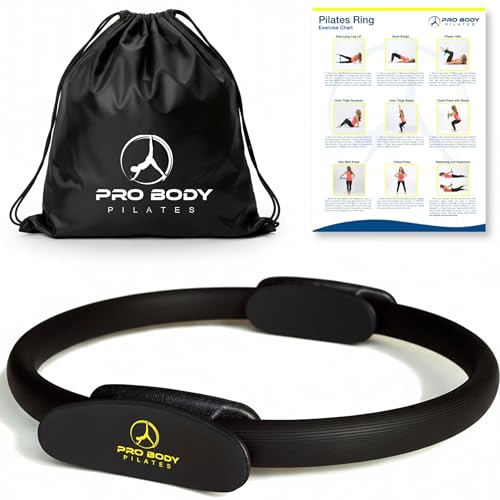
A Pilates ring is a lightweight, flexible circle used to add resistance to Pilates exercises. It targets muscles like the inner thighs, arms, and core, improving strength, stability, and alignment through controlled movements.
A Pilates ring, also known as a magic circle, is a versatile tool that can transform your home workouts. Whether you are new to Pilates or a seasoned practitioner, this simple piece of equipment adds progressive resistance to target specific muscle groups. In this guide, we will break down exactly what a Pilates ring is used for, the benefits it offers, and how to incorporate it into your routine for safer, more effective sessions.
What Is a Pilates Ring?
A Pilates ring is a circular piece of equipment, typically about 13 inches in diameter, made from flexible metal or lightweight materials. It has padded handles on opposite sides so you can grip it comfortably. The ring works by providing light resistance when you squeeze it with your arms, legs, or other body parts.
Invented by Joseph Pilates himself, the ring was designed to help isolate and challenge muscles during traditional Pilates mat exercises. Unlike larger equipment like the reformer, the ring is portable, affordable, and easy to store. It is ideal for home use because it adds resistance without taking up much space.
The ring’s flexibility means the resistance level depends on how much you press or squeeze it. You can adjust the intensity by changing your muscle engagement, making it suitable for all fitness levels.
Key Benefits of Using a Pilates Ring
Using a Pilates ring regularly can improve your workout in several ways. First, it enhances muscle activation, especially in the inner thighs, outer thighs, glutes, arms, and chest. The constant pressure against the ring forces your muscles to work harder, leading to greater strength gains over time.
Second, the ring encourages proper alignment and form. Because you have to stabilize the ring while moving, you become more aware of your body positioning. This helps prevent compensatory movements that can lead to injuries. Third, it adds variety to your routine, keeping workouts challenging and engaging. You can use the ring for exercises that target nearly every major muscle group.
Finally, the Pilates ring is excellent for rehabilitation and low-impact training. It allows you to build strength without heavy weights, making it a safe option for those recovering from injuries or with joint concerns.
How to Use a Pilates Ring Safely
Before you start, choose a ring with comfortable padding and a firm but flexible structure. Always begin with a warmup to prepare your muscles. When using the ring, focus on controlled movements rather than speed. Breathe deeply and avoid holding your breath.
Common mistakes include squeezing the ring too hard, which can cause strain, or letting your form slip. Keep your core engaged and your spine neutral. If you feel sharp pain, stop immediately. Start with simple exercises like the basic inner thigh squeeze: lie on your side, place the ring between your ankles, and slowly press down while keeping your legs straight.
Gradually increase repetitions as you get stronger. Aim for 10 to 15 reps per exercise, and rest between sets. Always close your workout with a cool-down to stretch the muscles you worked.
6 Effective Pilates Ring Exercises for Full Body Workout
Here are six exercises that target your entire body. 1. Inner Thigh Squeeze: Lie on your back with knees bent and feet flat. Place the ring between your knees and squeeze for 2 seconds, then release. This strengthens your inner thighs and pelvic floor.
2. Chest Press: Lie on your back holding the ring with both hands at chest level. Press the ring upward until your arms are fully extended, then lower slowly. This works your chest and triceps.
3. Leg Press: Sit with legs extended, place the ring under one foot, and press down against the ring. Great for quads and hip flexors.
4. Arm Circles: Stand with your arms extended forward, holding the ring. Make small circles in both directions to strengthen shoulders and arms.
5. Glute Bridge: Lie on your back with knees bent, place the ring just above your knees, press outward while lifting your hips into a bridge. This targets glutes and outer thighs.
6. Standing Side Kick: Stand holding onto a wall for balance, place the ring between your ankle and inner thigh of the same leg, and kick out to the side. Works outer thighs and hips.
Who Should Use a Pilates Ring?
A Pilates ring is great for beginners because it is low impact and easy to learn. It is also effective for advanced practitioners who want to intensify mat work without adding heavy weights. If you are recovering from an injury, the ring allows you to build strength gradually with controlled resistance.
Older adults can benefit from the ring to maintain muscle mass and bone density while protecting joints. Athletes can use it as a cross-training tool to improve stability and prevent imbalances. Even if you do not practice Pilates, the ring can be incorporated into general fitness routines for added variety.
If you have specific health conditions like high blood pressure or osteoporosis, consult your doctor before starting any new exercise program. The ring is generally safe, but proper technique is essential.
Frequently asked questions
How does a Pilates ring differ from a resistance band?
A Pilates ring provides targeted resistance that is isometric, meaning you hold a position against the ring's squeeze. Resistance bands offer variable resistance through stretching, targeting different angles. The ring is often easier for isolating smaller muscle groups.
Can a Pilates ring help with weight loss?
While the ring itself does not burn many calories, it can help build lean muscle mass, which boosts metabolism. Combined with a balanced diet and regular cardio, it supports weight loss goals.
How often should I use a Pilates ring?
For best results, use the ring 2 to 3 times per week, allowing at least one day of rest between sessions. Listen to your body and avoid overtraining.
Is a Pilates ring good for back pain?
Yes, it can help strengthen the core and back muscles, which may alleviate some types of back pain. However, consult a healthcare professional before starting if you have chronic pain.
Looking to buy? See our Pilates Sets guides for tested picks.