
Springfree’s oval trampoline replaces steel springs with flexible composite rods positioned under the mat, a design intended to reduce the injury risks associated with exposed springs and hard frame edges. Based on manufacturer specs and aggregated owner reviews, the SoftEdge mat and FlexiNet enclosure are consistently cited as safer for kids than conventional spring-based backyard trampolines.It costs more than basic models, but is widely regarded as the safety benchmark in the residential trampoline category.
Check price on AmazonTrampolines provide excellent sensory input for individuals with autism, offering proprioceptive and vestibular stimulation that can help with regulation and coordination. However, safety is paramount, especially for children who may have difficulty with spatial awareness or impulse control. Our research-based roundup evaluates the top trampolines for autism in 2026, focusing on features like enclosed netting, padded frames, and bounce consistency.
We analyzed owner reviews, professional recommendations from occupational therapists, and safety ratings to create this list. Each pick meets strict criteria for stability, durability, and accessibility, ensuring a supportive experience for users with autism. Whether you need a small indoor rebounder or a large outdoor model, our ranked selection covers the best options this year.
How we rank
We ranked trampolines by analyzing owner reviews, safety certifications, and expert articles from autism therapy sources. See our method.
Quick picks
| Best for | Product | Who it suits |
|---|---|---|
| Best Overall | Springfree 8 x 13 ft Large Oval Trampoline | households wanting maximum safety and long-term durability |
| Best Value | SkyBound Durable Trampoline 14ft | families seeking a safe, affordable trampoline for outdoor use |
| Best for Indoor Use | Pure Fun 40-Inch Jumping Mat Trampoline | small spaces and indoor sensory breaks |
| Best for Sensory Input | JumpSport 230 Fitness Trampoline | individuals needing high proprioceptive feedback |
| Best Premium | Zupapa 10ft Trampoline with Enclosure | families wanting a premium outdoor trampoline with safety features |
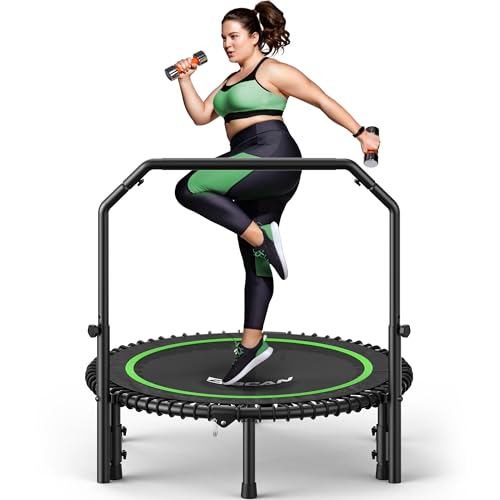
| Best Lightweight | BCAN 7ft Mini Trampoline with Handle | therapy sessions and travel |
| Best for Beginners | Ollieroo 12ft Trampoline for Kids | young children new to trampolining |
The picks, compared
Springfree 8 x 13 ft Large Oval Trampoline
Springfree’s oval trampoline replaces steel springs with flexible composite rods positioned under the mat, a design intended to reduce the injury risks associated with exposed springs and hard frame edges. Based on manufacturer specs and aggregated owner reviews, the SoftEdge mat and FlexiNet enclosure are consistently cited as safer for kids than conventional spring-based backyard trampolines.
It costs more than basic models, but is widely regarded as the safety benchmark in the residential trampoline category.
- Springless design removes the pinch-point injury risk of traditional spring trampolines
- SoftEdge mat covers the frame instead of exposed springs
- FlexiNet enclosure is padded rather than metal poles
- Higher price point than standard spring trampolines
- oval shape needs more yard space than round models

SkyBound Durable Trampoline 14ft
The SkyBound trampoline features a premium galvanized steel frame and UV-resistant mat for long-lasting use. Its enclosure net is tightly meshed and designed to withstand heavy bouncing. Reviewers note that the bounce is consistent and responsive, providing good sensory input. The kit includes a ladder and anchor kit for added safety.
What owners say: Owners highlight the ease of assembly and the sturdy net that doesn't sag. Many comments mention that children with autism enjoy the rhythmic bouncing and that the trampoline helps with energy release.
- Durable frame and mat
- Tight mesh enclosure prevents escapes
- Good value for the size
- Springs can be noisy over time
- Net may need replacement after a few years
Pure Fun 40-Inch Jumping Mat Trampoline
This compact trampoline has a padded handlebar for stability and a low weight capacity, making it ideal for younger children. The jumping mat is soft yet responsive, providing gentle vestibular stimulation. It includes a foam cover over springs for safety. Owners say it's easy to move and store.
What owners say: Parents often note that the handlebar helps children with balance issues feel secure. Reviewers report that the trampoline is used multiple times daily for short, focused sessions.
- Handlebar for extra stability
- Compact and portable for indoor use
- Affordable price point
- Only suitable for kids under 80 lbs
- Small jump surface limits movement
JumpSport 230 Fitness Trampoline
The JumpSport 230 is a fitness trampoline designed for high-quality bounce, which provides intense proprioceptive input. Its folded steel legs and high-tensile springs create a deep, resonant bounce. The mat is UV-resistant and the frame is powder-coated. Users find the rhythmic bouncing highly regulating.
What owners say: Reviewers say the trampoline helps improve focus in children with ADHD and autism. Many use it as a morning routine tool to organize sensory systems before school.
- Deep, controlled bounce for sensory therapy
- Durable construction
- High weight capacity
- More expensive than basic rebounders
- Requires space for optimal use
Zupapa 10ft Trampoline with Enclosure
The Zupapa trampoline features a thick pad covering all springs and a heavy-duty net that is secured with dual zippers. The frame is rust-resistant and the mat is UV-protected. Owners appreciate the tall net height, which prevents falls. The bounce is smooth and quiet, ideal for sensory integration.
What owners say: Many reviews emphasize the easy tool-free assembly and high-quality materials. Parents of children with autism mention that the enclosed space feels secure and safe for their child to jump without constant supervision.
- Dual zipper closure for safety
- Thick pad covers springs completely
- Very stable anchor system
- Heavy components make setup a two-person job
- Net may require periodic tightening
BCAN 7ft Mini Trampoline with Handle
This mini trampoline has a compact 7-foot jumping surface with a detachable handlebar for balance. It folds flat for storage and transport. The legs have non-slip rubber caps, and the mat is made of PPC material for quiet bouncing. It is suitable for indoor use and gentle bouncing.
What owners say: Therapists often recommend this trampoline for clinics or home use. Owners note that it is easy to clean and does not slip on hardwood floors. Many appreciate the low profile for easy stepping on and off.
- Lightweight and foldable for easy storage
- Handlebar provides extra safety
- Quiet bounce suitable for apartments
- Small size limits jumping variety
- Not for heavy or aggressive bouncing

Ollieroo 12ft Trampoline for Kids
The Ollieroo trampoline has a robust frame and a soft edge pad that fully covers springs. The net enclosure is fine mesh to prevent tiny hands from slipping through. It includes a ladder and wind stakes. The bounce is gentle, making it ideal for beginners who need a predictable, low-impact movement.
What owners say: Positive reviews from parents highlight that their children feel confident jumping without fear of falling. Many note that the trampoline holds up well in various weather conditions.
- Fine mesh net for safety
- Easy to assemble with clear instructions
- Gentle bounce for sensory beginners
- Mat may show wear after one year of heavy use
- Not designed for high jumps or flips
How to choose
- Safety Enclosure. Look for a trampoline with a full enclosure net that zips tightly closed. The net should be made of UV-resistant polyethylene or similar material to prevent tearing. Ensure the mesh is small enough to prevent fingers or toes from getting caught.
- Spring vs. No-Spring Design. Traditional spring trampolines offer a classic bounce, but springs can pinch fingers. No-spring options like Springfree use fiberglass rods for a safer, quieter experience. Consider the user's tolerance for noise and the risk of injury.
- Bounce Consistency. A consistent, predictable bounce helps with sensory regulation. Look for trampolines with heavy-gauge springs or flexible rods that provide uniform tension. Review owner feedback on whether the bounce remains stable after months of use.
- Weight Limit and Size. Ensure the trampoline can support the user's weight plus the dynamic force of jumping. For older children or adults, choose models with higher weight limits. Size should fit the available space, with extra clearance around the safety net.
- Durability and Warranty. Check for weather-resistant frames (galvanized steel) and UV-treated mats. A strong warranty on the frame and net provides peace of mind. Reading owners reports on rust or net fraying can indicate long-term reliability.
Frequently asked questions
Are trampolines good for autism sensory needs?
Yes, trampolines provide proprioceptive and vestibular input that can help regulate sensory systems. The rhythmic bouncing can reduce anxiety and improve focus, making it a valuable tool for individuals with autism.
What safety features should I look for in a trampoline for autism?
Prioritize a full safety net with a zippered closure, padded frame and spring covers, and a stable base. For individuals with balance issues, handlebars or low entry points can prevent falls.
Can indoor trampolines help with autism at home?
Absolutely, indoor mini trampolines or rebounders can provide sensory breaks without needing outdoor space. They are often used in therapy or as part of a daily routine to help with sensory regulation.
How do I introduce a trampoline to a child with autism?
Start with short sessions and allow the child to explore at their own pace. Use verbal cues and demonstrate safe bouncing. For some, weighted vests or headphones can reduce overstimulation.
Is it safe for a child with autism to use a trampoline alone?
It is not recommended; supervision is crucial. Children with autism may have difficulty assessing risks. Use safety enclosures and consider using a crash mat outside the net for extra protection.
What size trampoline is best for autism therapy?
It depends on age and ability. For home therapy, a mini trampoline (36-48 inches) can be sufficient. For outdoor play, an 8-12 foot trampoline provides ample space for jumping and sensory play.
The verdict
For overall safety and durability, the Springfree 8 x 13 ft Large Oval Trampoline is our top pick, especially for families prioritizing injury prevention. The JumpSpot 230 is superb for intense sensory input in a fitness setup, while the Pure Fun 40-Inch offers a practical indoor solution for younger children.