 Related pick
Cable machine attachments enhance your workout versatility. Key attachments include the tricep rope for pushdowns, lat pulldown bar for back exercises, and single handle D-grip for unilateral moves. Choose attachments based on your exercise goals and grip preference.
Cable machines are a staple in gyms for good reason. They provide constant tension throughout movements, which can help improve muscle activation and control. But to get the most out of your cable workouts, you need the right attachments. This guide covers the most common and useful attachments, how to use them, and what to look for when choosing your own.
The Tricep Rope: A Versatile Favorite
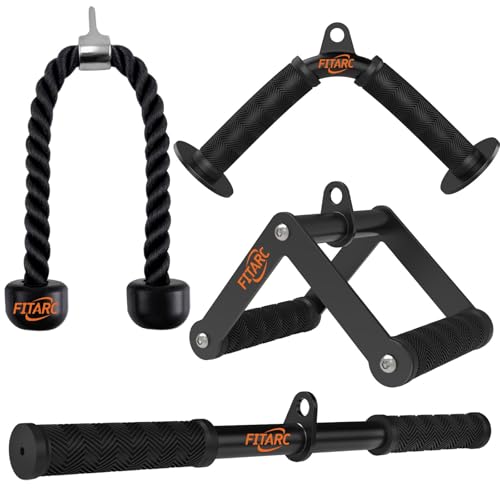
The tricep rope is probably the attachment you will see most often at the gym. It consists of a rope with a plastic or rubber coated end that splits into two. It is mainly used for tricep pushdowns, but it can also be used for tricep extensions, face pulls, and even some core exercises like wood chops. The rope allows for a neutral grip, which can be easier on the wrists than a straight bar.
When using the tricep rope, grip it at the ends for a fuller range of motion. For pushdowns, keep your elbows pinned to your sides and push the rope down until your arms are straight. For face pulls, attach the rope to a high pulley and pull it towards your face with your elbows out. This targets the rear delts and upper back.
One thing to note: ropes can wear out over time, especially the core inside. If you are buying one, look for a rope with a metal core or reinforced ends for durability. Also, consider the length. A standard length is about 22 to 24 inches, but some longer ropes are better for seated exercises.
Lat Pulldown Bar: The Back Builder
The lat pulldown bar is long, usually with a slight curve and a variety of grip positions. It is designed for lat pulldowns and seated rows, but it can also be used for pull ups if you have a cable tower. The wide grip targets the lats and traps, while a closer grip emphasizes the lower lats and biceps.
When performing lat pulldowns, adjust the thigh pad to secure your legs. Grip the bar wider than shoulder width and pull it down to your upper chest, keeping your back straight and chest up. For rows, attach it to a low pulley and sit on a bench, pulling the bar to your abdomen.
There are two main types: straight bars and curved bars. The curved bar allows for a more natural wrist position and can reduce strain. Some bars also have rotating handles, which can help with grip positioning. If you are buying one, make sure it has a comfortable grip and a secure connection (usually a carabiner or snap hook).
Single Handle D-Grip: Unilateral Training
The single handle D-grip, also known as a stirrup handle, is a simple attachment with a D-shaped handle. It is perfect for unilateral exercises, meaning you work one side at a time. This helps correct muscle imbalances and can improve core stability because you have to brace to prevent rotation.
You can use it for cable crossovers, standing tricep extensions, single arm rows, lateral raises, and more. Because it is separate, you can attach two handles to the same cable for a dual grip. Just clip them together with a carabiner.
When selecting a single handle, look for one with a knurled or textured grip for better traction. The handle size matters too. A thicker handle can be used for grip strength training, while a thinner one is more comfortable for lighter work.
The Straight Bar: For Classic Strength Work
The straight bar is a no-frills attachment that comes with most cable machines. It is a long, straight metal bar with grips. It is great for bicep curls, tricep pushdowns, and upright rows. However, because it forces your hands into a fixed position, it can be less wrist-friendly than other attachments.
For bicep curls, attach the bar to a low pulley and do standing curls. Keep your elbows stationary and curl the bar up. For tricep pushdowns, use a high pulley and push down, keeping your elbows close. The straight bar can also be used for front raises and bent over rows.
Some people find that the straight bar causes wrist pain, especially during pushes. If that is you, consider a bar with a built-in swivel or a more ergonomic design. Also, check the weight capacity. Most standard bars can handle weights up to 300 pounds, but if you are lifting heavy, look for a heavy-duty version.
Specialty Attachments: Ankle Cuffs, Tricep Bars, and More
Beyond the basics, there are several specialty attachments that can expand your exercise library. An ankle cuffs are padded cuffs that wrap around your ankle, allowing you to do cable kicks, hip adductions, and other leg movements. They are great for glutes and inner thighs. Look for a cuff with a comfortable lining and a secure strap.
The tricep bar, also called a V-bar, is a short bar with two handles forming a V shape. It is used for tricep pushdowns and can be easier on the wrists than a straight bar. Some V-bars also have a rotating handle for added comfort. Another useful attachment is the triangle rope, which is like the tricep rope but has three ends instead of two, allowing for a different grip.
For core work, you might see a rope or handle attached to a high pulley for kneeling crunches. For shoulders, a single handle on a low pulley can be used for single arm lateral raises. The key is to match the attachment to the movement pattern and your comfort. Do not be afraid to try different ones to see what works best for your body and goals.
When buying attachments, consider the universal standard carabiner clip that fits most cable stations. Attachments with a 1-inch or 1.5-inch carabiner are common. Also, think about storage. A simple hook or rack can keep them organized. Remember, quality matters, but you do not need to spend a fortune. A few key pieces will cover nearly all your cable exercises.
Frequently asked questions
What is the most versatile cable machine attachment?
The tricep rope is widely considered the most versatile because it can be used for tricep pushdowns, face pulls, and core exercises. Its neutral grip is gentle on wrists.
How do I choose a cable attachment for my home gym?
Focus on attachments that match your common exercises and have a universal carabiner clip. Start with a tricep rope, a lat pulldown bar, and a single handle for unilateral work.
Can I use cable attachments from different brands together?
Yes, most attachments have a standard carabiner that fits all cable machines. However, check the carabiner size to ensure compatibility, usually 1 inch or 1.5 inches.
Are there attachments specifically for leg exercises?
Yes, ankle cuffs attach to the cable and allow for exercises like cable kickbacks and hip adductions. Some handles can also be used for leg curls by clipping them to your ankle.
Looking to buy? See our Strength Attachments guides for tested picks.