If you practice on hardwood, the Manduka PRO is our overall winner thanks to its dense closed-cell base that grips wood without sliding and protects the finish underneath. For a lighter, stickier option, the Liforme Original is the alternative worth your money.

The PRO's dense 6mm closed-cell construction gives it real heft, and that weight is exactly what keeps it from sliding on a smooth plank floor. Owners consistently report it does not move during vigorous flows and leaves no residue or marks on hardwood, which is why it remains the most recommended s
Check price on AmazonHardwood floors and yoga mats have a tricky relationship. A thin or slick mat will skate across a polished plank the moment you push into downward dog, and a mat with an aggressive bottom texture can leave marks or trap grit that scratches the finish. We dug through manufacturer specs and thousands of aggregated owner reviews to figure out which mats actually stay put on wood and which ones become a slip hazard.
We do not physically test gear in a lab, so everything here is built from published specifications and the patterns we see across verified buyer feedback. The short version: you want a dense mat with a grippy but non-abrasive underside, enough weight to resist sliding, and a thickness that cushions your joints against a hard surface. Below are the seven mats that owners with wood floors recommend most consistently.
What to look for
Bottom grip is the whole game on hardwood. Look for closed-cell rubber or a textured non-slip underside. Owners repeatedly note that PVC and TPE mats with a smooth backing tend to creep on sealed wood, while natural rubber bottoms bite into the surface and stay anchored even during flowing sequences.
Weight and thickness matter too. A heavier mat resists sliding because there is simply more material pinning it down, and 4mm to 6mm of cushion spares your knees, wrists, and spine from an unforgiving wood surface. Just be wary of very soft, lightweight travel mats on wood, since they offer little resistance and bunch up. Finally, check that the bottom will not mark or stain a finished floor, a complaint that shows up often with cheaper sticky mats.
The top picks, compared
| Product | Best for | Rating | |
|---|---|---|---|
| Manduka PRO Yoga Mat Best Overall | Practitioners who want a do-everything mat that stays planted on wood for years | ★ 4.8/5 | Check price |
| Liforme Original Yoga Mat Best Premium | Sweaty, dynamic practitioners who want maximum grip on a wood surface | ★ 4.7/5 | Check price |
| Gaiam Essentials Thick Yoga Mat Best Budget | Beginners on a budget who still want cushion on a hard surface | ★ 4.4/5 | Check price |
| JadeYoga Harmony Yoga Mat Best for Beginners | New yogis who want reliable open-cell grip without a steep learning curve | ★ 4.6/5 | Check price |
| Lululemon The Reversible Mat 5mm Best Value | Hot yoga and sweat-heavy sessions where the floor must stay dry and the mat must stay put | ★ 4.6/5 | Check price |
| Manduka eKO Superlite Travel Yoga Mat Best Compact | Travelers who still want rubber grip on a wood floor away from home | ★ 4.3/5 | Check price |
| Yoga Design Lab Combo Mat Best Quiet | Apartment practitioners who want a no-shift, no-squeak setup on wood | ★ 4.4/5 | Check price |
Manduka PRO Yoga Mat
The PRO's dense 6mm closed-cell construction gives it real heft, and that weight is exactly what keeps it from sliding on a smooth plank floor. Owners consistently report it does not move during vigorous flows and leaves no residue or marks on hardwood, which is why it remains the most recommended studio mat for home practice on wood.
Best for: Practitioners who want a do-everything mat that stays planted on wood for years
- Dense and heavy, so it resists sliding on wood
- Closed-cell surface wipes clean and does not stain floors
- Extremely durable with a long lifetime reputation
- Slick when brand new until broken in
- On the heavy side to carry to a studio
Liforme Original Yoga Mat
Liforme pairs a natural rubber base that anchors firmly to hardwood with a top layer that gets grippier as you sweat. Reviewers on wood floors highlight that the rubber underside stays locked in place and the alignment markers help keep a consistent setup session after session.
Best for: Sweaty, dynamic practitioners who want maximum grip on a wood surface
- Natural rubber bottom grips hardwood very well
- Grip improves with sweat instead of getting slick
- Helpful alignment guide printed on top
- Premium price for the category
- Natural rubber smell at first that fades over weeks

Gaiam Essentials Thick Yoga Mat
At 10mm this mat delivers plenty of padding for joints pressing into hardwood, and it comes in well under the price of studio brands. Owners appreciate the thick cushion for floor work, though they note you may need to set it on a rug corner or add a non-slip pad for the most secure footing on slick wood.
Best for: Beginners on a budget who still want cushion on a hard surface
- Thick cushion that protects knees on hard floors
- Very affordable entry point
- Includes a carry strap
- Lightweight backing can slide on polished wood
- Too soft for some standing balance poses

JadeYoga Harmony Yoga Mat
The Harmony's natural rubber build provides instant traction on hardwood with no break-in period, so beginners are not fighting a sliding mat from day one. Buyers with wood floors say it stays put through standing poses, and the 5mm thickness offers a comfortable balance of stability and cushion.
Best for: New yogis who want reliable open-cell grip without a steep learning curve
- Natural rubber grips wood right out of the box
- Good cushion at 5mm for stability and comfort
- Made with a renewable rubber tap process
- Open-cell surface absorbs sweat and needs regular cleaning
- Rubber latex may bother sensitive users

Lululemon The Reversible Mat 5mm
Its natural rubber base clings to hardwood while the polyurethane top wicks moisture so your hands and feet do not skate around. Owners say the antimicrobial-treated surface plus the grippy rubber bottom make it a dependable everyday mat that does not migrate across wood.
Best for: Hot yoga and sweat-heavy sessions where the floor must stay dry and the mat must stay put
- Sweat-wicking top stays grippy when damp
- Rubber underside holds firm on wood
- Reversible for a smooth or absorbent surface
- Heavier than a basic mat
- Rubber odor early on that dissipates
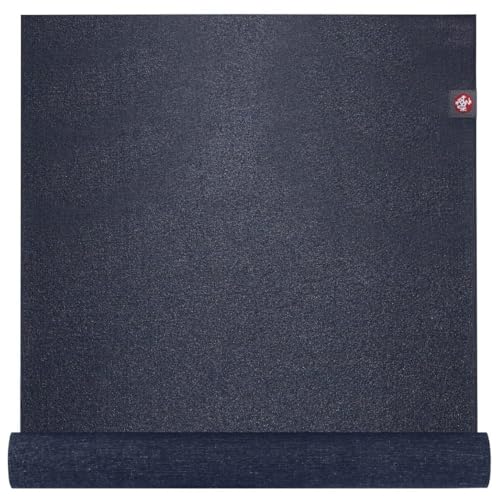
Manduka eKO Superlite Travel Yoga Mat
This foldable natural rubber mat packs down small yet keeps the grippy bottom that helps it stay anchored on smooth surfaces. Reviewers note it works best laid over another mat or a rug, but on its own the rubber base still holds better on wood than typical thin travel mats.
Best for: Travelers who still want rubber grip on a wood floor away from home
- Folds flat and travels easily
- Natural rubber grips better than foam travel mats
- Lightweight at around two pounds
- Thin at under 2mm, so little joint cushion
- Best used as a topper rather than a standalone on wood
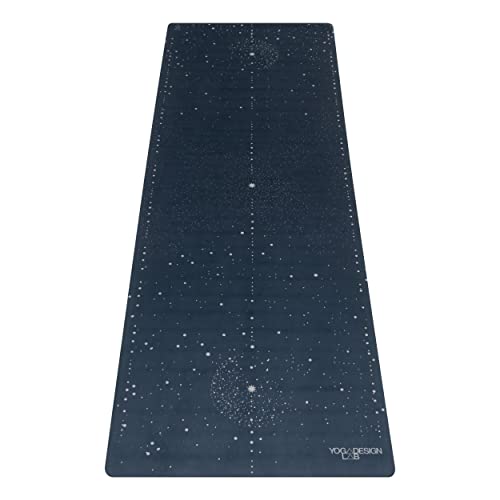
Yoga Design Lab Combo Mat
The natural rubber base sits silently and firmly on hardwood, avoiding the squeaks and sliding that come with foam mats. Owners say the built-in microfiber towel top stays grippy when wet and the rubber underside keeps the whole mat planted through flowing sequences.
Best for: Apartment practitioners who want a no-shift, no-squeak setup on wood
- Rubber base is quiet and stable on wood
- Towel top means no separate yoga towel needed
- Vivid printed designs
- Microfiber top can feel slick until you build a little sweat
- Needs full air-drying after sweaty sessions
Frequently asked questions
Why do yoga mats slide on hardwood floors?
Smooth, sealed wood offers very little friction, so a mat with a slick or lightweight backing has nothing to grip. Mats with a smooth PVC or TPE underside are the worst offenders, while dense rubber bottoms and heavier mats stay anchored much better.
What thickness is best for practicing on a hard wood floor?
Around 5mm to 6mm is the sweet spot for hardwood. It cushions your knees, wrists, and spine against the hard surface while still keeping you stable for standing and balance poses. Very thin travel mats leave you feeling every contact point with the floor.
Will a yoga mat scratch or damage my hardwood floor?
A clean, smooth rubber or closed-cell mat will not scratch a finished floor. The bigger risks are trapped grit underneath, which can act like sandpaper, and a few cheaper sticky mats that may leave residue. Sweep the area first and wipe the mat bottom periodically.
Do I need a rug or pad under my mat on wood?
Not with a grippy rubber-based mat, which should stay put on its own. If you choose a lightweight foam or budget mat that creeps, placing it on a low-pile rug or adding a thin non-slip pad underneath solves the sliding problem.
Are natural rubber or PVC mats better for hardwood?
Natural rubber generally grips wood better because the material bites into the smooth surface. PVC mats can work if they are dense and heavy, like the Manduka PRO, but lightweight PVC and TPE mats tend to slide more on polished planks.
The verdict
For most people practicing on hardwood, the Manduka PRO is our overall winner because its dense, heavy build stays planted on wood and protects the finish while lasting for years. If you run hot and want grip that improves as you sweat, reach for the Liforme Original instead. Shoppers watching their budget should look at the Gaiam Essentials Thick Mat and simply add a non-slip pad if it tries to wander.