For most low-ceiling garages and basements, the Titan Fitness T-3 Series Short Power Rack is our overall winner thanks to its sub-83-inch height and proven stability. If you need an even shorter footprint, the REP Fitness PR-1100 in the 80-inch trim is the smarter call.

Titan built this short version of the popular T-3 specifically for rooms where a standard 91-inch rack will not clear, landing under 83 inches tall while keeping the same eleven-gauge steel and three-by-three uprights. Owners consistently note that the lower height does not cost them stability when
Check price on AmazonIf your ceiling sits anywhere near eight feet, you already know the frustration. You find a rack you love, then read the spec sheet and realize it stands taller than your room, or worse, you buy one and discover you cannot rack a barbell overhead without scraping drywall. Low-ceiling lifting is a real constraint, and the wrong purchase means a return shipment that costs more than the savings.
We did not bolt these racks down and load them ourselves, so we are not going to pretend otherwise. What we did was dig through manufacturer height specs, measure the real overhead clearance you lose during a press, and read through hundreds of owner reviews from people lifting in basements, garages with low joists, and apartments. Below are seven racks that genuinely fit short spaces, ranked by how well they balance height, stability, and value.
What to look for
The number that matters most is total rack height, but the number that actually keeps you safe is overhead pressing clearance. A rack might be 80 inches tall, yet once you stand on the platform and press a bar overhead you need roughly another 18 to 24 inches above the top of the rack. Measure your ceiling, subtract your standing reach with a bar overhead, and shop from there. Many short racks let you flip the pull-up bar inward or skip it entirely to reclaim a few inches.
After height, look at hole spacing, upright gauge, and footprint. Westside spacing through the bench and pull range helps you dial in safeties at a low ceiling where you cannot rely on a high pull-up bar for stability. Eleven or twelve gauge steel with two or three inch uprights is plenty for home loads. Finally, confirm whether the unit needs bolting down, since shorter racks lose some of the leverage stability that tall ones get, and a wide base or floor anchors make a big difference for heavy work.
The top picks, compared
| Product | Best for | Rating | |
|---|---|---|---|
| Titan Fitness T-3 Series Short Power Rack Best Overall | Most garage and basement lifters with ceilings around eight feet | ★ 4.7/5 | Check price |
| REP Fitness PR-1100 Power Rack Best Value | Lifters who want REP build quality at a short height without overspending | ★ 4.6/5 | Check price |
| Fitness Reality 810XLT Super Max Power Cage Best Budget | First rack on a tight budget in a low, narrow space | ★ 4.3/5 | Check price |
| Rogue RML-390F Flat Foot Monster Lite Rack Best Premium | Serious lifters who want Rogue quality and can order the shorter height | ★ 4.8/5 | Check price |
| Sunny Health & Fitness Power Zone Power Cage Best for Beginners | New lifters who want a simple, forgiving cage in a small room | ★ 4.2/5 | Check price |
| PRx Performance Profile PRO Folding Squat Rack Best Compact | Tiny garages where the rack must fold flat against the wall | ★ 4.6/5 | Check price |
| Titan Fitness X-3 Series Short Power Rack Best Quiet | Lifters who want minimal rattle and a rock-solid short cage | ★ 4.5/5 | Check price |
Titan Fitness T-3 Series Short Power Rack
Titan built this short version of the popular T-3 specifically for rooms where a standard 91-inch rack will not clear, landing under 83 inches tall while keeping the same eleven-gauge steel and three-by-three uprights. Owners consistently note that the lower height does not cost them stability when the rack is bolted down, and the Westside hole spacing through the working range makes setting safeties precise even without a tall pull-up bar.
Best for: Most garage and basement lifters with ceilings around eight feet
- Sub-83-inch height clears most eight-foot ceilings with room for the bar
- Heavy eleven-gauge, three-by-three steel rated well above typical home loads
- Huge ecosystem of compatible attachments and a strong owner reputation
- Should be bolted to the floor for confident heavy lifting
- Pull-up bar height is limited, so taller users may need to flip it or skip it
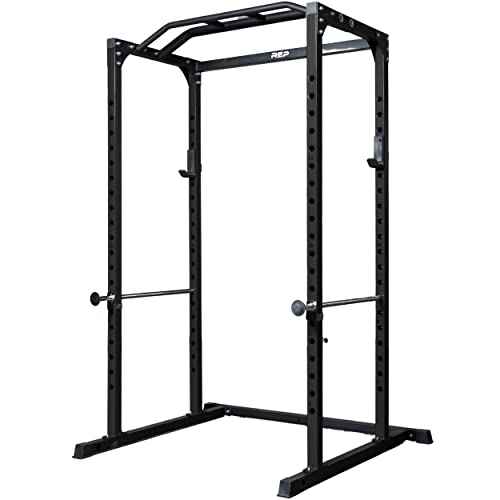
REP Fitness PR-1100 Power Rack
The PR-1100 ships in a shorter 80-inch trim that REP markets directly to low-ceiling buyers, and it pairs that height with the brand's reputation for clean welds and a smooth powder coat. It is a two-by-three rack rather than three-by-three, which keeps the price and weight down while still handling the loads most home lifters will ever put on it.
Best for: Lifters who want REP build quality at a short height without overspending
- 80-inch height option is one of the friendliest for tight rooms
- Includes safety bars and J-cups in the base package
- Strong owner reviews on fit, finish, and customer support
- Two-by-three uprights feel less beefy than premium three-by-three racks
- Attachment selection is narrower than the larger PR series

Fitness Reality 810XLT Super Max Power Cage
At a compact height with an adjustable two-piece design, the 810XLT is one of the few sub-200-dollar-class cages that owners actually report fitting under low basement ceilings. The high weight capacity for the price and the included accessories make it a sensible entry point, as long as you respect its lighter steel.
Best for: First rack on a tight budget in a low, narrow space
- One of the shortest and most affordable cages you can buy
- Generous stated weight capacity and bundled add-ons
- Bolt-together design ships and stores in a small space
- Lighter gauge steel shows more flex under heavy loads
- Tolerances and hardware are not at the level of premium brands
Rogue RML-390F Flat Foot Monster Lite Rack
Rogue offers the RML-390F in a shorter height configuration, and its flat-foot design means you can run it without bolting into concrete, which matters in finished basements and rentals. The Monster Lite hole pattern, eleven-gauge three-by-three steel, and Rogue's finish quality put this at the top for anyone who wants a rack that will outlast several home gyms.
Best for: Serious lifters who want Rogue quality and can order the shorter height
- Flat-foot base runs stable without floor anchors
- Monster Lite compatibility opens a massive attachment library
- Build quality and finish owners describe as best in class
- Costs noticeably more than the rest of this list
- Even the short option is tall, so confirm clearance before ordering
Sunny Health & Fitness Power Zone Power Cage
This cage keeps things straightforward with clearly labeled holes, included J-hooks and safety bars, and a height that owners report works in lower garages. It is not a rack for chasing maxes, but for learning the squat, bench, and overhead press safely it covers the basics without overwhelming a first-time buyer.
Best for: New lifters who want a simple, forgiving cage in a small room
- Beginner-friendly setup with everything needed to start
- Compact height suits lower ceilings
- Affordable and widely available
- Modest weight capacity limits long-term progression
- Steel and welds are entry-level, not for advanced loads

PRx Performance Profile PRO Folding Squat Rack
The Profile PRO folds to just a few inches from the wall, so a low-ceiling space that also lacks floor room can still host a serious rack and barbell. Owners with shared garages praise how it disappears between sessions, and the three-by-three steel handles heavy work when deployed.
Best for: Tiny garages where the rack must fold flat against the wall
- Folds nearly flat to free up the whole room
- Strong three-by-three construction for a wall unit
- Pull-up bar height is set by your mounting, helping with low ceilings
- Requires solid wall studs and a careful install
- It is a half-style fold rack, not a full four-post cage

Titan Fitness X-3 Series Short Power Rack
The X-3 short version steps up to eleven-gauge steel with tight tolerances, and owners frequently mention how little it rattles or shifts compared with lighter cages. Bolted down in a low basement, it gives the planted, quiet feel that keeps both your lifts and your downstairs neighbors happy.
Best for: Lifters who want minimal rattle and a rock-solid short cage
- Tight tolerances mean very little rattle or movement
- Short height built for low ceilings with heavy-duty steel
- Shares the broad Titan attachment ecosystem
- Heavier and pricier than the T-3 short version
- Best performance still requires bolting to the floor
Frequently asked questions
How much ceiling height do I really need for a power rack?
Beyond the rack's listed height, plan for another 18 to 24 inches of clearance so you can press a barbell overhead safely. An eight-foot ceiling pairs well with a rack under 83 inches tall, but always measure your own standing overhead reach with a bar to be sure.
Can I use a short power rack for overhead pressing?
Yes, but you press inside the cage where clearance is tightest. Stand under your ceiling with an empty bar and run through the full press before loading up. If you scrape, a shorter rack or a seated press variation will keep you safe.
Do I have to bolt a short rack to the floor?
Many shorter racks lose some of the natural stability that tall racks get from their height, so bolting down is strongly recommended for heavy work. Flat-foot designs like Rogue's are the main exception and can run unanchored on a level floor.
What about the pull-up bar on a low ceiling?
The pull-up bar is usually the tallest point and the first thing that limits clearance. Several racks let you mount the bar lower or flip it inward, and some short cages let you skip it entirely if you would rather have the headroom.
Is a folding rack a good idea for a low, small space?
If your room is short and tight on floor space, a wall-mounted folding rack like the PRx Profile PRO can be ideal because it stows flat and lets you set the pull-up bar height yourself. It does require solid wall studs and a careful install.
The verdict
For the widest range of low-ceiling garages and basements, the Titan Fitness T-3 Series Short Power Rack is our overall winner, balancing a sub-83-inch height with heavy-duty steel and a deep attachment ecosystem. If your room is also tight on floor space, the PRx Performance Profile PRO folding rack stows flat against the wall, while budget-focused first-timers will be well served by the Fitness Reality 810XLT Super Max.