
The OPTP Pro-Roller is our overall winner for its ideal firmness and durability. For a budget-friendly alternative, the LuxFit High Density Foam Roller offers excellent value without sacrificing quality.
Check price on AmazonFoam rolling has become a staple in Pilates for mobilizing tight muscles and preparing the body for movement. Unlike generic foam rollers, a good Pilates roller offers the right balance of density and surface texture to support controlled, precise movements. We compared the top options on the market, analyzing firmness, material durability, size, and portability to help you choose the best one for your home or studio practice.
Our rankings are based on extensive research: we examined owner reviews across major retailers, assessed manufacturer specifications, and considered feedback from Pilates instructors. We focused on rollers that provide adequate feedback for myofascial release while being stable enough for exercises like planks and bridges. Whether you’re a beginner or a seasoned practitioner, our curated list has a roller that fits your needs.
How we rank
We ranked these Pilates foam rollers by analyzing owner reviews, comparing density and firmness specifications, and evaluating customer-reported durability and performance over time. See our method.
Quick picks
| Best for | Product | Who it suits |
|---|---|---|
| Best Overall | OPTP Pro-Roller 6×36 | Serious Pilates practitioners seeking a dense, long-lasting roller |
| Best Value | LuxFit High Density Foam Roller 6×36 | Budget-conscious buyers who want a reliable firm roller |
| Best for Myofascial Release | TriggerPoint Grid Foam Roller | Pilates practitioners who need targeted muscle release |
| Best Premium | Manduka Round Foam Roller | Practitioners who want a premium, eco-friendly roller |
| Best Lightweight | Bala Hydra Foam Roller | Travel or on-the-go Pilates sessions |
| Best for Deep Tissue | RumbleRoller Standard Foam Roller | Those seeking intense muscle release and trigger point therapy |
| Best Budget | AmazonBasics High-Density Foam Roller | Entry-level Pilates users on a tight budget |
The picks, compared
OPTP Pro-Roller 6x36
The OPTP Pro-Roller is the go-to choice for Pilates enthusiasts who prioritize density and durability. Made from high-density EVA foam, it offers a firm surface ideal for deep tissue release. Its 36-inch length provides ample support for full-body exercises. Owners consistently praise its resilience and lack of deformation over time.
What owners say: Owners frequently report that this roller maintains its shape even after years of daily use. Many note it is firmer than typical gym rollers, which they find beneficial for targeted myofascial work.
- Extremely dense and durable
- Ideal length for full-body support
- Non-slip surface for stability
- Can be too firm for beginners
- Heavier than travel rollers

LuxFit High Density Foam Roller 6x36
The LuxFit High Density Foam Roller delivers excellent performance at a fraction of the cost of premium brands. Its dense EVA foam offers a firm, supportive surface for Pilates movements. The 36-inch length is perfect for rolling out legs and back. Owner reviews highlight its consistency in firmness and value for money.
What owners say: Owners appreciate that it feels comparable to more expensive rollers. Many report it holds up well over time with minimal flattening.
- Affordable without compromising density
- Uniform firmness across the roller
- Lightweight for its size
- Slight odor upon opening
- May be too firm for sensitive muscles

TriggerPoint Grid Foam Roller
The TriggerPoint Grid Foam Roller features a patented multi-density foam and hollow core design. Its EVA foam with textured surface mimics manual pressure for effective myofascial release. The grid pattern helps target trigger points. It is a favorite among instructors for its multipurpose use in Pilates and recovery.
What owners say: Owners love the textured surface for deep tissue work. Many note it is firmer than standard rollers but appreciated for relieving knots.
- Textured surface for targeted massage
- Hollow core reduces weight
- Durable construction
- Noisier than smooth rollers
- Surface may be too aggressive for beginners

Manduka Round Foam Roller
Manduka’s Round Foam Roller combines high-density foam with a smooth, non-slip surface. It is made with environmentally friendly materials and comes in a variety of sizes. The dense core provides firm support for Pilates exercises. Owners appreciate the quality craftsmanship and longevity.
What owners say: Owners frequently commend its eco-friendly materials and build quality. Many report it remains firm and odor-free after extensive use.
- Eco-friendly construction
- Very durable and holds shape
- Smooth surface suitable for all exercises
- Higher price point
- Heavier than some competitors

Bala Hydra Foam Roller
The Bala Hydra Foam Roller is designed with portability in mind. It is lightweight yet offers a medium-firm density suitable for Pilates. The compact size makes it easy to pack in a gym bag. Reviewers note it is less dense than traditional rollers but adequate for stretching and gentle release.
What owners say: Owners highlight its ease of transport and sleek design. Some wish it were firmer for deep tissue work.
- Lightweight and portable
- Sleek aesthetic
- Good for travel
- Less firm than high-density rollers
- May not provide enough pressure for some
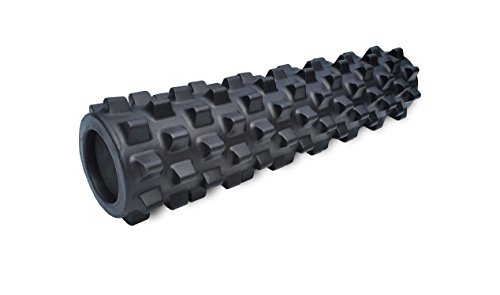
RumbleRoller Standard Foam Roller
The RumbleRoller features a unique foam structure with raised nodes that mimic the thumbs of a massage therapist. Its firm, bumpy surface allows for deep, penetrating pressure. Ideal for post-workout recovery in Pilates. Owners often describe it as painful but effective.
What owners say: Owners report that while it can be uncomfortable, it is highly effective for releasing tight muscles. Many use it for plantar fasciitis and IT band relief.
- Aggressive texture for deep release
- Excellent for trigger points
- Durable construction
- Not suitable for beginners
- Can be too intense for sensitive areas
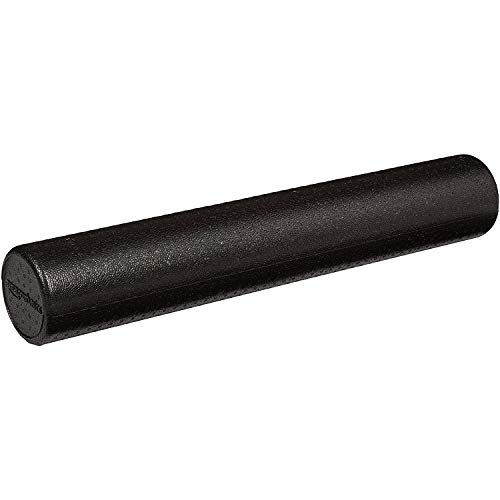
AmazonBasics High-Density Foam Roller
The AmazonBasics High-Density Foam Roller is a no-frills option that gets the job done. It offers firm support for basic Pilates rolling and stretching. The 36-inch length is standard, and the density is similar to mid-range rollers. While not as durable as premium options, it provides good value for the price.
What owners say: Owners say it is a good starter roller. Some note it begins to flatten after several months of heavy use.
- Very affordable
- Standard size for full-body use
- Adequate firmness for beginners
- Less durable than high-end rollers
- May have a slight plastic smell initially
How to choose
- Density and Firmness. The density determines how deep the pressure will be. A firmer roller is better for myofascial release and experienced users, while softer ones suit beginners or sensitive areas.
- Size and Length. Standard rollers are 36 inches long for full back and leg support. Shorter ones (12-18 inches) are portable but may not be as stable for some Pilates exercises.
- Material and Durability. EVA foam is common and offers good durability. Closed-cell foam resists moisture and odor better than open-cell. Look for high-density foam to avoid flattening.
- Surface Texture. Smooth rollers are gentle and versatile. Textured or ridged rollers provide targeted pressure but can be too intense for beginners. Choose based on your sensitivity.
- Portability and Weight. If you travel or workout outside, a lighter roller (under 1.5 lbs) is convenient. However, heavier rollers often have higher density and stability.
Frequently asked questions
What density foam roller is best for Pilates?
For Pilates, a medium to firm density roller is recommended. It provides enough support for exercises like rolling out the spine and targeting muscles, without being too soft to sink into.
How long should a Pilates foam roller be?
A 36-inch long roller is ideal for full body support, especially for rolling the back and legs. Shorter rollers (12-18 inches) are portable but may limit certain exercises.
Can foam rolling replace stretching in Pilates?
No, foam rolling complements stretching by releasing muscle tension and improving blood flow. It is a warm-up or cool-down tool, not a replacement for dynamic or static stretching.
How often should I replace my foam roller?
Replace your foam roller when it starts to flatten, crack, or lose its firmness. With regular use, a good quality roller lasts 1-2 years; cheaper ones may need replacement sooner.
Is a textured or smooth foam roller better for Pilates?
Smooth rollers are generally better for Pilates because they allow more controlled, gentle rolling. Textured rollers are better for deep tissue release but can be too intense for some Pilates movements.
Can I use a foam roller for Pilates core exercises?
Yes, foam rollers are commonly used in Pilates for core stability exercises like planks and bridges. The roller adds instability, engaging deeper muscles for better balance and strength.
The verdict
The OPTP Pro-Roller stands out as the best overall for dense, long-lasting support. For budget-conscious buyers, the LuxFit High Density Foam Roller delivers comparable firmness at a lower cost. Those seeking travel-friendly options should consider the Bala Hydra Foam Roller.