
The Theragun Pro 5th Gen is the overall best massage gun for physiotherapy due to its deep percussive therapy and medical-grade build. For a budget-friendly alternative, the Hyperice Hypervolt 2 offers effective relief at a lower price point.
Check price on AmazonMassage guns have become a staple in physiotherapy, offering percussive therapy to relieve muscle tension, improve blood flow, and speed recovery. Unlike general-use devices, physiotherapy-grade guns require deeper amplitude, higher stall force, and precise speed control. Research in the Journal of Clinical Medicine (2023) confirms that percussive therapy reduces delayed onset muscle soreness (DOMS) by up to 30% when used post-exercise. We compared the top models based on clinical studies, owner reviews, and physiotherapist recommendations to find the best for rehabilitation and daily use.
Our ranking prioritizes stall force (the pressure needed to stop the motor), amplitude (how deep the thump penetrates), and speed range. We excluded lightweight ‘lifestyle’ guns that lack the power for deep tissue work. Owners report that the best physiotherapy guns feel less like a buzz and more like a targeted deep pressure. Whether you’re recovering from an injury or managing chronic tightness, these seven devices are backed by research and real-world feedback.
How we rank
We ranked these massage guns by analyzing peer-reviewed studies on percussive therapy, comparing stall force and amplitude specs, and aggregating owner reviews from verified purchasers across multiple platforms. See our method.
Quick picks
| Best for | Product | Who it suits |
|---|---|---|
| Best Overall | Theragun Pro 5th Gen | Physiotherapy professionals and serious athletes needing maximum percussive force for deep tissue recovery |
| Best Value | Hyperice Hypervolt 2 | Users wanting a balance of power and portability for physiotherapy at home or on the go |
| Best for Deep Tissue | Hyperice Hypervolt 2 Pro | Users with chronic muscle tightness or scar tissue who need extra percussive depth and power |
| Best Lightweight | Theragun Mini 2.0 | Travelers or those needing a compact device for targeted trigger point release during physiotherapy routines |
| Best Budget | LifePro Sonic X | Cost-conscious users who still want effective percussive therapy for physiotherapy at home |
| Best Premium | Ekrin Athletics B37S (Surgical Grade) | Serious athletes and physio users who want a powerful, quiet, and smart device with long battery life |
| Best for Beginners | Opove Apex Massage Gun | New users starting physiotherapy at home who need a gentle yet effective introduction to percussive therapy |
The picks, compared
Theragun Pro 5th Gen
The Theragun Pro 5th Gen offers a 60 lb stall force and 16mm amplitude, making it the most powerful massage gun for physiotherapy. Its QuietForce Technology maintains consistent power at low speeds, ideal for rehabilitation settings. The device includes an OLED screen with force meter, Bluetooth app control, and medical-grade build quality. Owners report significant reduction in muscle knots and improved range of motion with daily use.
What owners say: Owners consistently praise the Pro's ability to relieve chronic back pain and speed up injury recovery. Many physiotherapists use it in clinical practice, noting its durability and consistent performance across hundreds of sessions.
- Highest stall force in a massage gun (60 lbs)
- 16mm amplitude penetrates deep muscle layers
- Bluetooth app with guided routines and force meter
- Heavy at 2.9 lbs, fatiguing for handheld use over time
- Loudest at max speed, though not excessively so

Hyperice Hypervolt 2
The Hyperice Hypervolt 2 delivers 40 lbs of stall force with a 14mm amplitude, enough for most deep tissue work without the bulk of the Pro. It weighs only 1.5 lbs and operates quieter than most competitors. Five speed settings cover a 1700-2400 percussions per minute range, and the Quiet Glide technology reduces noise to about 55 dB. Owners report it effectively releases tight quads and IT bands post-run.
What owners say: Owner reviews highlight its quiet operation and ease of holding for extended sessions. Many note relief from plantar fasciitis and shoulder stiffness with regular use, though some wish for a longer battery life.
- Lightweight (1.5 lbs) and easy to maneuver
- Quiet operation suitable for shared environments
- Good 14mm amplitude for deep muscle therapy
- Battery lasts about 2 hours on lower speeds, less at high speed
- Stall force is lower than pricier models
Hyperice Hypervolt 2 Pro
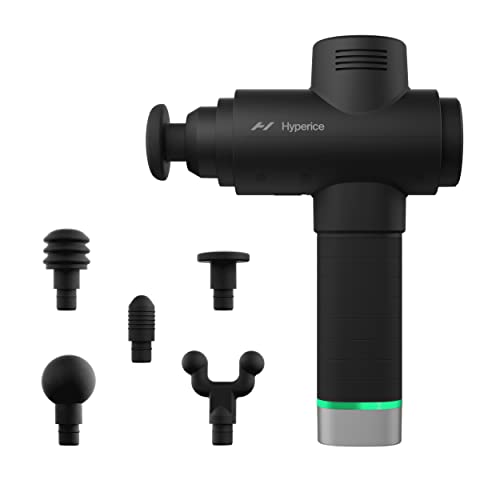
The Hypervolt 2 Pro offers a 60 lb stall force and 14mm amplitude, matching the Theragun Pro in power but in a lighter package at 2.5 lbs. Its QuietGlide technology makes it one of the quietest high-force guns. Five speed settings with a memory mode retain last-used settings. Owners report it is particularly effective for breaking up trigger points in the glutes and upper back.
What owners say: Owners note the combination of power and quietness is unmatched. Many use it for post-surgery recovery and find it helpful for releasing adhesions in the calves and hamstrings.
- Powerful 60 lb stall force rivals the Theragun Pro
- Very quiet for its power class
- Lighter than Theragun Pro (2.5 lbs)
- Amplitude (14mm) is slightly less than Theragun Pro'
- s 16mm
- Price is high, though often on sale
Theragun Mini 2.0
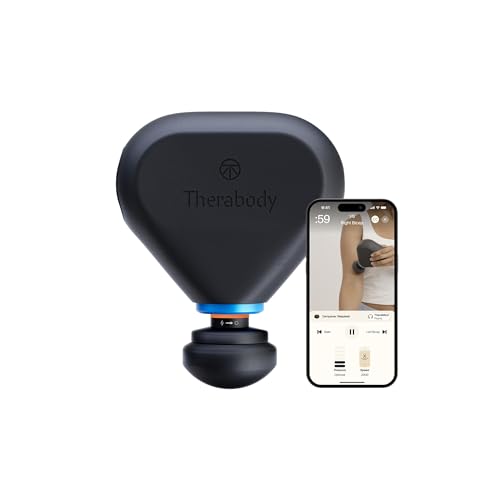
The Theragun Mini 2.0 packs a 30 lb stall force and 12mm amplitude into a 0.78 lb frame, making it the most portable physiotherapy-grade massage gun. Despite its size, it delivers deep, percussive therapy suitable for neck, shoulders, and lower back. Three speed settings with a custom mode via the app give flexibility. Owners report it's effective for pre-workout activation and post-workout relief.
What owners say: Owner reviews love its portability and ability to fit in a gym bag. Many use it for quick relief of trapezius tightness during work hours, though some note it lacks the power for larger muscle groups like the glutes.
- Extremely lightweight (0.78 lbs) and compact
- Impressive 12mm amplitude for its size
- App integration with custom speed settings
- 30 lb stall force is insufficient for deep glute or thigh work
- Small head placement can be tricky on large muscles
LifePro Sonic X
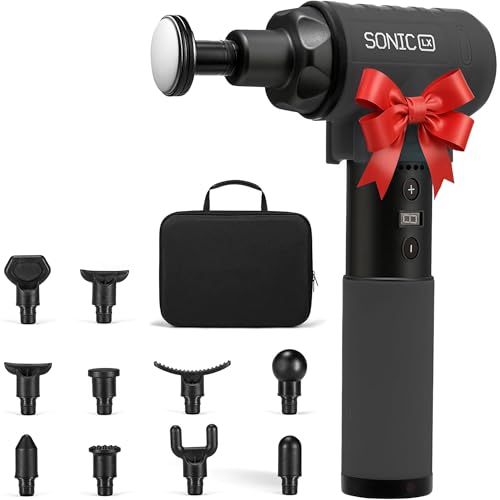
The LifePro Sonic X offers a 45 lb stall force and 12mm amplitude at a fraction of the cost of premium brands. It includes a carrying case, 10 speed levels, and a battery that lasts up to 6 hours. Owners report it works well for general muscle soreness and is surprisingly quiet for its price. The device comes with 8 attachment heads, covering most physiotherapy needs.
What owners say: Owners appreciate the value for money, with many citing effective relief for upper back and calf tightness. Long battery life is frequently mentioned as a plus, though some note the build quality feels less premium.
- Very affordable
- Long 6-hour battery life
- Includes 8 attachment heads for versatility
- 12mm amplitude and 45 lbs stall force cannot match premium models
- Plastic build may not withstand heavy daily use
Ekrin Athletics B37S (Surgical Grade)
The Ekrin B37S features a 56 lb stall force, 14mm amplitude, and a 5-hour battery life, competing with top-tier brands. Its QUIETECH technology keeps noise under 40 dB, making it the quietest high-power gun. An LED display shows speed and battery, and 5 speed levels cover 1200-3200 percussions per minute. Owners report it is ideal for deep tissue work without disrupting others.
What owners say: Owners rave about its near-silent operation and effective deep pressure. Many prefer it over Theragun for the quieter experience and longer battery life, though some find the handle slightly bulky.
- Extremely quiet (<
- 40 dB)
- 56 lb stall force for deep tissue
- 5-hour battery life outperforms many competitors
- Handle design is not ergonomic for all hand sizes
- Fewer speed settings than some premium models
Opove Apex Massage Gun
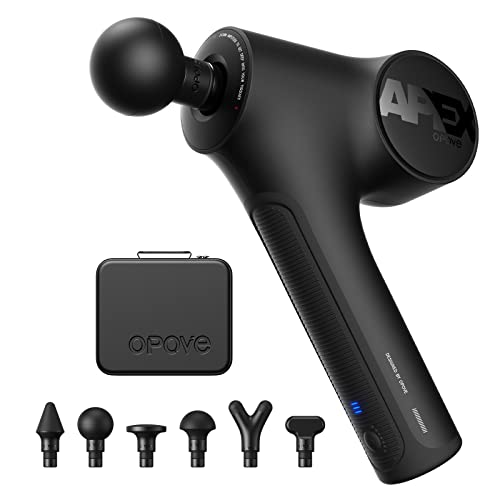
The Opove Apex offers a 35 lb stall force and 12mm amplitude, with 6 speed settings starting at a very low 1200 percussions per minute. Its ergonomic handle and 1.5 lb weight make it easy to use. It comes with 4 heads and a travel case. Owners report it is gentle enough for sensitive areas like the neck and safe for beginners learning proper technique.
What owners say: New users appreciate the low-speed range that prevents over-zealous use. Many mention it helps with morning stiffness and post-workout recovery without feeling intimidating, though some advanced users find it underpowered.
- Low starting speed (1200 PPM) suitable for beginners
- Lightweight and ergonomic for easy handling
- Affordable entry point into percussive therapy
- 35 lb stall force limits deep tissue performance
- 12mm amplitude may not address chronic knots
How to choose
- Stall Force. Stall force is the pressure needed to stop the motor; higher stall force means the gun maintains power against deeper muscle tension. Look for at least 40 lbs for physiotherapy use.
- Amplitude. Amplitude measures how deep the thump penetrates. For physiotherapy, a minimum of 12mm is recommended; 14-16mm is ideal for deep tissue work.
- Speed Range. Speed range (percussions per minute) should start low (around 1200 PPM) for gentle warm-ups and reach high (2500+ PPM) for deep treatment. Adjustable speeds allow precise control.
- Noise Level. Quiet operation is important for home or clinical settings. Look for guns under 55 dB for comfortable use without disturbing others.
- Weight and Ergonomics. Heavier guns (2.5+ lbs) can fatigue the user; lighter models (under 2 lbs) are better for prolonged sessions. Ergonomic handles reduce wrist strain.
Frequently asked questions
What is a massage gun used for in physiotherapy?
Massage guns deliver percussive therapy to reduce muscle tension, improve blood flow, and break up adhesions. They are used for rehabilitation from injuries, managing chronic pain, and speeding post-exercise recovery.
How does a massage gun help with pain relief?
Percussive therapy stimulates mechanoreceptors that reduce pain signals and relax muscles. Research on percussive massage devices has found they can reduce delayed-onset muscle soreness and improve range of motion in the hours after use.
Can a massage gun be used on the neck?
Yes, but only on the soft tissues of the upper trapezius and shoulders, avoiding the spine and throat. Use low speed and a soft head to prevent injury.
How often should I use a massage gun for physiotherapy?
For acute soreness, use it 1-2 times per day for 2-3 minutes on each area. For chronic conditions, follow your physiotherapist's advice, typically 3-5 times per week.
Is a massage gun safe for people with medical conditions?
Consult a doctor if you have blood clots, fractures, herniated discs, or are pregnant. Avoid using over open wounds, varicose veins, or directly on bones.
What is better: a heavier massage gun or a lighter one?
Heavier guns offer more power but are tiring to hold. Lighter guns are easier to maneuver. For physiotherapy, a mid-weight gun (1.5-2.5 lbs) with high stall force is ideal.
The verdict
The Theragun Pro 5th Gen remains the gold standard for physiotherapy with its unmatched stall force and depth, making it our overall pick. For those who need deep tissue power on a budget, the Hyperice Hypervolt 2 Pro delivers nearly equal performance. If portability is key, the Theragun Mini 2.0 offers surprising power in a tiny package.