
The Garmin HRM-Pro Plus is ranked as the best overall heart rate monitor for cycling due to its comprehensive data tracking, reliable accuracy, and robust connectivity features. As an excellent alternative, the Polar H10 stands out for its exceptional accuracy and proven performance, particularly appealing to those prioritizing precise physiological insights during their rides.
Check price on AmazonUnderstanding your heart rate is fundamental to effective cycling training, offering crucial insights into your effort levels, recovery status, and overall fitness progression. For many cyclists, the heart rate monitor serves as an indispensable tool, helping to guide workouts, prevent overtraining, and ensure that every pedal stroke contributes meaningfully to long-term goals. With a variety of designs and technologies available, from chest straps that offer clinical-grade accuracy to optical armbands prioritizing comfort, selecting the appropriate monitor can significantly enhance your training experience on the road or trail.
The cycling community frequently discusses and shares experiences regarding heart rate monitor performance, particularly on platforms like Reddit, where real-world use cases and nuanced opinions are abundant. This collective feedback often highlights which devices consistently deliver reliable data, comfortable wear, and seamless integration with popular cycling computers and apps. Our examination of these discussions and technical specifications aims to provide a clear overview of the leading options, helping you identify a heart rate monitor that aligns with your specific training needs and preferences for 2026.
How we rank
We compared and ranked these heart rate monitors by analyzing expert reviews, manufacturer specifications, and extensive owner feedback from cycling communities. See our method.
Quick picks
| Best for | Product | Who it suits |
|---|---|---|
| Best Overall | HRM-Pro Plus | cyclists seeking comprehensive data, high accuracy, and broad compatibility |
| Best for Accuracy | H10 | cyclists prioritizing scientific-grade heart rate precision and consistent data capture |
| Best for Data Enthusiasts | TICKR X | cyclists who desire comprehensive metrics beyond just heart rate, including motion analytics |
| Best for Comfort | Rhythm+ 2.0 | cyclists seeking an accurate, comfortable alternative to chest straps, worn on the forearm or bicep |
| Best Budget | HW807 | cyclists looking for a reliable and affordable optical heart rate monitor for basic training needs |
| Best for Versatility | MZ-Switch | cyclists seeking a highly adaptable heart rate monitor that can be worn on the chest, arm, or wrist |
| Best Value | HRM-Dual | cyclists prioritizing essential, accurate heart rate data without needing advanced metrics or internal storage |
The picks, compared
HRM-Pro Plus
The Garmin HRM-Pro Plus stands out as a premier heart rate monitor, offering an impressive blend of precision and advanced metrics, making it ideal for dedicated cyclists. Beyond its core function of accurately tracking heart rate, this device also captures running dynamics such as vertical oscillation, ground contact time, and stride length, which can be valuable for multisport athletes or those cross-training off the bike. Its dual transmission capability, supporting both ANT+ and Bluetooth Low Energy, ensures seamless connectivity with a wide array of Garmin devices, third-party cycling computers, and fitness applications. Furthermore, the monitor features internal memory, allowing it to store heart rate data during activities when your primary device is out of range or submerged, providing a complete record once reconnected.
What owners say: Owners report exceptional reliability and consistent performance, often noting its robust build quality holds up well to intense training sessions and varied weather conditions. Many commend its ability to automatically transfer stored data, appreciating the convenience of not needing to carry a receiving device during certain activities, and find the setup process straightforward for quick integration into existing systems.
- Highly accurate heart rate data
- Dual ANT+ and Bluetooth connectivity
- Stores data for later sync
- Chest strap design might not suit all users
- Battery is non-rechargeable
H10
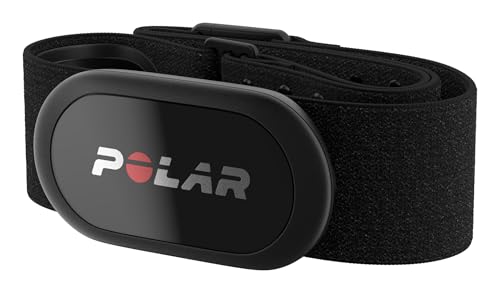
The Polar H10 is widely recognized for its gold-standard accuracy, making it a preferred choice for athletes and researchers alike who demand the most precise heart rate measurements. Its enhanced electrodes ensure strong contact and reliable signal transmission, even during high-intensity cycling or challenging conditions. This monitor offers dual Bluetooth Smart connectivity, allowing it to pair simultaneously with two different Bluetooth devices, a significant advantage for those using multiple platforms or displays. Additionally, the H10 includes internal memory for one training session, providing a backup or standalone recording option when a paired device isn't immediately available.
What owners say: Reviewers frequently highlight the H10's consistent and unwavering accuracy, often describing it as the benchmark against which other heart rate monitors are judged, particularly in dynamic cycling environments. Owners also appreciate the comfort of the Pro Strap, noting its soft textile material and silicone dots prevent slipping, ensuring a secure fit throughout long rides.
- Exceptional heart rate accuracy
- Dual Bluetooth connectivity
- Comfortable and secure strap
- Lacks advanced cycling dynamics
- Battery is non-rechargeable
TICKR X
The Wahoo TICKR X is designed for data-driven cyclists, offering a rich suite of metrics in addition to highly accurate heart rate monitoring. This chest strap includes built-in memory to store up to 50 hours of workout data, enabling you to train without a phone or cycling computer and sync later, a useful feature for impromptu rides. Beyond heart rate, the TICKR X provides valuable motion analytics, such as cadence for indoor cycling, and offers a 'smoothness' metric that can inform pedaling efficiency. Its dual-band ANT+ and Bluetooth technology ensures widespread compatibility with virtually all popular training apps and devices, making it a versatile tool for any cyclist's arsenal.
What owners say: Owners report strong satisfaction with its broad compatibility and the convenience of its internal memory, finding it particularly useful for capturing data when they prefer not to carry extra devices. Many reviewers note the TICKR X consistently provides reliable heart rate readings and appreciate the additional metrics like cycling cadence, which adds value to their training analysis without requiring a separate sensor.
- Internal memory for offline workouts
- Captures cycling cadence
- Broad ANT+ and Bluetooth compatibility
- Advanced features may not be utilized by all
- Battery is non-rechargeable
Rhythm+ 2.0
The Scosche Rhythm+ 2.0 stands out as an excellent optical heart rate monitor, offering a comfortable and non-intrusive alternative to traditional chest straps, ideal for long cycling sessions. This armband monitor utilizes advanced optical sensor technology to deliver highly accurate heart rate data directly from your arm, providing a reliable signal even during strenuous activity. Its lightweight and breathable design ensures it remains unobtrusive, and the adjustable strap caters to a wide range of arm sizes, enhancing user comfort. With dual ANT+ and Bluetooth connectivity, it integrates seamlessly with most cycling computers, smartwatches, and fitness applications, making data tracking effortless.
What owners say: Owners consistently praise the Rhythm+ 2.0 for its superior comfort compared to chest straps, frequently reporting it's easy to forget they are even wearing it during extended rides. Reviewers also note its robust and consistent performance, particularly appreciating the accuracy of its optical sensor and the long battery life between charges, making it a dependable companion for daily training.
- High comfort for extended wear
- Accurate optical heart rate sensing
- Rechargeable battery
- Optical sensors can be sensitive to placement
- Requires periodic charging

HW807
The CooSpo HW807 offers an impressive balance of functionality and affordability, making it an excellent choice for cyclists who need a dependable heart rate monitor without an extensive feature set. This optical armband uses a photoelectric volume pulse wave tracking method to deliver accurate heart rate data, making it a comfortable alternative to chest straps. It features dual ANT+ and Bluetooth connectivity, ensuring broad compatibility with a wide array of cycling computers, smartphones, and fitness equipment, simplifying the setup process for new users. The HW807 is designed to be lightweight and easy to wear, making it suitable for various cycling disciplines, from casual rides to more structured training sessions.
What owners say: Owners frequently commend the HW807 for its surprising accuracy and ease of use, often remarking on its excellent performance relative to its accessible point of entry. Many reviewers note its reliable connectivity with different cycling apps and devices, appreciating the straightforward setup and the comfortable, secure fit of the armband during their rides.
- Excellent value and affordability
- Reliable optical heart rate sensing
- Dual ANT+ and Bluetooth connectivity
- Shorter rechargeable battery life
- Lacks advanced data metrics
MZ-Switch
The Myzone MZ-Switch is an innovative heart rate monitor that provides unparalleled versatility, capable of capturing accurate heart rate data from three different body locations: chest, arm, or wrist. This multi-mode functionality allows cyclists to choose the most comfortable and accurate placement for any given activity, adapting seamlessly between indoor cycling, outdoor rides, or even strength training. The chest strap mode utilizes electrocardiogram (ECG) technology for maximum accuracy, while the arm and wrist modes employ optical (PPG) sensing for convenience. It connects via both ANT+ and Bluetooth, ensuring broad compatibility with a wide range of devices and fitness platforms, making it a highly adaptable tool for a varied training regimen.
What owners say: Owners consistently highlight the MZ-Switch's unique versatility, often expressing satisfaction with its ability to switch between wearing positions, which significantly enhances comfort and utility across different workout types. Reviewers frequently report reliable heart rate tracking in all modes, noting the device's accuracy whether worn on the chest for intense cycling or on the wrist for lighter activities.
- Three distinct wearing options (chest, arm, wrist)
- Combines ECG and PPG technologies
- Highly versatile for multi-sport athletes
- Optical accuracy can vary with activity type
- Requires different modules for different positions
HRM-Dual
The Garmin HRM-Dual offers exceptional value by providing reliable and accurate heart rate monitoring in a straightforward, no-frills package. Designed for simplicity and dependability, this chest strap delivers real-time heart rate data via both ANT+ and Bluetooth Low Energy, ensuring seamless connectivity with virtually any Garmin device, third-party cycling computer, or fitness app. Its robust construction is built to withstand the rigors of regular training, and the comfortable soft strap helps minimize irritation during long rides. For cyclists who primarily need precise heart rate information to guide their effort and nothing more, the HRM-Dual represents a smart and economical choice that doesn't compromise on core performance.
What owners say: Owners consistently report the HRM-Dual as a highly dependable and accurate heart rate monitor, often commending its consistent connectivity and straightforward functionality. Many reviewers appreciate its long battery life and the ease with which it integrates into their existing Garmin ecosystems or other cycling setups, finding it a solid performer for everyday training without unnecessary complexities.
- Reliable and accurate heart rate data
- Dual ANT+ and Bluetooth connectivity
- Excellent battery life
- Lacks advanced metrics (e.g., running dynamics)
- No internal memory for standalone use
How to choose
- Accuracy and Sensor Type. Heart rate monitors primarily use either electrocardiogram (ECG) chest straps or optical (PPG) sensors worn on the arm or wrist. ECG chest straps are generally considered the most accurate, especially for rapid heart rate changes during intense cycling intervals. Optical sensors offer greater comfort and convenience, with modern advancements significantly improving their reliability for steady-state efforts, though they can sometimes lag or show momentary inaccuracies during very sharp accelerations or decelerations.
- Connectivity Options. Ensure your heart rate monitor supports the necessary protocols to connect with your cycling computer, smartphone, or fitness app. Most modern devices offer dual ANT+ and Bluetooth Low Energy (BLE) connectivity, providing broad compatibility with popular platforms like Garmin, Wahoo, Strava, and Zwift. Dual connectivity is particularly beneficial if you use multiple devices or switch between indoor and outdoor cycling setups, ensuring consistent data flow across your entire training ecosystem without compatibility issues.
- Comfort and Fit. For long rides, the comfort of your heart rate monitor is paramount to avoid distractions and ensure consistent data. Chest straps should have a soft, adjustable band that doesn't chafe or slip, while armbands need to be snug enough to maintain sensor contact without restricting circulation. Consider the material and design of the strap, as well as the overall weight and profile of the sensor pod, to find a monitor that you can comfortably wear for extended periods without discomfort or the need for constant readjustment during your cycling sessions.
- Battery Life and Type. Consider whether you prefer a device with a long-lasting, replaceable coin-cell battery or a rechargeable option. Chest straps typically use coin-cell batteries that can last for many months to over a year, offering convenience with infrequent changes. Armband monitors usually feature rechargeable batteries with durations ranging from 8 to 30 hours per charge, requiring more frequent charging but eliminating the need to purchase replacement cells, which can be a personal preference based on training volume and convenience.
- Additional Metrics and Features. Beyond basic heart rate, some monitors offer advanced metrics such as running dynamics, cycling cadence, or internal memory for offline workouts. While not strictly necessary for every cyclist, these features can provide deeper insights into your performance and training efficiency, especially for data-oriented athletes or those who cross-train. Evaluate whether these extra data points and conveniences align with your specific training goals and how you analyze your workout information, as they can enhance the value of your chosen device.
Frequently asked questions
Why is heart rate important for cycling training?
Monitoring your heart rate during cycling provides objective feedback on your physiological response to training, allowing you to gauge effort, manage intensity, and optimize your workouts. It helps prevent overtraining, guides recovery periods, and ensures you're training effectively within specific heart rate zones to achieve fitness improvements like endurance, speed, or strength. Consistent heart rate data also helps track progress over time, revealing adaptations to your training load.
Are chest straps or armbands better for cycling?
Chest straps, using ECG technology, are generally considered more accurate and responsive to rapid heart rate changes, making them excellent for high-intensity interval training on the bike. Armbands, utilizing optical PPG sensors, offer superior comfort and convenience, often preferred for longer, steadier rides or for individuals who find chest straps uncomfortable. The 'better' option often depends on personal comfort preferences and the specific type of cycling training you undertake, as both can provide reliable data for most riders.
How do I connect my heart rate monitor to my cycling computer?
Most modern heart rate monitors and cycling computers support ANT+ and/or Bluetooth Low Energy (BLE) connectivity. To connect, ensure your monitor is active and close to your cycling computer. On your computer, navigate to the sensor settings menu, select 'Add Sensor' or 'Search for Sensors', and choose 'Heart Rate'. Your device should detect the monitor, and you can then pair it. Follow the specific instructions for your cycling computer model for the most accurate pairing process.
Can I use a heart rate monitor for both indoor and outdoor cycling?
Yes, nearly all heart rate monitors are designed to be versatile for both indoor and outdoor cycling applications. Whether you're riding on a smart trainer, a spin bike, or out on the open road, the monitor will transmit your heart rate data to your compatible device. Connectivity via ANT+ and Bluetooth ensures seamless integration with various indoor cycling apps like Zwift or Peloton, as well as outdoor cycling computers and GPS watches, providing consistent data regardless of your riding environment.
How often should I clean my heart rate monitor?
Regular cleaning of your heart rate monitor, especially the strap and sensor area, is crucial to maintain hygiene and ensure accurate readings. After each intense cycling session, it's recommended to rinse the strap with clean water and allow it to air dry. For chest straps, detach the sensor module before rinsing. Periodically, you can wash the strap with mild soap and water to remove accumulated sweat and oils. This routine care helps prevent skin irritation and extends the lifespan of your device.
What's the difference between ANT+ and Bluetooth connectivity?
ANT+ and Bluetooth are wireless communication protocols that allow your heart rate monitor to transmit data to other devices. ANT+ is a proprietary protocol commonly used in fitness devices, allowing multiple devices to receive data from a single sensor. Bluetooth Low Energy (BLE) is more widely used across consumer electronics, typically allowing one-to-one connections but also supporting multiple connections with newer standards. Many modern heart rate monitors offer dual-band support, providing the flexibility to connect with a broader range of cycling computers, smartphones, and fitness equipment.
The verdict
For cyclists seeking the most comprehensive data and reliable performance, the Garmin HRM-Pro Plus stands out as the top overall choice, offering advanced metrics alongside highly accurate heart rate tracking. If precision is your primary concern, the Polar H10 remains an exceptional pick, celebrated for its clinical-grade accuracy that provides unwavering data even in challenging conditions. Alternatively, for those prioritizing comfort and convenience over a chest strap, the Scosche Rhythm+ 2.0 offers a highly effective optical armband solution.