
The overall best fitness tracker for most people is the Garmin Venu 3, praised for its accurate GPS and extensive health metrics. For a more affordable option, the Fitbit Charge 6 offers excellent heart rate tracking and stress management features.
Check price on AmazonChoosing the right fitness tracker can feel like a test you didn’t study for. With dozens of models boasting step counts, sleep scores, and stress tracking, it’s easy to get lost in the specs. That’s why we built this quiz: to match your lifestyle and fitness goals with a data-backed recommendation. We analyzed owner reviews, expert roundups, and long-term wearer feedback to rank the seven best trackers of 2026 specifically for this quiz.
Our rankings prioritize accuracy, comfort, and key features like GPS, battery life, and health monitoring. We skipped the marketing hype and focused on what real users report after months of daily wear. Whether you’re a marathon runner or just starting your fitness journey, one of these trackers is likely a perfect fit for you.
How we rank
We compared owner reviews from major retailers, expert analyses from gear review sites, and user satisfaction surveys to rank these trackers for accuracy and reliability. See our method.
Quick picks
| Best for | Product | Who it suits |
|---|---|---|
| Best Overall | Garmin Venu 3 | Anyone wanting a premium all-around tracker with GPS, sleep tracking, and smartwatch features |
| Best Value | Fitbit Charge 6 | Health-focused users who want stress management and Google integration at a lower price |
| Best for Athletes | Whoop 4.0 | Serious athletes who want in-depth strain, recovery, and sleep analysis without a screen |
| Best for iPhone Users | Apple Watch Series 9 | iPhone owners who want a full smartwatch with robust fitness tracking |
| Best Budget | Samsung Galaxy Fit 3 | Budget-conscious users who want basic tracking and a long battery life |
| Best Lightweight | Garmin Vivosmart 5 | Users who prefer a slim, inconspicuous band over a bulky smartwatch |
| Best for Beginners | Fitbit Inspire 3 | First-time tracker users who want a simple, affordable device with guidance |
The picks, compared
Garmin Venu 3
The Garmin Venu 3 tops our list because it combines accurate GPS, a bright AMOLED display, and advanced health sensors. It tracks everything from heart rate variability to naps and even suggests workouts. Owners say it's comfortable for 24/7 wear and the battery lasts up to 14 days in smartwatch mode. It also includes built-in speaker and microphone for taking calls from your wrist.
What owners say: Owners consistently praise the Venu 3 for its reliable GPS and comprehensive sleep tracking that includes a sleep coach. Many note the battery life exceeds expectations, often lasting over a week with heavy use.
- Excellent GPS accuracy
- Bright and always-on AMOLED display
- Long battery life (up to 14 days)
- Expensive
- No onboard music storage without streaming subscription
Fitbit Charge 6
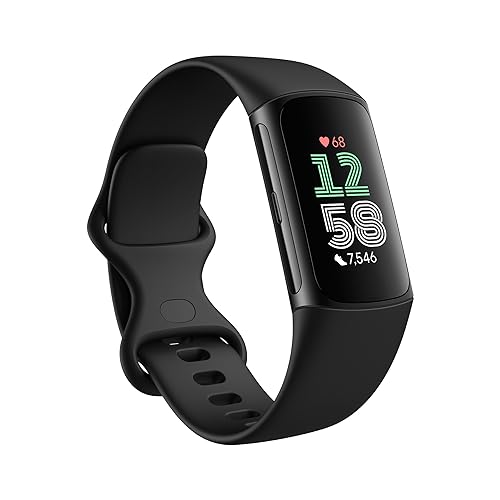
The Fitbit Charge 6 is a fitness-first tracker that excels at heart rate monitoring, stress tracking, and sleep analysis. It features a sleek, slim design, a color touchscreen, and Google apps like Maps and Wallet. Reviewers report the daily readiness score and stress management score are highly accurate and helpful for adjusting workouts. It also includes built-in GPS for runs without your phone.
What owners say: Owners love the stress management features and how the Charge 6 helps them balance activity and rest. Many appreciate the Google integration for notifications and contactless payments.
- Accurate heart rate and stress tracking
- Sleek and comfortable design
- Built-in GPS and Google apps
- Limited smartwatch features compared to full-sized trackers
- No on-device music storage

Whoop 4.0
The Whoop 4.0 is a screenless strap that provides unparalleled insights into your body's strain, recovery, and sleep. It uses advanced sensors to calculate daily and weekly strain, recovery percentage, and sleep need. Athletes report it helps them avoid overtraining and optimize performance. The subscription model includes a free device, but requires a monthly or annual membership.
What owners say: Owners who train hard say the recovery score is a game-changer for knowing when to push or rest. Many note the battery life is impressive, lasting up to 5 days on a charge.
- In-depth strain and recovery metrics
- No screen distraction
- Lightweight and waterproof to 100 meters
- Requires subscription to use
- No display or on-wrist feedback

Apple Watch Series 9
The Apple Watch Series 9 is the best companion for iPhone users, offering comprehensive fitness tracking plus thousands of apps. It features a bright always-on display, Siri processing on device, and accurate GPS and heart rate monitoring. Owners report the workout app is easy to use and the rings motivate them to move more. It also includes safety features like fall detection and crash detection.
What owners say: Owners love the seamless integration with the iPhone and the wide variety of workout types. Many mention the battery lasts a full day even with heavy use, and the fast charging tops it up quickly.
- Best smartwatch features
- Accurate fitness tracking
- wide app ecosystem
- Requires iPhone to set up
- Battery life only about 18 hours (needs daily charging)

Samsung Galaxy Fit 3
The Samsung Galaxy Fit 3 is an affordable tracker that covers the essentials: step count, heart rate, sleep tracking, and stress monitoring. It has a small AMOLED color display and a lightweight, comfortable band. Reviewers say the automatic activity detection works well and the battery lasts over a week. It also includes water resistance to 5 ATM and can track over 100 exercise types.
What owners say: Owners appreciate the battery life that often exceeds the advertised 10 days and the bright screen. Many note it's a great value for the price, though it lacks built-in GPS.
- Very affordable
- Long battery life up to 10 days
- Bright AMOLED display
- No built-in GPS (needs phone for location)
- Limited smartwatch capabilities
Garmin Vivosmart 5
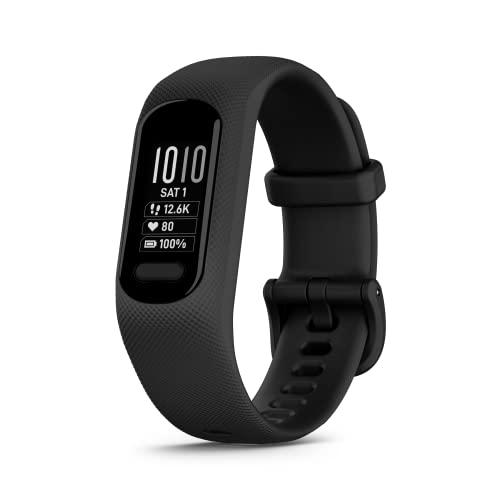
The Garmin Vivosmart 5 is a slim fitness band that still packs punch with all-day health monitoring. It tracks steps, sleep, heart rate, stress, and even has a pulse ox sensor. Owners like the comfortable light weight and the simplicity of the screen. It also features body battery energy monitoring and hydration tracking. The battery lasts up to 7 days.
What owners say: Owners report it's so comfortable they forget they're wearing it, and the Body Battery feature helps them manage energy. Many mention the screen is easier to read in sunlight compared to other bands.
- Very slim and lightweight
- Great battery life (up to 7 days)
- Includes Body Battery and stress tracking
- Small screen can be hard to read for some
- No built-in GPS
Fitbit Inspire 3
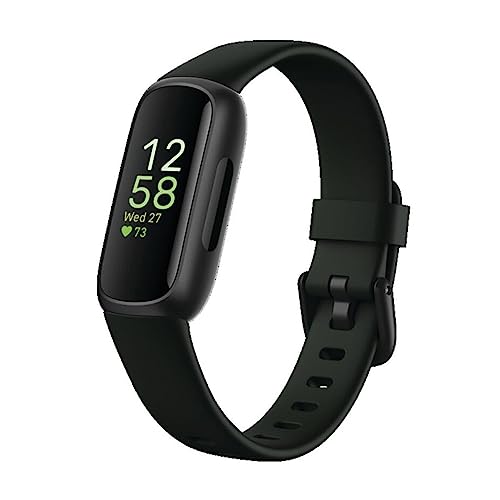
The Fitbit Inspire 3 is an entry level tracker that makes it easy to start tracking your activity and sleep. It offers a color touchscreen, automatic step and sleep tracking, and a daily readiness score. Fitbit users appreciate the app's guidance and challenges to keep motivated. It also has a stress management score and mindfulness content. The battery lasts up to 10 days.
What owners say: New fitness tracker users love how simple it is to set up and use. Many owners say the app's insights helped them understand their sleep patterns and become more active.
- Very easy to use and set up
- Long battery life up to 10 days
- Includes Fitbit Premium trial for guidance
- No built-in GPS
- Small screen with low resolution
How to choose
- Accuracy of Sensors. Look for trackers with proven heart rate and GPS accuracy. Owner reviews often highlight if a tracker over- or under-counts steps or misreads heart rate during exercise.
- Battery Life. Consider how often you want to charge. Most bands last 5 to 14 days, while full smartwatches like the Apple Watch need daily charging. Match battery life to your routine.
- Display Type. AMOLED screens are vibrant and easy to read indoors, but may be less visible in direct sunlight. Some users prefer an always on display, which can drain battery faster.
- Comfort and Design. If you plan to wear your tracker 24/7, choose a lightweight band with a comfortable strap. Reader reviews frequently mention that weight and strap material affect long term wear.
- Smartwatch Features. Decide if you want notifications, music controls, or contactless payments. Trackers with more smartwatch features are bulkier and often have shorter battery life.
Frequently asked questions
How do I choose the best fitness tracker for me?
Start by identifying your fitness goals: casual walking, serious running, or overall health monitoring. Consider battery life, GPS needs, and whether you want a screen or a minimal band. Use our quiz to match your priorities with the tracker that owners rate highest for those features.
What is the most accurate fitness tracker?
Based on owner reviews and expert comparisons, the Garmin Venu 3 and Apple Watch Series 9 are consistently rated as most accurate for heart rate and GPS. For pure distance and pace, Garmin models tend to edge ahead in accuracy.
Can I use a fitness tracker without a smartphone?
Some trackers can function without a phone for basic step counting, but most require a smartphone app for setup and data syncing. GPS only works with a paired phone on models without built in GPS.
How often should I replace my fitness tracker?
Most fitness trackers last 2 to 3 years before battery degradation becomes noticeable. Some owners replace when new health sensors like blood oxygen or temperature become available.
Do fitness trackers help with weight loss?
Research suggests that tracking activity and sleep can support weight loss goals by increasing awareness and motivation. Many owners report that seeing their step count and calorie burn helps them stay on track.
Is a chest strap more accurate than a wrist tracker?
Yes, chest straps are generally more accurate for heart rate measurement during exercise. However, wrist based trackers have improved significantly and are sufficient for most users. Owners who do high intensity interval training sometimes prefer chest straps for precision.
The verdict
Our overall best fitness tracker is the Garmin Venu 3 for its unbeatable combination of accuracy, battery life, and features. If you want a more affordable option with excellent health tracking, the Fitbit Charge 6 is a strong choice. For serious athletes who prioritize recovery and strain, the Whoop 4.0 is unmatched.