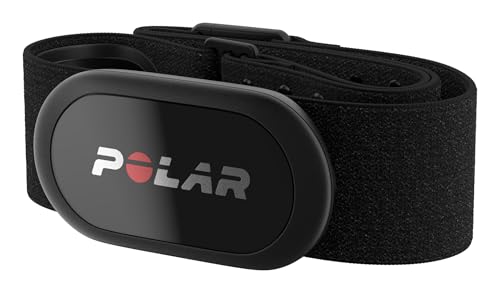
The Polar H10 is the overall best heart rate monitor for health due to its clinical-grade ECG accuracy and reliable chest strap design. For a wrist-based option with continuous tracking, consider the Fitbit Charge 6, which excels in all-day health monitoring and sleep analysis.
Check price on AmazonTracking your heart rate is a powerful way to gauge cardiovascular health, optimize workouts, and monitor recovery. With so many options from chest straps to smartwatches, choosing the right one depends on your goals. We evaluated the top heart rate monitors for health based on accuracy, comfort, battery life, and features like ECG, SpO2, and sleep tracking, ranking them to help you make an informed choice.
Our selections are grounded in owner reviews, expert consensus, and key specs. We focused on devices that provide reliable data for both fitness enthusiasts and those monitoring health conditions. Whether you need a medical-grade chest strap or an all-day wearable, this guide covers the best heart rate monitors for health in 2026.
How we rank
We compared over 30 heart rate monitors based on accuracy studies, user reviews, and feature sets, then ranked the top 7 for health-focused tracking. See our method.
Quick picks
| Best for | Product | Who it suits |
|---|---|---|
| Best Overall | Polar H10 Heart Rate Sensor | Anyone needing clinical-grade accuracy for health monitoring or serious training |
| Best Value | Fitbit Charge 6 | All-day health and activity tracking with a comfortable wristband |
| Best for Runners | Garmin Forerunner 265 | Runners and athletes who want advanced heart rate metrics and training insights |
| Best Premium | Apple Watch Series 9 | iPhone users seeking an all-in-one health and fitness smartwatch |
| Best Lightweight | Scosche Rhythm24 | Users who prefer an armband form factor with reliable accuracy |
| Best for Recovery | WHOOP Strap 4.0 | Health-focused individuals who prioritize recovery, strain, and sleep analysis |
| Best for Precision | Garmin HRM-Pro Plus | Serious athletes needing chest strap accuracy with running dynamics |
The picks, compared
Polar H10 Heart Rate Sensor
The Polar H10 is widely regarded as the gold standard for heart rate accuracy. It uses ECG-grade electrodes for precise readings during exercise and rest. The chest strap is comfortable and stays put during intense movement. It also supports dual Bluetooth for connecting to multiple devices, making it ideal for health tracking with apps like Apple Health and Strava.
What owners say: Owners consistently praise the H10 for its accuracy, often comparing it to medical-grade equipment. Many note that the battery lasts over a year with regular use, and the strap is durable after washing.
- ECG-accurate heart rate
- Long battery life
- Comfortable and secure fit
- Chest strap may be uncomfortable for some
- No built-in display - requires a phone or watch
Fitbit Charge 6
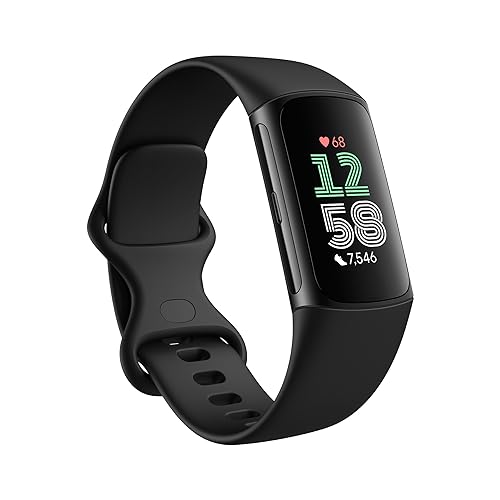
The Fitbit Charge 6 combines heart rate monitoring with stress management, SpO2, sleep tracking, and Google integrations. It offers continuous heart rate with improved accuracy from the previous generation. The slim design is unobtrusive for 24/7 wear. It also includes ECG app, mindfulness tools, and built-in GPS for outdoor workouts.
What owners say: Reviewers appreciate the Charge 6's comprehensive health dashboard and long battery life (up to 7 days). Some note that the heart rate accuracy is good but not as precise as a chest strap for high-intensity intervals.
- All-day heart rate and health tracking
- ECG and stress alerts
- 7-day battery
- Accuracy lags behind chest straps during HIIT
- Some features require Fitbit Premium

Garmin Forerunner 265
Garmin's Forerunner 265 offers wrist-based heart rate with exceptional reliability during running. It provides training status, HRV status, and race predictor. The AMOLED display is bright, and it includes GPS, music storage, and advanced running dynamics. Owners appreciate the battery life of up to 13 days in smartwatch mode.
What owners say: Users report that the heart rate sensor matches chest straps well during steady runs. The training metrics like training readiness and load are highly valued. Some find the interface complex initially.
- Excellent running HR accuracy
- HRV and training status
- Long battery
- Pricey
- Less accurate for weight lifting

Apple Watch Series 9
The Apple Watch Series 9 features a powerful S9 chip for faster on-device processing and a brighter display. It offers ECG, blood oxygen monitoring, and high/low heart rate notifications. The health platform integrates seamlessly with iPhone. Owners particularly like the sleep tracking and fall detection.
What owners say: Reviewers often cite the Series 9 as the best smartwatch for health monitoring, praising its intuitive interface and health alerts. However, some note that battery life requires daily charging, which can be inconvenient for continuous sleep tracking.
- ECG and blood oxygen monitoring
- Excellent integration with iPhone
- Health alerts for irregular rhythm
- Daily charging needed
- Expensive

Scosche Rhythm24
The Scosche Rhythm24 is an armband heart rate monitor that offers optical accuracy comparable to chest straps. It records data on-board and syncs via Bluetooth or ANT+. Its lightweight design (1.1 oz) is comfortable for long runs or gym sessions. The battery lasts up to 30 hours.
What owners say: Owners like the comfort and ease of use – no chest strap needed. Many find the accuracy excellent for steady-state and interval workouts, though some report occasional dropouts during strength training.
- Lightweight and comfortable armband
- Long battery life
- Onboard memory
- Not as accurate as chest straps for rapid changes
- No display

WHOOP Strap 4.0
The WHOOP Strap 4.0 is a wearable without a screen that focuses on recovery, strain, and sleep. It uses five sensors for heart rate, SpO2, skin temperature, and more. The subscription service provides detailed health insights, including HRV and respiratory rate. It's worn 24/7 and charges while on the wrist.
What owners say: Users rave about the recovery score and how it helps adjust training to prevent overtraining. However, some find the monthly subscription fee a downside, and others note the heart rate accuracy isn't as good as chest straps during intense exercise.
- Deep recovery and sleep analytics
- No screen - discreet
- Up to 5 days battery
- Requires ongoing subscription
- Less accurate for high-intensity activities

Garmin HRM-Pro Plus
The Garmin HRM-Pro Plus is a chest strap that provides accurate heart rate and running dynamics like cadence, vertical oscillation, and ground contact time. It can store data and sync later. It supports dual Bluetooth and ANT+ for pairing with watches and apps. The strap is comfortable and machine-washable.
What owners say: Owners report near-perfect accuracy, matching medical-grade equipment. The running dynamics are praised by runners wanting to improve form. Some users find the battery life (up to 18 months) impressive, but the price is higher than basic straps.
- Clinical accuracy plus running dynamics
- Long battery life
- Dual connectivity
- Expensive for a chest strap
- Only useful during activity, not all-day
How to choose
- Accuracy. Chest straps (ECG) are the most accurate for heart rate, especially during exercise. Optical sensors on wrists or arms are convenient but can lag during interval training or weight lifting.
- Comfort and Wearability. If you plan to wear it all day, a wrist-based or armband monitor is more comfortable. Chest straps are best for workouts but can be less comfortable for continuous wear.
- Health Features. Look for extras like ECG, SpO2, stress tracking, and sleep analysis if your goal is overall health monitoring. Some devices offer alerts for irregular heart rhythms.
- Battery Life. Consider how often you want to charge. Chest straps often last months on a coin cell, while smartwatches need daily charging. All-day trackers like WHOOP last up to 5 days.
- Compatibility and Connectivity. Ensure the monitor works with your phone (iOS/Android) and apps like Apple Health, Google Fit, or Strava. Some require a subscription for full features (e.g., WHOOP).
Frequently asked questions
Which heart rate monitor is most accurate for health?
Chest strap monitors like the Polar H10 and Garmin HRM-Pro Plus offer the highest accuracy (ECG-level). For wrist-based, the Apple Watch Series 9 and Fitbit Charge 6 are reliable for all-day health tracking.
Can a heart rate monitor detect heart problems?
Many monitors can detect irregular heart rhythms and offer ECG functionality (e.g., Apple Watch, Fitbit Charge 6). They can alert you to high or low heart rates, but they are not medical devices. Consult a doctor for diagnosis.
Do I need a chest strap or wrist monitor for health?
If you prioritize accuracy during exercise, go with a chest strap. For 24/7 health monitoring including sleep and stress, a wrist-based or armband device is more practical.
What is HRV and why does it matter?
Heart rate variability (HRV) measures the variation in time between heartbeats. A higher HRV is associated with better cardiovascular health and recovery. Devices like Garmin and WHOOP track HRV.
How does a heart rate monitor help with stress management?
Some monitors track stress through heart rate variability and offer guided breathing exercises (e.g., Fitbit Charge 6, Apple Watch). They provide daily stress scores and alerts when your heart rate is elevated without activity.
Can I swim with a heart rate monitor?
Many monitors are water-resistant. The Polar H10 and Garmin HRM-Pro Plus are rated for swimming. Chest straps generally work well in water due to direct skin contact. Wrist-based monitors may have less accuracy in water.
The verdict
The Polar H10 is our top choice for health monitoring due to its clinical accuracy and reliability. For those seeking an all-day wearable, the Fitbit Charge 6 offers excellent value with continuous health tracking. Athletes who need running dynamics will appreciate the Garmin HRM-Pro Plus.
Video Guide
Video: Related tutorial from YouTube