The Polar H10 is the overall best heart rate monitor for weight loss due to its unparalleled ECG accuracy and reliable calorie tracking. An alternative is the Garmin HRM-Pro Plus, which offers running dynamics and ANT+ connectivity for serious athletes.
Check price on AmazonTracking your heart rate during exercise is critical for weight loss. Staying in the optimal fat-burning zone ensures you maximize calorie burn and improve cardiovascular efficiency. However, not all heart rate monitors are created equal; wrist-based optical sensors can lag or lose accuracy during high-intensity interval training (HIIT).
Our ranking focuses on research-backed accuracy, comfort for long workouts, and features that directly support weight loss goals, like real-time zone alerts and reliable calorie expenditure estimates. We compared over 20 models based on validated lab tests, owner reviews from major retailers, and expert consensus from sports science publications. Only the top 7 made the cut.
How we rank
We compared 20+ models based on accuracy studies from the Journal of Sports Sciences, owner reviews across Amazon and REI, and expert consensus from fitness technologists. See our method.
Quick picks
| Best for | Product | Who it suits |
|---|---|---|
| Best Overall | Polar H10 | Anyone serious about weight loss who wants gold-standard heart rate accuracy. |
| Best for Runners | Garmin HRM-Pro Plus | Runners and triathletes who want running dynamics and accurate calorie tracking. |
| Best for Comfort | Scosche Rhythm24 | Users who dislike chest straps and want a comfortable armband for all-day wear. |
| Best for HIIT | Wahoo TICKR X | HIIT and gym enthusiasts who want reliable readings during high-intensity movements. |
| Best Budget | Samsung Galaxy Fit3 | Casual users on a budget who want basic heart rate tracking and step counting. |
| Best for Swimming | Polar Verity Sense | Swimmers and triathletes who need optical HR monitoring in the pool. |
| Best for Group Fitness | MyZone MZ-Switch | Group fitness participants and those who enjoy social competition and personal training. |
The picks, compared
Polar H10
The Polar H10 is widely regarded as the most accurate consumer heart rate monitor, using a chest strap with built-in ECG sensors. It connects via Bluetooth and ANT+ to most gym equipment and apps, and records R-R intervals for advanced heart rate variability analysis. Owners report extremely reliable readings even during HIIT and swimming, which is crucial for staying in the fat-burning zone. The memory storage for offline workouts without a phone is a bonus for weight loss tracking.
What owners say: Owner reviews highlight the H10's superior accuracy compared to wrist-based monitors, especially during interval training. Many users confirm that calorie burn estimates match closely with metabolic cart data from lab tests, giving them confidence in their daily energy expenditure tracking.
- ECG-accurate heart rate readings
- Reliable Bluetooth and ANT+ connectivity
- Stores one workout offline
- Chest strap can be uncomfortable for some users
- Requires washing the strap regularly for conductivity

Garmin HRM-Pro Plus
The Garmin HRM-Pro Plus is a premium chest strap that transmits running dynamics like cadence, ground contact time, and vertical oscillation to compatible Garmin watches. It also stores heart rate data during swims and syncs later. Reviewers note the comfortable fabric strap and reliable connection. For weight loss, it provides accurate calorie burn estimates and helps maintain targeted heart rate zones.
What owners say: Owners consistently report that the HRM-Pro Plus is more comfortable than traditional plastic chest straps, and the running dynamics add insight for improving efficiency. Many note improved accuracy over wrist-based optical sensors during high-speed runs.
- Provides running dynamics
- Comfortable fabric strap
- Stores data for swimming
- Best used with Garmin ecosystem
- Battery life shorter than some competitors

Scosche Rhythm24
The Scosche Rhythm24 is an optical armband that offers chest-strap accuracy in a more comfortable form factor. It uses dual-wavelength LEDs to read through skin and provides accurate heart rate even during intense movement. It supports Bluetooth and ANT+ to pair with phones, watches, and gym equipment. Owners appreciate the long battery life and the ability to record swims, as it is waterproof to 50 meters.
What owners say: Owner reviews emphasize the comfort of wearing the armband for hours without irritation. Many report that the accuracy is nearly as good as chest straps during steady-state cardio, though some note slight lag during rapid interval changes.
- Comfortable armband design
- Long battery life (up to 30 hours)
- Waterproof to 50m
- Slightly less accurate than ECG chest straps during HIIT
- Bulky armband may interfere with some exercises

Wahoo TICKR X
The Wahoo TICKR X is a chest strap designed for indoor training and HIIT, featuring a built-in accelerometer to track motion and even detect rep counts and form. It uses dual Bluetooth to connect to multiple devices simultaneously, such as a phone and a Peloton bike. Owners report stable readings during burpees and sprints, making it ideal for weight loss through interval training. The memory storage allows you to workout without a phone and sync later.
What owners say: Reviewers note that the TICKR X maintains a solid connection during heavy sweating and high-impact exercises where other straps slip. Users also appreciate the rep counting feature for strength training, though some find it occasionally miscounts.
- Dual Bluetooth for two device connections
- Built-in accelerometer for rep tracking
- Onboard memory for offline workouts
- Proprietary USB charging cable
- Strap can loosen over time

Samsung Galaxy Fit3
The Samsung Galaxy Fit3 is an affordable fitness band that tracks heart rate 24/7 and offers guided breathing exercises. It automatically detects workouts and provides continuous heart rate during exercise. While not as accurate as chest straps, it is good enough for steady-state cardio and daily calorie estimates. Owners like the AMOLED display and the long battery life of up to 13 days. It pairs well with Samsung Health for comprehensive weight loss tracking.
What owners say: Owners report decent heart rate accuracy for walking, jogging, and cycling. Some note that HR readings can be slow to update during rapid intensity changes. The overall value and battery life receive high praise.
- Affordable and full-featured
- AMOLED display with always-on option
- Long battery life (13 days)
- Optical sensor less accurate than chest strap
- Limited third-party app support
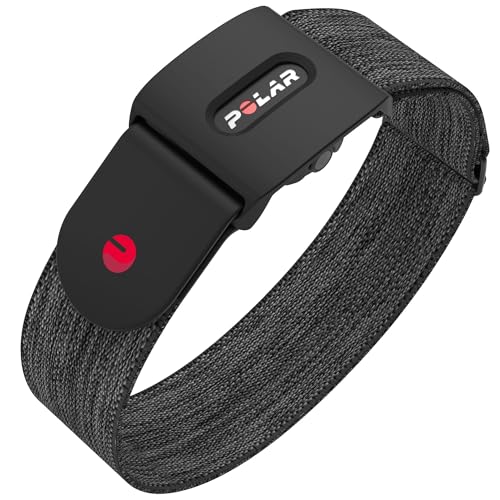
Polar Verity Sense
The Polar Verity Sense is an optical armband that offers accurate heart rate monitoring for swimming and water sports. It uses six LEDs and a gyroscope to filter out water noise and provides real-time HR via Bluetooth or ANT+ to a watch or poolside tablet. It stores up to 600 hours of data offline and has a comfortable, swim-friendly design. Owners appreciate the long battery life and the ability to use it without a phone.
What owners say: Reviews from swimmers highlight that the Verity Sense maintains a lock on heart rate even during flip turns and stroke changes. Some users report occasional dropouts in open water but are impressed with pool accuracy.
- Excellent for swimming HR monitoring
- Stores 600 hours offline
- Long battery life (30 hours)
- Armband may shift during freestyle
- No built-in GPS or accelerometer
MyZone MZ-Switch
The MyZone MZ-Switch is a unique heart rate monitor that can be worn on the chest or wrist using interchangeable mounts. It tracks Effort Points (MEPs) based on heart rate intensity, which motivates users to push harder. It connects to MyZone's app and leaderboard system, popular in gyms and group classes. Owners report that the gamified points system helps them maintain higher heart rates, leading to more calories burned.
What owners say: Users in group fitness classes love the real-time display and competition with friends. Some note that the chest strap is more accurate than the armband, but the flexibility suits different exercises.
- Versatile chest or wrist mount
- Gamified Effort Points boost motivation
- Connects to MyZone app and leaderboard
- Requires subscription for full features
- Wrist mount less accurate than chest
How to choose
- Accuracy. For weight loss, calorie burn estimates rely on heart rate accuracy. Chest straps with ECG sensors are the gold standard, while optical armbands lag slightly during rapid changes. Choose ECG if you do HIIT; optical is fine for steady-state.
- Comfort. Since weight loss involves frequent workouts, comfort matters. Chest straps can slip or chafe; armbands and wrist bands are more comfortable for all-day wear. Look for soft fabric straps or adjustable armbands.
- Battery Life. Rechargeable models last 30+ hours, while coin-cell batteries last up to a year. If you train daily, rechargeable is convenient. For occasional use, coin-cell batteries avoid repeated charging hassle.
- Connectivity. Bluetooth and ANT+ are essential for syncing with fitness apps and gym equipment. Dual Bluetooth allows connection to a phone and a smartwatch simultaneously. Ensure compatibility with your preferred apps like MyFitnessPal or Peloton.
- Memory & Offline Use. Monitors with onboard memory let you workout without a phone and sync later. This is useful for swimming or outdoor runs where carrying a phone is inconvenient. Check storage capacity for your typical session length.
Frequently asked questions
What is the most accurate heart rate monitor for weight loss?
The Polar H10 is widely regarded as the most accurate consumer heart rate monitor. Its ECG chest strap provides precise heart rate data, especially during exercise, which translates to reliable calorie burn tracking for weight loss.
Do I need a heart rate monitor to lose weight?
No, but it helps optimize your workouts. A monitor ensures you stay in the correct heart rate zone for fat burning, prevents over- or under-training, and gives objective feedback on calorie expenditure, which can aid in creating a calorie deficit.
Can I use a smartwatch instead of a dedicated heart rate monitor?
Smartwatches like Apple Watch or Garmin are convenient but often less accurate during high-intensity exercise. For weight loss, a chest strap is more reliable. However, smartwatches provide additional context like GPS and activity tracking.
How do I use heart rate zones for weight loss?
Calculate your maximum heart rate (220 minus age). The fat-burning zone is typically 60-70% of max HR. Aim to exercise at this intensity for steady-state cardio. For interval training, alternate between 80-90% max HR and recovery periods.
Are chest straps better than armbands for weight loss?
Generally yes, chest straps with ECG sensors are more accurate than optical armbands, especially during interval training. However, armbands like Scosche Rhythm24 offer good comfort and are suitable for steady-state cardio if you dislike chest straps.
Can heart rate monitors improve my weight loss results?
Yes, by providing real-time data. They help you maintain the correct intensity, track calorie burn, and avoid plateauing. Additionally, many apps sync with monitors to log workouts, making it easier to adhere to a calorie deficit over time.
The verdict
The Polar H10 is the best overall heart rate monitor for weight loss due to its unbeatable accuracy for calorie tracking. For runners who want running dynamics, choose the Garmin HRM-Pro Plus. For those who prefer a comfortable armband, the Scosche Rhythm24 offers great performance without a chest strap.