The TriggerPoint Grid X wins for the combination that matters most on IT band work: multi-density foam firm enough to reach the tissue without bruising, in a hollow-core build that holds its shape for years. For a budget-friendly, still-effective alternative, the LuxFit High Density Foam Roller delivers similar firmness for less.
Check price on AmazonThe IT band itself is dense, fibrous connective tissue, not muscle, which is why a roller that’s too soft just glances off it without doing much. The actual work happens on the tensor fasciae latae and glute muscles that feed into the IT band, and a roller with enough firmness to reach those without bruising the surface is what actually matters here.
We compared density, texture, and portability across six rollers, prioritizing models that reviewers specifically credit with reaching IT band tightness without the surface pain that makes people quit rolling before it does any good.
How we rank
We ranked these foam rollers by analyzing thousands of owner reviews, expert articles from physical therapists, and material specifications to identify models that deliver consistent IT band release without unnecessary expense. See our method.
Quick picks
| Best for | Product | Who it suits |
|---|---|---|
| Best Overall | TriggerPoint Grid X | Runners and cyclists needing deep, multi-density IT band release |
| Best Premium | Theragun Wave Roller | Users wanting percussive therapy combined with rolling for IT band relief |
| Best Value | LuxFit High Density Foam Roller | Budget-conscious athletes seeking effective IT band rolling |
| Best Budget | Amazon Basics High Density Foam Roller | First-time foam roller users on a tight budget |
| Best for Runners | ProSource Myofascial Grid Foam Roller | Runners needing targeted IT band relief with grid texture |
| Best for Travel | Yes4All High Density Foam Roller | Travelers who need a portable IT band roller |
The picks, compared
TriggerPoint Grid X
A hollow-core, multi-density EVA foam roller built specifically to be TriggerPoint’s firmest option, aimed at reaching stubborn tightness that a standard-density roller glances off.
What owners say: Reaching deep IT band tightness without the surface pain of a plain high-density roller is the specific, repeated praise. It’s pricier than basic foam rollers and the surface can feel aggressive if you’re new to rolling.
- Multi-density foam targets deep and superficial layers
- Lightweight and portable for gym or travel
- Durable construction with hollow core design
- Higher price point than basic foam rollers
- Surface may feel too aggressive for beginners

Theragun Wave Roller
A vibrating foam roller that adds percussive-style therapy to standard rolling, Bluetooth-connected to guided routines through the Therabody app rather than working purely as passive foam.
What owners say: The vibration specifically helping loosen tight IT bands before runs is what owners point to over a standard roller. It costs significantly more than non-vibrating options and the added weight makes it less packable.
- Integrated vibration enhances myofascial release
- Bluetooth connectivity for guided sessions
- Smooth foam surface is gentle on lateral thighs
- Expensive compared to non-vibrating rollers
- Heavier at 2.5 lbs, less portable
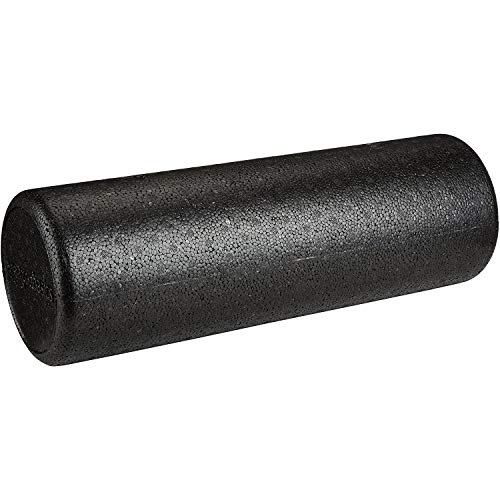
LuxFit High Density Foam Roller
A firm, closed-cell EVA roller built to hold its shape over years of use, with an 18-inch length that covers the full thigh without repositioning.
What owners say: Holding firmness without flattening or denting, even under heavy regular use, is the consistent praise. There’s no textured surface for trigger-point work specifically, a smooth-roller trade-off.
- Firm density provides deep muscle release
- Large surface area covers full thigh
- Odor and moisture resistant foam
- No textured surface for trigger points
- May be too firm for sensitive users
Amazon Basics High Density Foam Roller
A genuinely no-frills firm roller at the lowest price in this roundup, built for someone testing whether IT band rolling is worth investing further in before buying something pricier.
What owners say: Adequate firmness for the price is the recurring theme in reviews. Some owners report it losing shape after several months of use, a fair trade-off at this cost.
- Very affordable entry point
- Compact size fits in gym bag
- Firm enough for IT band release
- May compress over time with heavy use
- No texture for trigger point work
ProSource Myofascial Grid Foam Roller
A textured, dual-density roller with a grid surface designed to mimic the feel of a massage therapist’s hands rather than plain smooth foam.
What owners say: Targeting IT band knots specifically without the roller slipping is what runners point to most. The grid texture can feel painful directly over bone if used too aggressively, worth easing into it.
- Grid texture effectively targets IT band adhesions
- Lightweight and easy to carry
- Sweat-resistant and easy to clean
- Grid can be painful on bones or if used too aggressively
- Shorter length requires repositioning for full leg

Yes4All High Density Foam Roller
A compact 12-inch roller built specifically for travel, firm enough for real IT band work without the bulk of a full-size roller.
What owners say: Fitting easily in luggage without sacrificing meaningful pressure is the specific draw for travelers. The shorter length means more repositioning to cover the full thigh compared to an 18-inch roller.
- Compact and lightweight for travel
- Firm density works well on IT band
- Includes a convenient carrying bag
- Short length may not suit all users
- No texture for deeper trigger point work
How to choose
- Density and Firmness. IT band release requires a firm roller to penetrate the thick fascia. Too soft a roller will not provide enough pressure, while too firm may cause bruising. Look for high-density EVA foam or a multi-density design that balances comfort and effectiveness.
- Surface Texture. Smooth rollers are gentle and good for warm-ups, while textured or grid rollers can target trigger points more effectively. For IT bands, a grid pattern can help break up adhesions, but may be too aggressive for beginners.
- Size and Portability. Longer rollers (18 inches) cover the full thigh without repositioning, while shorter ones (12 inches) are easier to pack. Consider where you'll use it most: home gyms can accommodate larger sizes, but travel demands compact models.
- Material and Durability. Closed-cell EVA foam resists moisture and odors, making it ideal for sweaty athletes. Hollow core designs reduce weight without compromising durability. Avoid cheap foams that compress over time.
- Special Features. Vibration or percussive therapy rollers can enhance release by adding motion. Ergonomic handles help control pressure on sensitive IT bands. Consider your tolerance for gadgets versus simplicity.
Frequently asked questions
Can foam rolling directly on the IT band cause injury?
Rolling directly on the IT band is generally safe, but avoid rolling over the bony parts of the hip and knee. Focus on the muscle belly of the tensor fasciae latae (TFL) and glutes, as the IT band itself is tough connective tissue. If you feel sharp pain, reduce pressure or switch to a smoother roller.
How often should I foam roll my IT band?
You can foam roll your IT band daily, but limit sessions to 1-2 minutes per area. Over-rolling can cause inflammation. If you have acute pain, consult a physical therapist. Consistent rolling 3-4 times per week is effective for maintenance.
What is the best density for an IT band foam roller?
A high-density roller (around 50-60 durometer) is typically best for IT band work. It provides enough pressure to release tight fascia without causing bruising. Beginners may prefer a medium density, while advanced users often choose ultra-firm rollers.
Can a foam roller help with IT band syndrome?
Yes, foam rolling can help alleviate IT band syndrome by reducing tension in the TFL and glute muscles, which often contribute to IT band tightness. However, it should be combined with strengthening exercises for the hips and glutes for long-term relief.
Should I use a vibrating foam roller for IT band?
A vibrating roller can be beneficial because the vibration helps relax the muscle before rolling, making the process more comfortable. It may enhance blood flow and fascial release, but a standard firm roller can be just as effective if used correctly.
How do I clean a foam roller?
Most foam rollers can be wiped clean with a damp cloth and mild soap. Avoid submerging in water. For textured rollers, use a brush to remove debris. Regular cleaning prevents bacteria buildup, especially for gym use.
The verdict
The TriggerPoint Grid X delivers the best combination of firmness and durability for serious IT band work. Go with the LuxFit if budget matters more than the multi-density texture, or the Yes4All if portability is the priority.