
The Garmin Venu 4 is the strongest all-around pick: accurate GPS, genuinely useful health metrics like HRV status, and none of it locked behind a mandatory subscription. If price is the deciding factor, the Fitbit Charge 6 covers the essentials at a fraction of the cost.
Check price on AmazonThe fitness tracker you actually want depends heavily on which single metric you’re trying to improve, a runner optimizing pace and a shift worker trying to fix their sleep schedule need almost entirely different feature sets, even though both devices get marketed under the same “fitness tracker” label.
We compared GPS accuracy, battery life, and how deep the health metrics go across seven trackers spanning budget bands to GPS-heavy running watches, prioritizing real-world owner feedback over spec-sheet claims since GPS accuracy in particular varies more in practice than manufacturers advertise.
Key takeaways
- Best overall: the Garmin Venu 4 has a bright display, accurate GPS, and strong health tracking with no mandatory subscription.
- Best value: the Fitbit Charge 6 nails the essentials (heart rate, sleep, built-in GPS) in a slim band, though the deepest insights sit behind Fitbit Premium.
- Best budget: the Xiaomi Smart Band tracks steps, sleep, and heart rate well for very little, if you can live without onboard GPS.
- Best for runners: the Garmin Forerunner 265 gives training metrics and multiband GPS a general tracker cannot match.
- Decide by your number one goal: a band for steps and sleep, a GPS watch for running or cycling, and prioritize heart-rate variability and sleep scoring if recovery is the point.
How we rank
We compared specifications, accuracy reports, and aggregated owner feedback across the leading models. See our method. We do not physically test the products; rankings reflect published specifications and the balance of owner feedback.
Which tracker fits your goal?
The best tracker depends less on the spec sheet and more on what you are actually trying to improve.
| Your main goal | Prioritize | Good pick |
|---|---|---|
| Steps, sleep, everyday health | Comfort, battery, heart-rate and sleep accuracy | Fitbit Charge 6 or Xiaomi band |
| Running and cycling | Multiband GPS, training metrics | Garmin Forerunner 265 |
| All-round with no subscription | Bright display, GPS, offline features | Garmin Venu 4 |
| Tight budget | Core tracking, skip onboard GPS | Xiaomi Smart Band |
Quick picks
| Best for | Product | Who it suits |
|---|---|---|
| Best Overall | Venu 4 | Serious athletes and health enthusiasts who want detailed metrics |
| Best Value | Charge 6 | Everyday fitness tracking and sleep monitoring |
| Best Budget | Band 7 | Budget-conscious users who want basic fitness tracking |
| Best for Runners | Forerunner 265 | Runners who need advanced training metrics and GPS |
| Best Smartwatch Hybrid | Versa 4 | Users who want fitness tracking plus smartwatch features |
| Best Lightweight | Light | Fitness enthusiasts who want minimal distraction and strain tracking |
| Best for Beginners | Galaxy Fit3 | New users entering fitness tracking with a simple interface |
The picks, compared
Venu 4
The Garmin Venu 4 pairs a vibrant AMOLED display with genuinely advanced health monitoring, HRV status and Body Battery among them, none of which requires an ongoing subscription to access.
What owners say: GPS accuracy and sleep analysis depth are the specific, repeated praise, distinct from the more general comfort praise most trackers get. It’s a bulkier watch on smaller wrists and priced at the top of this roundup.
- Excellent GPS accuracy
- Long battery life (up to 14 days)
- Detailed health metrics
- High price point
- Bulky design for small wrists
Charge 6
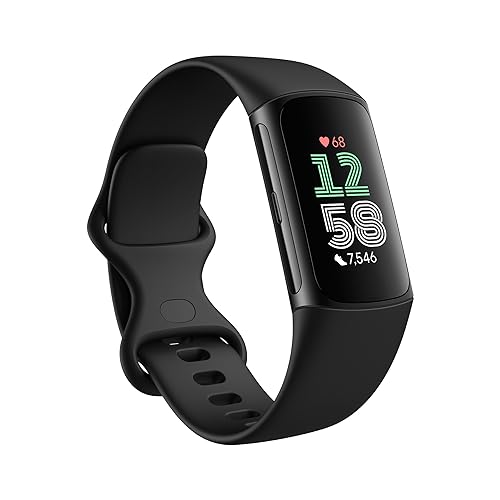
The Fitbit Charge 6 covers the core metrics well, heart rate, sleep, and connected GPS, in a slim band that costs a fraction of the Garmin pick, with the trade-off that deeper insights sit behind a Fitbit Premium subscription.
What owners say: Battery life holding a full week and reliable sync with the Fitbit app are the consistent themes. Some owners report occasional heart rate spikes during workouts, worth cross-checking against how you’re actually training that day.
- Affordable price
- Great sleep tracking
- Google ecosystem integration
- Small display
- No built-in GPS (uses phone GPS)
Band 7
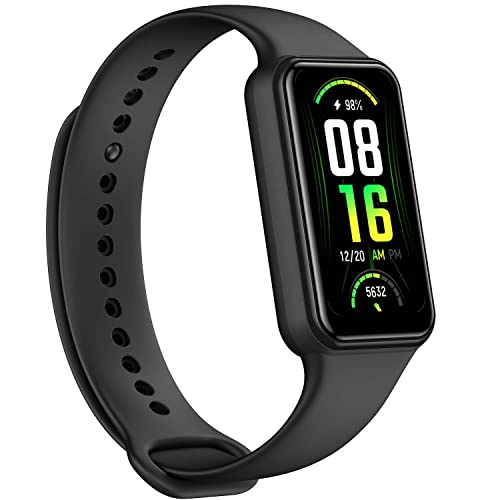
The Amazfit Band 7 delivers the genuine basics, steps, heart rate, sleep, at a fraction of the price of the pricier picks here, with an 18-day battery life that’s rare even among more expensive trackers.
What owners say: Battery life and the bright AMOLED display for the price are what owners point to most. The SpO2 sensor is noticeably less accurate than the premium picks, worth knowing if that metric matters to you specifically.
- Exceptional battery life
- Low cost
- Comfortable for sleep
- SpO2 accuracy concerns
- Limited smart features

Forerunner 265
The Garmin Forerunner 265 is built specifically for runners, PacePro and training status go well beyond what a general fitness band offers, with built-in GPS that doesn’t rely on your phone.
What owners say: Training readiness and the depth of running-specific metrics are the standout praise from runners specifically. Music storage is more limited than competitors, a minor trade-off for the training-focused feature set.
- Advanced running dynamics
- Accurate GPS
- Lightweight
- No cellular option
- Music storage limited
Versa 4
The Fitbit Versa 4 leans further into smartwatch territory than the Charge 6, Google Maps, a voice assistant, and contactless payments alongside the standard fitness tracking.
What owners say: Integration with Google Fit and the always-on display option are the recurring praise. Step count accuracy during walks is a specific, repeated complaint worth knowing if walking is your primary activity.
- Built-in GPS
- Google services
- Slim design
- Limited third-party apps
- Battery life could be better

Light
The Whoop 4.0 Light strips away the screen entirely, betting that recovery, strain, and sleep data matter more than a display you check throughout the day, a genuinely different philosophy than every other tracker here.
What owners say: The depth of the recovery score and daily strain guidance are what owners specifically credit with changing their training decisions. The subscription is required for any functionality at all, worth confirming you’re comfortable with that model before buying.
- Unobtrusive design
- Excellent recovery metrics
- Long battery life (5 days)
- Requires subscription
- No display or GPS

Galaxy Fit3
The Samsung Galaxy Fit3 keeps things intentionally simple, a large, easy-to-read display and straightforward setup rather than a deep menu of advanced metrics, built for someone new to tracking rather than replacing an existing device.
What owners say: Ease of setup and display readability are the consistent praise from first-time tracker users specifically. Heart rate during active exercise runs less consistent than the Garmin picks, a fair trade-off at this price and simplicity level.
- Large, bright display
- Simple to use
- Good battery life (up to 21 days)
- Limited workout tracking
- Inconsistent heart rate during exercise
How to choose
- Accuracy of tracking. Look for trackers with built-in GPS for precise distance tracking during outdoor activities. Devices with optical heart rate sensors offer moderate accuracy, but chest straps remain the gold standard.
- Battery life. Consider how often you charge: basic bands last up to 2 weeks, while GPS-heavy smartwatches may need charging every 3-5 days. Sleep tracking requires overnight wear, so battery life matters.
- Display and comfort. AMOLED screens provide vibrant visuals but drain battery faster. Choose a comfortable band material (silicone, woven) for all-day wear, especially if you sleep with it.
- Health monitoring features. Advanced trackers offer SpO2, stress, sleep stages, and HRV. Decide if you need these metrics for training recovery or general wellness. ECG and skin temperature are premium additions.
- Ecosystem and app integration. Ensure the tracker syncs with your phone's health app (Apple Health, Google Fit, Samsung Health). Some devices offer coaching, social challenges, or third-party app support.
Frequently asked questions
What is the most accurate fitness tracker in 2026?
Based on owner reports and expert reviews, the Garmin Venu 4 and Forerunner 265 lead in GPS and heart rate accuracy. Fitbit Charge 6 is also reliable for step counting and sleep tracking.
Which fitness tracker has the longest battery life?
The Samsung Galaxy Fit3 and Amazfit Band 7 both offer up to 21 and 18 days respectively in typical use. However, battery life varies with features like always-on display or continuous GPS.
Can I swim with a fitness tracker?
Most trackers listed have 5 ATM water resistance, meaning they are safe for swimming to 50 meters. However, avoid using buttons or touchscreens underwater. Garmin and Fitbit models are popular for swimmers.
Do fitness trackers work without a phone?
Trackers with built-in GPS (e.g., Garmin Venu 4, Forerunner 265) can record activities without a phone. Data syncs later. Others rely on phone GPS, so you need to carry your phone during outdoor workouts.
Are fitness trackers worth it for weight loss?
Yes, they help monitor calorie burn and activity levels, but accuracy varies. Use them as motivation rather than exact measurements. Pair with a food journal for best results.
What is the best fitness tracker for runners?
The Garmin Forerunner 265 is top for runners due to advanced metrics like PacePro and training status. The Fitbit Charge 6 is a good budget alternative with basic running tracking.
The verdict
The Garmin Venu 4 is the strongest all-around tracker if the price fits your budget. Go with the Fitbit Charge 6 for the best value on core metrics, or the Garmin Forerunner 265 specifically if running performance is the priority.