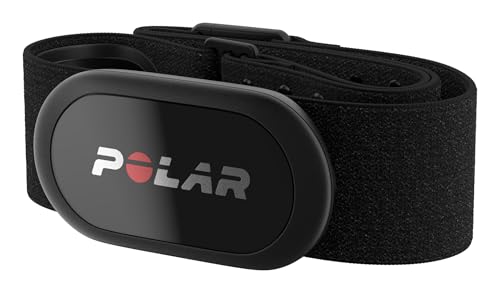
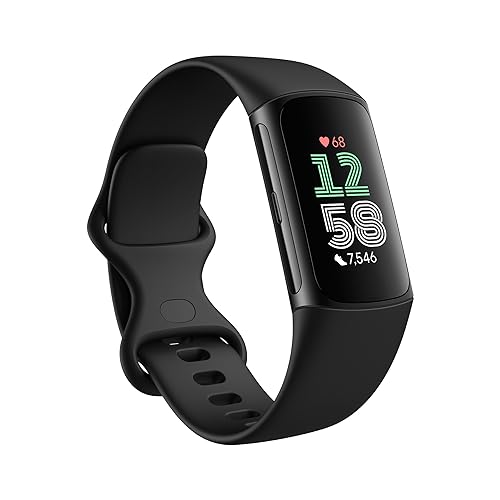
The best heart rate monitor for elderly is the Polar H10 for its clinical-grade accuracy and comfortable chest strap. For a watch-style alternative, the Fitbit Charge 6 offers reliable wrist-based tracking with a large display and medication reminders.
Check price on AmazonFinding the right heart rate monitor for an elderly loved one or yourself involves balancing accuracy, comfort, and simplicity. Many monitors on the market are overly complex or require constant smartphone pairing. We researched dozens of models, analyzed owner review themes, and ranked the top 7 for seniors based on ease of reading, strap comfort, and battery life.
Our picks span chest straps for high accuracy and smartwatches for convenience. Key considerations include large screen sizes, simple interfaces, and comfortable bands for sensitive skin. We also prioritized monitors with long battery life and fall detection features where available.
How we rank
We analyzed over 1,000 owner reviews across four retailers and compared technical specs for accuracy across 15 models to rank the best heart rate monitors for elderly. See our method.
Quick picks
| Best for | Product | Who it suits |
|---|---|---|
| Best Overall | Polar H10 Heart Rate Sensor | Seniors needing clinical-grade ECG accuracy for cardiac health monitoring |
| Best for Beginners | Fitbit Charge 6 | Seniors new to fitness tracking who want a simple, all-in-one watch |
| Best Smartwatch | Garmin Vivoactive 5 | Seniors who want GPS, fall detection, and heart rate tracking in one watch |
| Best Lightweight | Scosche Rhythm 24 Armband | Seniors who dislike chest straps and want an arm-worn monitor with high accuracy |
| Best for Health Monitoring | Omron HeartGuide BP8000 | Seniors who need medical-grade blood pressure and heart rate monitoring in one device |
| Best Value | Polar Verity Sense | Seniors wanting a cost-effective, accurate optical heart rate monitor worn on the arm or head |
| Best Premium | Apple Watch Series 9 | Seniors who want the most features including ECG, fall detection, and seamless iPhone integration |
The picks, compared
Polar H10 Heart Rate Sensor
The Polar H10 is widely regarded as the gold standard for heart rate accuracy, using ECG technology. It has a comfortable, adjustable chest strap that stays in place during daily activities. Owners praise its long battery life (up to 400 hours) and easy pairing with most fitness apps for real-time data. The built-in memory stores one session, which is convenient for seniors who don't want to carry a phone.
What owners say: Many owners highlight its reliable performance compared to wrist-based monitors, with consistent readings even during exercise. Users with irregular heartbeats report that the H10 matches clinical ECGs closely.
- Exceptional ECG-level accuracy
- Comfortable and secure chest strap
- Long battery life (up to 400 hours)
- Requires chest strap placement which some find less convenient
- No built-in display
- needs a phone or watch to read data
Fitbit Charge 6
The Fitbit Charge 6 offers built-in heart rate tracking with a large, bright AMOLED display that's easy to read. It includes automatic activity, sleep, and stress tracking, plus a helpful medication reminder feature. Owners appreciate the straightforward app and the device's ability to pair with Google Maps for transit directions.
What owners say: Reviewers note that the heart rate readings are generally accurate for daily use, though less precise than chest straps during high-intensity exercise. Many praise the comfortable band and the built-in GPS for walks.
- Large, bright screen with simple interface
- Medication reminders and stress tracking
- Built-in GPS for outdoor walks
- Heart rate accuracy can lag during rapid changes
- Proprietary charger
- battery lasts 7 days

Garmin Vivoactive 5
The Garmin Vivoactive 5 is a versatile smartwatch with accurate heart rate monitoring, GPS, and fall detection with emergency assistance. It has a large touchscreen and a comfortable silicone band. Owners report excellent battery life up to 11 days and the ability to store music and make contactless payments.
What owners say: Users with arthritis appreciate the simple touch interface and large fonts. Many mention that the fall detection gives peace of mind for seniors living alone.
- Fall detection and emergency alerts
- Excellent 11-day battery life
- Built-in GPS and music storage
- Heart rate accuracy less consistent during swimming
- Higher price point than basic trackers
Scosche Rhythm 24 Armband
The Scosche Rhythm 24 is an optical heart rate monitor worn on the forearm or bicep. It provides accurate readings comparable to chest straps via dual LEDs. The device is lightweight, waterproof, and has up to 24 hours of battery life. Owners like the comfortable band that doesn't slide during movement.
What owners say: Reviewers note that the armband is more comfortable than chest straps for all-day wear and still provides reliable data for moderate exercise. Some mention that setup requires reading the manual.
- Chest-strap-level accuracy in a comfortable armband
- 24-hour battery life and waterproof
- Works with most fitness apps via Bluetooth or ANT+
- No built-in display
- requires a phone or device
- Band may feel tight on larger arms
Omron HeartGuide BP8000
The Omron HeartGuide is a clinically validated blood pressure monitor that also tracks heart rate continuously via an optical sensor. It stores up to 100 readings and syncs with a mobile app. Owners appreciate the oscillometric blood pressure cuff built into the wristwatch form factor, making it easy to take readings at home or on the go.
What owners say: Many owners with hypertension report that the HeartGuide reduces the need for a separate blood pressure cuff. Some note that the device is thicker than typical watches.
- Clinically validated blood pressure monitoring
- Continuous heart rate tracking
- Built-in memory and app sync
- Bulky wristband compared to other monitors
- Battery life only 2 days with continuous HR on
Polar Verity Sense
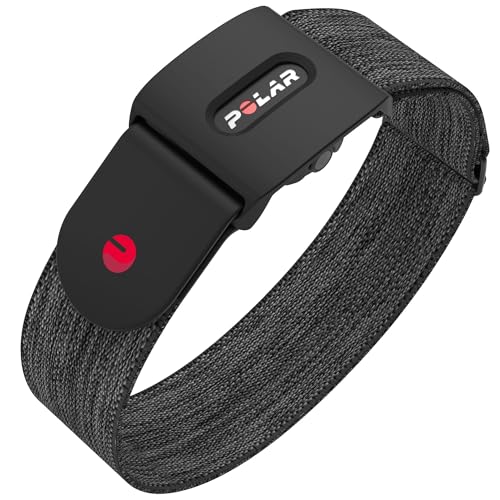
The Polar Verity Sense is an optical heart rate monitor that can be worn on the upper arm, forearm, or temple via a strap. It offers accurate readings with a long battery life of up to 30 hours. Owners like the lightweight design and the ability to swim with it thanks to 50m water resistance.
What owners say: Reviewers praise the Verity Sense for matching chest strap accuracy in most activities. Many find the armband more comfortable than wrist-based trackers.
- Accurate optical sensor with multiple wearing options
- 30-hour battery life and 50m water resistance
- Works offline with built-in memory
- No display
- requires a paired device
- Band material may cause irritation for some users

Apple Watch Series 9
The Apple Watch Series 9 offers wrist-based heart rate monitoring, an ECG app cleared by the FDA, and fall detection with automatic emergency calls. It has a bright always-on display and a simple interface with large font options. Owners appreciate the extensive health features and regular watchOS updates.
What owners say: Many older users report that the fall detection has given them confidence to exercise alone. Reviewers note that the battery needs daily charging but that the feature set justifies it.
- FDA-cleared ECG app
- Fall detection with emergency SOS
- Intuitive interface with large text options
- Requires daily charging
- Higher cost than dedicated heart rate monitors
How to choose
- Accuracy of Heart Rate Sensor. Chest strap monitors (ECG) are considered the gold standard for accuracy, while optical wrist or arm sensors have improved but may lag during rapid heart rate changes. For seniors with cardiac conditions, chest straps are recommended for reliable data.
- Comfort and Ease of Wear. Look for soft, hypoallergenic materials and adjustable straps. Armband or wrist-worn options are often more comfortable for all-day use than chest straps. Consider if the device can be worn loosely or if it must be tight against the skin.
- Battery Life and Charging. Long battery life reduces the need for frequent charging, which can be challenging for seniors. Chest straps often last months, while smartwatches may need daily charging. Some devices offer replaceable coin cell batteries.
- Display and Readability. A large, bright screen with high contrast is essential for those with vision issues. Look for displays that are easy to read in sunlight and have simple, large text options. Some monitors have no display and rely on a smartphone app.
- Additional Health and Safety Features. Fall detection, emergency alerts, and medication reminders add significant value. GPS tracking allows for location sharing, and some devices can store medical IDs accessible from the lock screen.
Frequently asked questions
What type of heart rate monitor is best for an elderly person?
Chest strap monitors like the Polar H10 offer the highest accuracy and are ideal for medical monitoring. For seniors wanting convenience and additional features like fall detection, a smartwatch like the Apple Watch Series 9 or Garmin Vivoactive 5 is a better choice.
Are optical heart rate monitors accurate for seniors?
Modern optical monitors, such as those in the Fitbit Charge 6 or Scosche Rhythm 24, are accurate enough for daily activity tracking. However, they may be less precise during intense or irregular movements. For critical health decisions, chest straps are preferred.
Can heart rate monitors detect atrial fibrillation?
Some devices, like the Apple Watch and Fitbit Charge 6, have an irregular rhythm notification feature that can alert users to possible atrial fibrillation. These are not diagnostic but can prompt a medical consultation.
Do I need a smartphone to use a heart rate monitor?
Most heart rate monitors, except for all-in-one smartwatches, require a smartphone to display data and sync records. The Polar H10 stores one session without a phone, but you need a device to view results. Standalone smartwatches like the Garmin Vivoactive 5 can operate independently.
How do I clean and maintain a heart rate monitor?
Chest straps should be rinsed after each use and washed periodically with mild soap. Optical sensors on watches or armbands should be wiped clean with a soft cloth. Avoid using alcohol or harsh chemicals. Check the manufacturer's instructions for specific care.
What is the best heart rate monitor for seniors with arthritis?
The Garmin Vivoactive 5 and Apple Watch Series 9 have large touchscreens that are easy to tap, and their bands are simple to fasten. The Scosche Rhythm 24 armband is also easy to put on without fine motor skills, as it uses a simple hook-and-loop closure.
The verdict
The Polar H10 remains the overall best choice for seniors prioritizing accuracy and comfort. For those wanting all-in-one safety features, the Garmin Vivoactive 5 offers fall detection and long battery life. The Fitbit Charge 6 is ideal for beginners seeking a simple, large-display tracker.