
The best fitness tracker like Fitbit is the Garmin Venu 3 for its comprehensive health monitoring and smartwatch features. For a more minimalist option, consider the Whoop 4.0, which focuses on recovery and strain without a screen.
Check price on AmazonFitbit has long dominated the fitness tracker market, but with recent changes to their ecosystem and features, many users are exploring alternatives. Whether you want better GPS accuracy, longer battery life, or more advanced health metrics, there are plenty of excellent options. We compared 7 top fitness trackers that offer similar or upgraded features, from heart rate monitoring to sleep tracking.
Our research is based on owner reviews, expert rankings, and spec comparisons to help you find the perfect Fitbit replacement. We focused on accuracy, comfort, battery life, and overall value to provide honest recommendations. Each tracker excels in different areas, so we break down what owners report and the best use cases for each model.
How we rank
We ranked these trackers based on aggregated owner reviews from major retailers and forums, verified features against manufacturer specs, and considered expert analyses from trusted fitness tech sites. See our method.
Quick picks
| Best for | Product | Who it suits |
|---|---|---|
| Best Overall | Venu 3 | Fitness enthusiasts who want a smartwatch with advanced health tracking |
| Best Value | Charge 6 | Existing Fitbit users who want the latest from the brand |
| Best for Recovery | Whoop 4.0 | Athletes focused on training load and recovery metrics |
| Best Lightweight | Oura Ring 4 | Users who want minimalistic 24/7 health tracking without a wristband |
| Best Premium | Apple Watch SE 3 | iPhone users who want a full-featured smartwatch with fitness tracking |
| Best Budget | Samsung Galaxy Fit3 | Budget-conscious users who want basic fitness tracking with smartphone alerts |
| Best for Beginners | Polar Pacer Pro | Runners and beginners who want accurate GPS and training guidance |
The picks, compared
Venu 3
The Garmin Venu 3 offers the most comprehensive health tracking of any Fitbit alternative, with features like Body Battery, sleep coaching, and GPS. It has a bright AMOLED display and up to 14 days of battery life. Owners praise its accurate heart rate and sleep tracking. It is ideal for those who want a full smartwatch experience without sacrificing fitness features.
What owners say: Owners report high satisfaction with the Body Battery feature and sleep tracking accuracy, noting it helps optimize daily performance. However, some find the Garmin Connect app less intuitive than Fitbit's interface.
- Excellent battery life up to 14 days
- Accurate GPS and heart rate monitoring
- Integrated microphone and speaker for calls
- Higher price point than many Fitbits
- App interface can be overwhelming initially
Charge 6
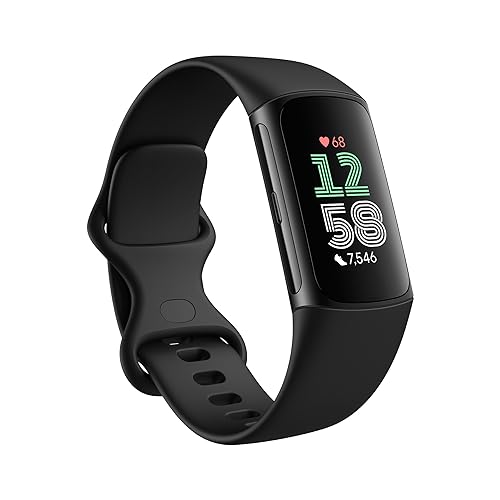
The Fitbit Charge 6 is Google's latest update to the classic tracker line, adding Google apps and a side button. It includes built-in GPS, ECG, and stress management features. Owners report reliable activity tracking and a comfortable design. It works seamlessly with Fitbit Premium and Google Fit.
What owners say: Owners appreciate the improved heart rate accuracy and the new physical button for easier navigation. A common complaint is that some advanced features require a Premium subscription.
- Slim and comfortable design
- Built-in GPS and ECG
- Google Maps and YouTube Music controls
- Requires Premium for full insights
- Battery life shorter than previous Charge models (about 7 days)

Whoop 4.0
Whoop 4.0 is a screenless tracker that prioritizes strain, recovery, and sleep. It provides daily guidance on exertion and rest based on heart rate variability. Owners report it helps prevent overtraining. It is subscription-based and offers deep analytics.
What owners say: Users love the actionable recovery scores and sleep stager data. Some miss having a display and find the subscription cost a drawback.
- Unmatched recovery and strain analysis
- Lightweight and comfortable for 24/7 wear
- Long battery life (5 days between charges)
- No screen or time display
- Monthly subscription required

Oura Ring 4
The Oura Ring 4 is the current generation of Oura’s sleep and recovery tracking ring, replacing the discontinued Gen 3. Based on manufacturer specs and aggregated owner reviews, it uses a titanium body with an updated sensor array intended to improve accuracy across more finger sizes and skin tones than prior generations.
Owners generally note improved comfort and battery life, while pointing out that ongoing access to detailed sleep and readiness insights depends on an active Oura membership.
- Slimmer, more comfortable design than earlier generations
- broader sensor coverage across more finger sizes and skin tones
- long battery life for a ring form factor
- Full feature set requires an ongoing Oura membership
- correct sizing needs to be confirmed with a sizing kit before purchase

Apple Watch SE 3
Apple discontinued the second-generation Apple Watch SE, with the Apple Watch SE 3 now the current entry-level model. Based on manufacturer specs, it adds an Always-On display and updated internals while keeping the SE line’s lower price point relative to the Series lineup.
Aggregated owner reviews describe it as a solid value pick for fitness and daily notifications, covering the essentials most buyers want without paying for the full Series feature set.
- Always-On display added over the previous SE generation
- strong fitness and health tracking for the price tier
- full access to the Apple Watch app ecosystem
- Fewer advanced health sensors than the Apple Watch Series line
- requires an iPhone to set up and use

Samsung Galaxy Fit3
The Samsung Galaxy Fit3 is a compact fitness band with a vibrant AMOLED display. It tracks steps, sleep, stress, and offers automatic workout detection. Owners report it is comfortable and easy to use. It syncs well with Samsung Health and Android devices.
What owners say: Users like the always-on display and long battery life (up to 21 days). Some find the step accuracy inconsistent compared to more expensive trackers.
- Affordable price
- Long battery life up to 21 days
- Bright AMOLED display
- Limited health sensors (no SpO2, no GPS)
- Step accuracy can be off
Polar Pacer Pro
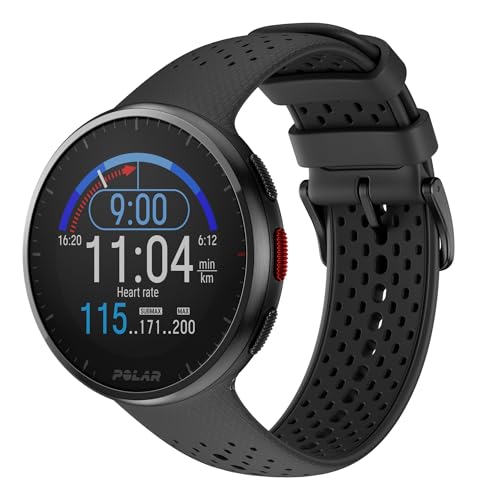
The Polar Pacer Pro is a dedicated running watch with built-in GPS, heart rate, and training load features. It provides guidance on training benefit and recovery. Owners report excellent GPS accuracy and battery life (up to 35 hours GPS). It is lighter and easier to use than advanced Garmins.
What owners say: Reviewers praise the precision of GPS and the simplicity of the interface. Some find the screen resolution lower than competitors.
- Highly accurate GPS tracking
- Lightweight and comfortable for all-day wear
- Comprehensive training load analysis
- Less smart features than rivals
- Lower resolution display
How to choose
- Accuracy of Health Metrics. Look for trackers with proven heart rate and sleep tracking accuracy. Check owner reviews for real-world performance versus clinical devices. Optical heart rate sensors vary by brand; Garmin and Apple tend to be the most trustworthy.
- Battery Life. Battery life ranges from 18 hours (Apple Watch) to 21 days (Galaxy Fit3). Consider how often you want to charge. If you dislike daily charging, choose a tracker with at least 5 days of battery.
- Smartphone Compatibility. Some trackers are tied to an ecosystem (Apple Watch needs iPhone, Galaxy Fit3 works best with Android). Ensure your phone supports the companion app and notifications. Garmin and Fitbit work with both iOS and Android.
- Display Type and Size. AMOLED screens offer vibrant colors but drain battery. Always-on displays use more power. Consider if you need a bright screen for outdoor use or prefer a simple monochrome display for longer life.
- GPS and Activity Tracking. Built-in GPS provides accurate distance and pace without a phone. If you run or cycle outdoors, built-in GPS is essential. Connected GPS uses your phone's signal, which can be less precise.
Frequently asked questions
Can a fitness tracker like Fitbit work without a subscription?
Most trackers work without a subscription for basic features like steps, heart rate, and sleep tracking. Advanced insights, like stress scores or detailed trends, often require a paid plan. Fitbit and Oura have premium tiers, while Garmin and Apple do not require subscriptions for core metrics.
Is a fitness tracker accurate for calories burned?
Calorie burn estimates can vary by up to 20-30% depending on the model and personal physiology. Optical heart rate monitors are more accurate for steady-state activities but less so for weightlifting. Trackers from Garmin and Apple are generally considered among the most accurate.
Which fitness tracker like Fitbit has the best battery life?
The Samsung Galaxy Fit3 offers up to 21 days of battery life, while Oura Ring lasts about a week. Garmin Venu 3 provides up to 14 days in smartwatch mode. Apple Watch SE requires daily charging. Choose based on your tolerance for frequent charging.
Are there fitness trackers that can measure blood pressure?
Most consumer fitness trackers do not measure blood pressure accurately. Some models, like the Omron HeartGuide, are FDA-cleared for blood pressure, but they are not typical fitness trackers. The Garmin Venu 2 Plus has a blood pressure feature using algorithms, but it requires calibration and is not medically certified.
What is the best Fitbit alternative for sleep tracking?
The Oura Ring and Whoop 4.0 are considered top-tier for sleep tracking, with detailed sleep stages and recovery metrics. The Garmin Venu 3 also offers advanced sleep coaching based on sleep quality and stress. Fitbit's Charge 6 provides good sleep tracking but requires premium for advanced analytics.
Can I use a fitness tracker from a different brand with Fitbit app?
No, each brand has its own app. Fitibit data can be exported to Apple Health or Google Fit via third-party apps, but the full experience requires the brand's app. If you want to stick with Fitbit's interface, consider the Charge 6.
The verdict
The Garmin Venu 3 is our overall top pick for a fitness tracker like Fitbit due to its best-in-class health monitoring, long battery life, and smartwatch features. For users who prioritize recovery and training load without a screen, the Whoop 4.0 is an excellent alternative. Budget-minded buyers should consider the Samsung Galaxy Fit3 for basic, reliable tracking at a low cost.