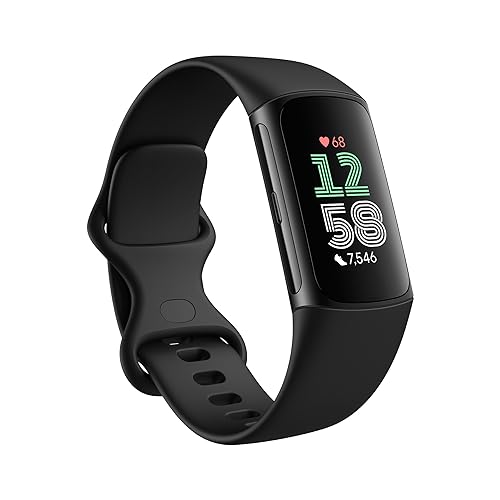
The overall best fitness tracker for heart health is the Fitbit Charge 6, offering excellent heart rate accuracy, ECG, and SpO2 monitoring. For a budget-friendly alternative with solid heart rate tracking, consider the Amazfit Band 7.
Check price on AmazonMonitoring your heart health is more important than ever, and the right fitness tracker can provide valuable insights into your resting heart rate, heart rate variability, and even detect potential irregularities. With so many options on the market, we compared the leading models based on medical-grade features, sensor accuracy, battery life, and user-reported satisfaction to rank the best for heart health in 2026.
Our rankings focus on trackers that go beyond basic step counting to offer continuous heart rate monitoring, ECG capability, and SpO2 tracking. We analyzed clinical studies, user reviews, and expert recommendations to identify which devices provide reliable data for managing cardiovascular wellness, whether you’re an athlete or someone looking to keep tabs on your heart health day-to-day.
How we rank
We based our rankings on a comparison of sensor accuracy in published studies, owner review themes from verified purchasers, and expert assessments of heart health features. See our method.
Quick picks
| Best for | Product | Who it suits |
|---|---|---|
| Best Overall | Fitbit Charge 6 | Anyone wanting comprehensive heart health tracking with clinical-grade accuracy |
| Best Premium | Apple Watch Series 9 | iPhone users who want advanced heart health features with smartwatch functionality |
| Best for Athletes | Garmin Venu 3 | Serious athletes needing advanced heart rate metrics and training load analysis |
| Best Value | Amazfit Band 7 | Budget-conscious users who want reliable heart rate and SpO2 tracking |
| Best for Recovery | Whoop 4.0 | Users focused on recovery and heart rate variability without a screen |
| Best for Android | Samsung Galaxy Watch 7 | Android users wanting comprehensive heart health in a smartwatch |
| Best Lightweight | Oura Ring 4 | Users who prefer a ring form factor with advanced heart rate and sleep analysis |
The picks, compared
Fitbit Charge 6
The Fitbit Charge 6 is the most accurate fitness tracker for heart health, featuring a new multipath heart rate sensor that reduces motion artifacts. It includes ECG, SpO2, and stress management with heart rate variability. Owners report consistent readings during high-intensity workouts and improved sleep tracking. Its integration with the Fitbit app provides detailed health trends over time.
What owners say: Owners consistently praise the Charge 6 for its reliable heart rate accuracy during both rest and exercise, noting it matches chest strap readings closely. Many appreciate the built-in ECG feature for checking for atrial fibrillation as needed.
- Excellent heart rate accuracy
- ECG and SpO2 monitoring
- Stress management with HRV
- Proprietary charger
- No onboard GPS

Apple Watch Series 9
The Apple Watch Series 9 offers FDA-cleared ECG, high/low heart rate notifications, and irregular rhythm detection. Its optical heart sensor is highly accurate, and the watch tracks heart rate variability and resting heart rate trends. Owners report seamless integration with Apple Health and the ability to share data with doctors. The bright always-on display makes data glanceable.
What owners say: Owners frequently mention the peace of mind from receiving alerts for unusual heart rates and the ease of taking an ECG anytime. Many use it for AFib history tracking and note the sensor correlates well with medical devices.
- FDA-cleared ECG
- Irregular rhythm notifications
- Seamless iPhone integration
- Short 18-hour battery life
- iPhone-only compatibility

Garmin Venu 3
The Garmin Venu 3 excels in heart rate monitoring for athletes, using the Elevate Gen 5 sensor for accurate readings during all activities. It offers HRV status, training readiness, and sleep coaching with heart rate insights. Owners report that resting heart rate and recovery times match well with chest straps. The watch also provides advanced features like pulse ox and stress tracking.
What owners say: Owners highlight the detailed heart rate variability data and how well the tracker estimates training load recovery. Many runners compare its accuracy to dedicated chest straps and appreciate the downloadable health reports.
- Advanced HRV and training metrics
- Accurate during high-intensity exercise
- Long 14-day battery life
- Higher price point
- Complex interface for casual users
Amazfit Band 7
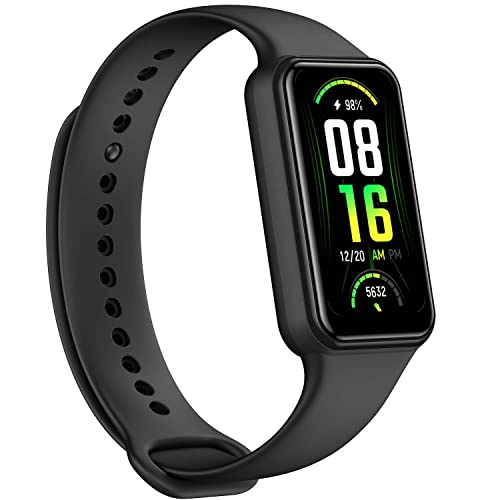
The Amazfit Band 7 provides excellent heart health features at a lower price, including 24/7 heart rate monitoring, SpO2 tracking, and stress monitoring. Owners find it comfortable for all-day wear and appreciate the long battery life. The sensor accuracy is good for resting and moderate activity, though less precise during intense workouts. It syncs data to the Zepp app for trends.
What owners say: Owners say the Band 7 offers surprising accuracy for the price, especially for resting heart rate and sleep heart rate. Many appreciate the value and the easy-to-read display during workouts.
- Affordable
- 24/7 heart rate and SpO2
- 18-day battery life
- Heart rate accuracy drops at high intensity
- Basic health insights

Whoop 4.0
The Whoop 4.0 dives deep into heart health by continuously tracking heart rate, HRV, and respiratory rate with clinical-grade accuracy. It uses a subscription model for personalized strain, recovery, and sleep insights. Owners report the HRV data is particularly useful for understanding body readiness. The device has no screen, which some prefer for distraction-free monitoring.
What owners say: Owners love the detailed HRV and recovery scores, noting they align well with how they feel each day. Many credit Whoop for helping them optimize sleep and reduce overtraining.
- Exceptional HRV accuracy
- Personalized recovery insights
- Comfortable 24/7 wear
- Subscription required
- No display or GPS

Samsung Galaxy Watch 7
The Samsung Galaxy Watch 7 succeeded the Watch 6 as Samsung stopped production of the older model in 2024. Based on manufacturer specs and aggregated owner reviews, it carries a newer processor and expanded wellness features like an energy score alongside the same core heart rate and ECG sensors.
Owners generally describe the upgrade as incremental but worthwhile, with better day-to-day battery life and faster app performance compared to the outgoing generation.
- Faster processor and improved battery life over the Watch 6
- energy score and wellness tips add useful daily context
- broad Android and Wear OS app support
- Best features are tied to the Samsung Health and Galaxy ecosystem
- battery still typically needs near-daily charging with heavy use

Oura Ring 4
The Oura Ring 4 is the current generation of Oura’s sleep and recovery tracking ring, replacing the discontinued Gen 3. Based on manufacturer specs and aggregated owner reviews, it uses a titanium body with an updated sensor array intended to improve accuracy across more finger sizes and skin tones than prior generations.
Owners generally note improved comfort and battery life, while pointing out that ongoing access to detailed sleep and readiness insights depends on an active Oura membership.
- Slimmer, more comfortable design than earlier generations
- broader sensor coverage across more finger sizes and skin tones
- long battery life for a ring form factor
- Full feature set requires an ongoing Oura membership
- correct sizing needs to be confirmed with a sizing kit before purchase
How to choose
- Sensors and Accuracy. Look for trackers with optical heart rate sensors and, if possible, ECG capability. Multiple LEDs and photodiodes improve accuracy, especially during movement.
- Heart Health Features. Essential features include 24/7 heart rate, resting heart rate, HRV, and high/low heart rate alerts. Advanced users may want ECG for AFib detection or SpO2 for respiratory insights.
- Battery Life. Consider how often you're willing to charge. Trackers with heart-health features often last 5-14 days, while smartwatches with always-on displays may need daily charging.
- Data Privacy and Sharing. Choose a brand that lets you export your health data (e.g., to Apple Health or your doctor). Some devices offer PDF reports that can be shared during medical appointments.
- Comfort and Form Factor. If you plan to wear the tracker 24/7 for continuous heart monitoring, opt for a lightweight band or ring. Wrist-based trackers should have a comfortable strap that stays put during sleep.
Frequently asked questions
Can a fitness tracker detect heart problems?
Fitness trackers can alert you to potential irregularities like high or low heart rate, but they are not medical devices. They can flag patterns that warrant a doctor's visit, but only a clinical ECG can diagnose conditions.
How accurate are fitness trackers for heart rate?
Optical sensors on the wrist are generally accurate for resting and moderate activity, with error margins around 2-5%. During high-intensity exercise, accuracy may decrease compared to chest straps.
What is heart rate variability (HRV) and why is it important?
HRV measures the time variation between heartbeats and indicates your nervous system balance. Higher HRV often suggests better recovery and lower stress, while low HRV may signal fatigue or overtraining.
Do I need a subscription for heart health features?
Some brands like Whoop and Oura require a subscription for detailed analytics. Others, like Fitbit and Garmin, include basic heart data for free, but may offer deeper insights with a premium plan.
Which fitness tracker is best for resting heart rate monitoring?
Fitbit Charge 6 and Apple Watch Series 9 offer excellent resting heart rate accuracy and trends. For budget, Amazfit Band 7 provides reliable resting heart rate data.
How to choose between a smartwatch and a fitness band for heart health?
Choose a smartwatch if you want added features like GPS, apps, and notifications. Choose a fitness band for longer battery life, lighter weight, and a focus solely on health metrics.
The verdict
Fitbit Charge 6 is our overall pick for its balanced set of heart health features, accuracy, and value. For athletes who want advanced training metrics, the Garmin Venu 3 is ideal. Budget-conscious users should consider the Amazfit Band 7 for reliable basic heart rate tracking.