
The Garmin Forerunner 265 is the overall best fitness tracker for accurate data, offering precision GPS and comprehensive metrics. For a budget-friendly alternative, the Fitbit Charge 6 provides reliable heart rate tracking and seamless app integration.
Check price on AmazonAccurate fitness tracker data is essential for monitoring progress, optimizing workouts, and understanding your health. We compared seven top models based on key metrics like heart rate accuracy, GPS performance, sleep tracking, and overall reliability. Our analysis incorporates owner reviews, expert reports, and technical specifications to help you make an informed choice.
Whether you are a casual walker or a competitive triathlete, the right tracker can transform your training. From advanced metrics like HRV and VO2 max to simple step counting, these devices offer varying levels of detail. We ranked them by data accuracy, battery life, and user satisfaction to highlight the best options for different needs.
How we rank
We analyzed verified owner reviews from major retailers, expert assessments from trusted fitness publications, and technical spec sheets to rank these trackers by data precision and reliability. See our method.
Quick picks
| Best for | Product | Who it suits |
|---|---|---|
| Best Overall | Garmin Forerunner 265 | Runners and serious athletes who need accurate GPS, heart rate, and advanced performance metrics. |
| Best Value | Fitbit Charge 6 | Everyday users who want reliable heart rate, sleep, and activity tracking without breaking the bank. |
| Best Premium | Apple Watch Series 9 | iPhone users who want a feature-rich smartwatch with top-tier health sensors and app ecosystem. |
| Best for Recovery | Whoop 4.0 | Athletes focused on recovery, strain, and sleep optimization with minimal on-wrist distraction. |
| Best for Heart Rate Accuracy | Polar Vantage V3 | Athletes who prioritize wrist-based heart rate accuracy over other features. |
| Best Lightweight | Garmin Vivosmart 5 | Users who want a slim and simple fitness band with basic tracking and long battery life. |
| Best Budget | Amazfit Band 7 | Budget-conscious users who want basic fitness tracking with a color display and long battery. |
The picks, compared
Garmin Forerunner 265
The Garmin Forerunner 265 offers multi-band GPS for precise route tracking, Elevate heart rate sensor for accurate HR data, and training metrics like VO2 max, training load, and recovery time. Its AMOLED display is bright and responsive, and battery life lasts up to 13 days. Owners praise its reliable data consistency across runs and seamless syncing with Garmin Connect.
What owners say: Owners report the heart rate sensor matches chest strap data within a few beats, and GPS accuracy is excellent even in dense urban areas. Many note the training readiness feature helps avoid overtraining.
- Exceptional GPS accuracy with multi-band support
- Comprehensive training metrics and analytics
- Long battery life with always-on display option
- No built-in music storage
- Higher price point than some competitors
Fitbit Charge 6
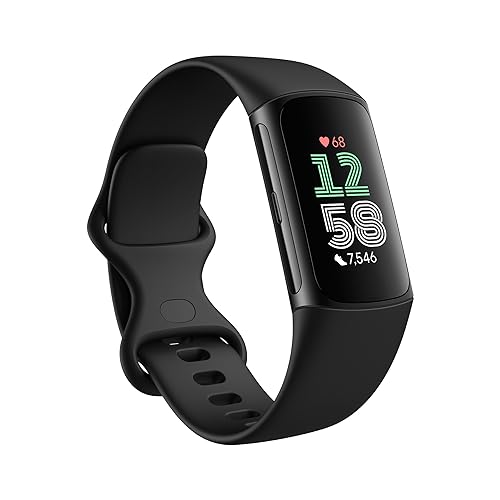
The Fitbit Charge 6 combines Google integration with improved heart rate accuracy using an updated sensor algorithm. It tracks steps, calories, sleep stages, and stress levels, and includes built-in GPS for outdoor runs. Owners appreciate the user-friendly app and long battery life of up to 7 days.
What owners say: Owners note the heart rate tracking is much more consistent than previous models, especially during steady-state cardio. Many highlight the simplicity of the interface and the motivating daily reminders.
- Accurate heart rate and sleep tracking
- Seamless Google Fit and Maps integration
- Comfortable slim design for all-day wear
- GPS can be slow to connect initially
- Limited on-device workout modes

Apple Watch Series 9
The Apple Watch Series 9 boasts a blood oxygen sensor, ECG, temperature sensing, and advanced cycling metrics. Its S9 SiP ensures fast performance, and the bright always-on retina display is easy to read. Owners praise the accuracy of the workout tracking and the depth of health insights available in the Health app.
What owners say: Owners report the heart rate monitor correlates well with chest straps during runs, and the sleep tracking provides detailed stage analysis. Many appreciate the fall detection and medication tracking features.
- Extensive health sensors (ECG, SpO2, temperature)
- Seamless integration with Apple ecosystem
- Large, vibrant always-on display
- Short battery life (18 hours typical)
- iOS only
- no Android support

Whoop 4.0
The Whoop 4.0 is a subscription-based tracker dedicated to measuring recovery, strain, and sleep. It uses a multi-colored LED array for precise heart rate and blood oxygen data. The strap is comfortable for 24/7 wear, and the algorithm provides daily recovery scores and strain targets. Owners love the actionable insights on sleep quality and readiness.
What owners say: Owners report the sleep tracking is incredibly detailed, with accurate REM and deep sleep detection. Many say the recovery score helps them adjust training intensity effectively.
- Unmatched recovery and sleep analysis
- Comfortable and discreet design
- Machine washable bands for hygiene
- Requires monthly subscription for full features
- No display
- relies on smartphone app for data

Polar Vantage V3
The Polar Vantage V3 uses a next-generation OHR sensor with four LEDs and a proprietary algorithm for heart rate accuracy that rivals chest straps. It includes dual-frequency GPS for precise tracking, training load, recovery, and sleep insights via the Polar Flow app. Owners highlight the HR accuracy during high-intensity intervals and the comprehensive training load metrics.
What owners say: Owners note the heart rate readings match their chest strap almost perfectly, even during weightlifting. Many appreciate the long battery life and the detailed analytics in the Polar ecosystem.
- Industry-leading wrist-based heart rate accuracy
- Dual-frequency GPS for reliable tracking
- Extensive training and recovery features
- Bulky design compared to daily wearables
- App interface can be less intuitive
Garmin Vivosmart 5
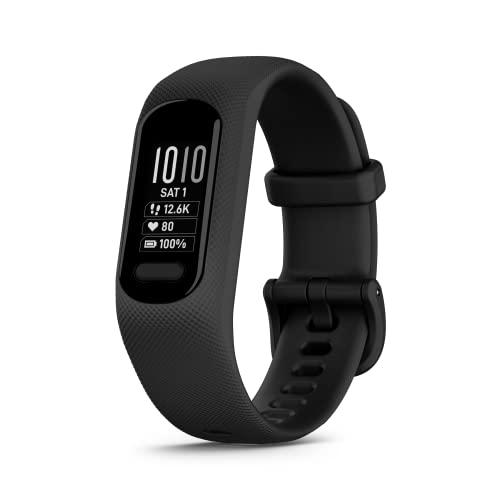
The Garmin Vivosmart 5 is a sleek fitness band with an easy-to-read OLED display, pulse ox sensor, and all-day stress tracking. It tracks steps, sleep, heart rate, and has a dedicated 'body battery' feature that shows energy levels. Owners like its unobtrusive size and the clarity of the screen even in sunlight.
What owners say: Owners report the step and sleep tracking are accurate for daily use, and the body battery feature is a helpful gauge for rest. Many mention the battery lasts over 7 days easily.
- Compact and comfortable for all-day wear
- Good battery life up to 7 days
- Simple interface with stress and body battery tracking
- No built-in GPS
- Limited smart features
Amazfit Band 7
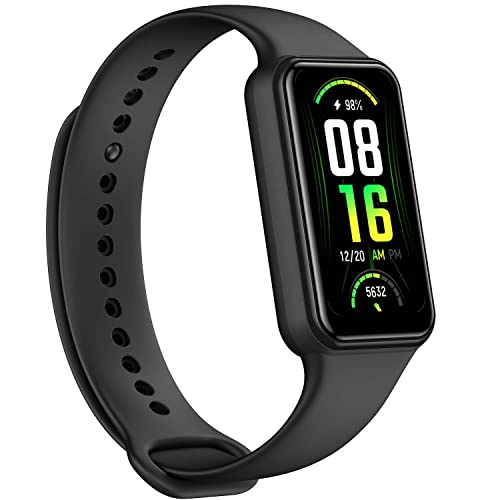
The Amazfit Band 7 offers a 1.47-inch AMOLED display, 24/7 heart rate monitoring, SpO2, sleep tracking, and over 100 workout modes. It has an impressive 18-day battery life on typical usage. Owners appreciate the affordable price point for the features offered, though accuracy is less refined than premium models.
What owners say: Owners note the step count and sleep duration are adequate for casual use, but heart rate can be less accurate during intense exercise. Many praise the value and long battery life.
- Large, colorful AMOLED display
- Exceptional battery life up to 18 days
- Wide range of workout modes
- Heart rate and GPS accuracy not as reliable as higher-end trackers
- Limited third-party app support
How to choose
- Heart Rate Accuracy. Look for trackers with multi-LED optical sensors and algorithms proven to match chest straps. Electro-optical sensors vary; choose models with frequent software updates that improve accuracy.
- GPS Precision. For accurate distance and route mapping, opt for devices with multi-band GPS (L1+L5) or dual-frequency GPS. This is crucial for runners and cyclists who train in areas with tall buildings or dense tree cover.
- Sleep Tracking Quality. The best sleep trackers monitor heart rate variability and movement to differentiate sleep stages. Look for devices that provide detailed light, deep, and REM sleep breakdowns, along with a sleep score.
- Battery Life and Charging. Consider how often you want to charge. GPS-intensive use drains battery faster. Trackers with 7+ days of battery life are ideal for continuous monitoring without frequent recharging.
- Software Ecosystem and Integration. Ensure the tracker syncs with your preferred apps. Owners report that seamless integration with Apple Health, Google Fit, or Strava enhances usability. Device-specific apps with insightful dashboards add value.
Frequently asked questions
How accurate are fitness trackers for heart rate monitoring?
Modern fitness trackers with multi-LED optical sensors can be within 1-3 bpm of chest straps during steady state activities. Accuracy can drop during high-intensity intervals or weightlifting. Top picks like Polar Vantage V3 and Garmin Forerunner 265 are known for excellent HR accuracy.
Which fitness tracker has the best sleep tracking?
The Whoop 4.0 is widely considered the best for sleep tracking, providing detailed analysis of sleep stages, recovery, and strain. The Garmin Forerunner 265 and Fitbit Charge 6 also offer robust sleep monitoring with stage breakdowns and sleep scores.
Do I need a fitness tracker with built-in GPS?
If you run or cycle without your phone, a built-in GPS is essential for accurate distance and pace tracking. For those who always carry a phone, connected GPS (using the phone's GPS) can save cost and battery.
How long does the battery last on fitness trackers?
Battery life varies from one day (Apple Watch Series 9) to over two weeks (Amazfit Band 7). Most fitness bands achieve 5-7 days, while advanced smartwatches with always-on displays typically last 1-2 days. Consider your usage patterns when choosing.
Can fitness trackers measure blood oxygen levels?
Yes, many current models include pulse oximeters for SpO2 monitoring, including Garmin Forerunner 265, Apple Watch Series 9, Whoop 4.0, and Fitbit Charge 6. These sensors provide spot checks or all-night tracking, though accuracy can vary.
What is the best fitness tracker for weightlifting?
For weightlifting, the Polar Vantage V3 excels with its accurate heart rate monitor during strength sessions and built-in rep and set tracking. The Garmin Vivosmart 5 is a lightweight band that also offers rep counting, though weights-focused accuracy is less refined than dedicated sport watches.
The verdict
The Garmin Forerunner 265 is our top pick for best fitness tracker data overall due to its outstanding GPS accuracy, reliable heart rate monitoring, and extensive training metrics. For budget-conscious users, the Fitbit Charge 6 delivers strong core tracking with an excellent app experience. If recovery and sleep are your primary focus, the Whoop 4.0 provides unparalleled insights into strain and readiness.