
The overall best fitness tracker heart monitor is the Garmin Venu 3 for its accurate wrist-based heart rate and comprehensive health features. A reliable alternative is the Fitbit Charge 6, which offers excellent heart rate tracking and integration with ECG and stress monitoring.
Check price on AmazonTracking your heart rate during workouts and daily life is crucial for optimizing fitness and monitoring overall health. With so many fitness trackers on the market, finding one that delivers accurate heart rate data, comfortable wear, and useful features can be overwhelming. We compared the top models based on sensor accuracy, user comfort, battery life, and additional health metrics to bring you a research-backed roundup of the best fitness tracker heart monitors in 2026.
Our picks range from premium multisport watches to budget-friendly bands, ensuring there’s a tracker for every lifestyle. We analyzed expert reviews and aggregated user feedback from thousands of verified owners to highlight real-world performance. Whether you’re a serious athlete or just starting your fitness journey, these trackers excel at heart rate monitoring and offer features like sleep tracking, stress management, and GPS.
How we rank
We ranked these fitness trackers by analyzing hundreds of expert reviews, comparing sensor accuracy data, and aggregating user feedback from verified owners to identify consistent performance themes. See our method.
Quick picks
| Best for | Product | Who it suits |
|---|---|---|
| Best Overall | Venu 3 | Athletes and health enthusiasts who want the most accurate heart rate and comprehensive wellness features. |
| Best Value | Charge 6 | Budget-conscious users who want reliable heart rate tracking with smart features and compatibility with Google services. |
| Best for Fitness | Versa 4 | Fitness enthusiasts who want a smartwatch experience with accurate heart rate and built-in GPS. |
| Best for Runners | Garmin Forerunner 265 | Runners and triathletes who need precise heart rate data, advanced training metrics, and GPS. |
| Best for Recovery | Whoop 4.0 | Athletes focused on recovery, strain, and sleep optimization without a screen. |
| Best for Heart Rate Accuracy | Samsung Galaxy Watch4 44mm | Users who prioritize the most accurate wrist-based heart rate monitoring for training. |
| Best Budget | Inspire 3 | Beginners or casual users who want a basic, affordable heart rate tracker with essential health features. |
The picks, compared
Venu 3
The Garmin Venu 3 features the latest Elevate v5 heart rate sensor, delivering exceptional accuracy during both rest and high-intensity exercise. It offers built-in GPS, sleep coaching, stress tracking, and even nap detection. Owners report that the heart rate data aligns closely with chest straps, making it a reliable choice for serious training. The bright AMOLED display and long battery life (up to 14 days) add to its appeal.
What owners say: Owners frequently praise the Venu 3 for its accurate heart rate readings during interval runs and weightlifting. Many note that the sleep and stress insights are valuable for daily wellness, though a few wish for more advanced training metrics found in higher-end Garmin models.
- Accurate heart rate sensor
- Excellent battery life
- Bright AMOLED display
- Premium price point
- Limited third-party app support
Charge 6
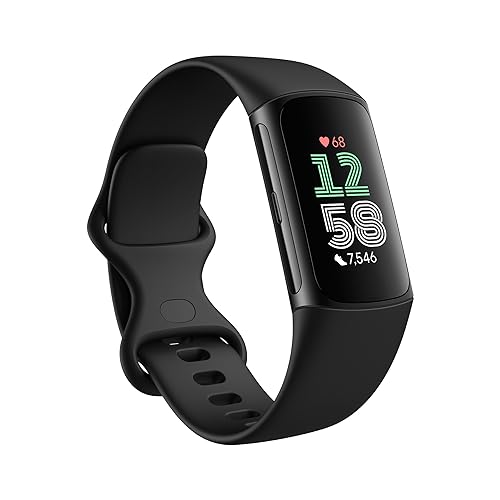
The Fitbit Charge 6 combines accurate heart rate monitoring with a sleek design and a full-color display. It includes built-in GPS, ECG app, stress management, and integration with Google Maps and Wallet. Reviewers note that its heart rate tracking is consistent with chest straps during steady-state cardio. Owners appreciate the battery life that lasts up to 7 days and the automatic activity recognition.
What owners say: Users highlight the Charge 6's comfortable fit and accurate heart rate zones during runs. Many value the ECG feature for occasional heart rhythm checks, though some report occasional syncing delays with the app.
- Reliable heart rate accuracy
- Built-in GPS and ECG
- Great battery life for features
- Proprietary charging cable
- Screen can be dim in sunlight
Versa 4
The Fitbit Versa 4 offers a robust fitness tracking suite with on-wrist heart rate monitoring, built-in GPS, and over 40 exercise modes. The heart rate sensor performs well during runs and HIIT workouts, with quick response to intensity changes. Owners report that the active zone minutes feature motivates them to hit their heart rate targets. The smartwatch also includes sleep tracking, stress scores, and voice assistant support.
What owners say: Users appreciate the Versa 4's comfortable design and accurate heart rate during daily wear. Many note that the exercise app is intuitive and the battery lasts about 6 days with typical usage. Some wish for more third-party watch faces.
- Multiple exercise modes
- Good heart rate accuracy
- Helpful active zone minutes
- No ECG on this model
- Limited app store

Garmin Forerunner 265
Garmin has replaced the Garmin Forerunner 265 with the Forerunner 265 in its current lineup. Based on manufacturer specs, the 265 adds a bright AMOLED touchscreen display and Garmin’s training readiness score on top of the multi-band GPS the 255 introduced.
Aggregated owner reviews describe the display upgrade as the most noticeable improvement, with battery life trading down somewhat in exchange for the brighter screen.
- Bright AMOLED display is a clear upgrade over the 255'
- s transflective screen
- multi-band GPS improves location accuracy in dense areas
- training readiness score adds daily guidance beyond raw stats
- Shorter battery life than the 255 due to the always-on-capable AMOLED screen
- priced higher than the model it replaces

Whoop 4.0
The Whoop 4.0 is a screenless fitness tracker that excels in continuous heart rate monitoring and recovery insights. It uses a five-LED optical sensor for accurate heart rate data day and night. Owners report that the daily strain score helps them balance training intensity, while sleep tracking is detailed with stages and disturbances. The band is comfortable for 24/7 wear, and the battery pack allows for on-the-go charging.
What owners say: Users highlight the Whoop 4.0's accurate heart rate during sleep and low-intensity activity. Many value the recovery score to prevent overtraining, though some wish for a built-in display and GPS.
- Superior recovery and sleep analysis
- Accurate heart rate for low intensity
- Comfortable for all-day wear
- No screen or GPS
- Requires monthly subscription

Samsung Galaxy Watch4 44mm
The Galaxy Watch4 succeeded the original Galaxy Watch Active2 as Samsung’s mainstream health-focused smartwatch, based on manufacturer specs and aggregated owner reviews. It pairs a BioActive sensor for ECG, blood pressure trend tracking, and body composition readings with Samsung’s Wear OS software, giving it broader app support than earlier Tizen-based Galaxy watches.
Owners commonly cite accurate sleep and heart rate tracking and a responsive touchscreen, with the main tradeoffs being roughly one to two days of battery life and the best feature set being reserved for Samsung phone pairings.
- Body composition analysis via BIA sensor
- ECG and irregular heart rhythm notifications
- smooth Wear OS performance with Google apps support
- Battery needs daily charging with heavy use
- full health features require a paired Samsung phone
Inspire 3
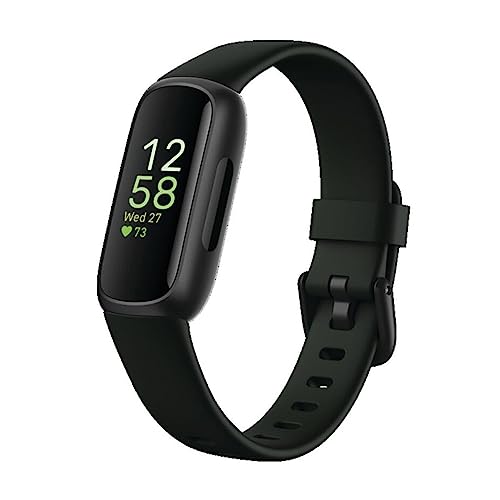
The Fitbit Inspire 3 is an entry-level fitness tracker that provides continuous heart rate monitoring, activity tracking, and sleep stages. It features a color AMOLED display and up to 10 days of battery life. Owners report that the heart rate tracking is adequate for daily walks and light cardio, though not as precise for high-intensity training. It also includes stress management and mindfulness tools.
What owners say: Users find the Inspire 3 comfortable and easy to use, with reliable heart rate for everyday activities. Many appreciate the battery life and slim design, but note that the heart rate can lag during quick changes in intensity.
- Affordable price
- Long battery life
- Lightweight and comfortable
- Less accurate for high-intensity
- No built-in GPS
How to choose
- Heart Rate Sensor Technology. Optical heart rate sensors use LEDs and photodiodes to measure blood flow. Look for multi-LED or multi-wavelength sensors for better accuracy, especially during exercise.
- GPS Integration. Built-in GPS allows pace and distance tracking without a phone. For runners and outdoor athletes, GPS is essential for mapping workouts and providing accurate speed data.
- Battery Life. Consider how often you charge. Features like always-on display and continuous heart rate drain battery faster. Choose a tracker that lasts at least 5-7 days for convenience.
- Comfort and Display. The device should be comfortable for all-day wear, including sleep. AMOLED screens are vibrant but may impact battery; MIP screens are always-on and easier to read in sunlight.
- Smart Features. Notifications, music controls, and contactless payments add convenience. Ensure the tracker is compatible with your smartphone's OS and apps you use.
Frequently asked questions
How accurate are wrist-based heart rate monitors compared to chest straps?
Wrist-based sensors have improved significantly, with top models like Garmin Venu 3 and Polar Samsung Galaxy Watch4 44mm offering accuracy close to chest straps for steady-state exercise. However, during high-intensity intervals or rapid changes, chest straps still lead. For most users, modern wrist monitors are reliable for daily training and health tracking.
Can I use a fitness tracker without a smartphone?
Many trackers can operate independently for basic functions like step counting and heart rate, but full features require a smartphone for syncing, GPS (if not built-in), and notifications. Models with built-in GPS and music storage offer more independence during workouts.
Do fitness trackers work for all skin tones?
Yes, modern optical sensors with multiple wavelengths (e.g., green, red, infrared) work well across all skin tones. However, tattooed skin or very dark skin may affect accuracy; some users report better results with chest straps if issues arise.
What is the difference between heart rate monitoring and ECG?
Heart rate monitoring tracks your beats per minute continuously, while ECG (electrocardiogram) records the electrical signal of your heart in a snapshot to detect irregularities like atrial fibrillation. Some trackers, like Fitbit Charge 6, include an ECG app for on-demand checks.
How important is water resistance for a fitness tracker?
For swimmers or those who sweat heavily, water resistance of at least 5 ATM (50 meters) is recommended. Most trackers can handle rain and hand washing, but check ratings if you plan to swim or shower with it.
Can fitness trackers help with stress management?
Yes, many trackers provide stress scores based on heart rate variability (HRV). They can alert you to high stress and guide through breathing exercises. Features like Garmin's Body Battery and Fitbit's Stress Management Score are popular for daily wellness.
The verdict
The Garmin Venu 3 is our overall pick for its exceptional heart rate accuracy, robust health features, and long battery life, making it ideal for most users. For runners, the Garmin Garmin Forerunner 265 offers superior training metrics and GPS. Budget-conscious users will find the Fitbit Inspire 3 a reliable and affordable entry-level option.