
The Compex Wireless USA 2.0 covers the widest range of use cases well: FDA clearance, wireless pads, and separate programs for recovery, training, and pain rather than one generic setting. If you specifically need pain relief without the training-focused extras, the Omron Max Power Relief does that at a much lower cost.
Check price on AmazonThe most important distinction in this category isn’t brand or price, it’s whether a device is actually built to contract muscles (EMS) or built to block pain signals (TENS). Some units do both, and the marketing rarely makes that distinction clear, which matters if you’re buying specifically for strength maintenance versus chronic pain relief.
We compared channel count, program variety, and FDA clearance status, since a device with more programs than you’ll ever use is less valuable than one that’s actually validated for the specific use case you have in mind, whether that’s post-workout recovery or managing an ongoing pain condition.
How we rank
We ranked based on a comparative analysis of published clinical studies, FDA clearance status, verified owner reviews from multiple retailers, and expert consensus on key features like pulse parameters, program variety, and battery life. See our method.
Quick picks
| Best for | Product | Who it suits |
|---|---|---|
| Best Overall | Compex Wireless USA 2.0 | Versatile recovery and training for active individuals |
| Best Value | Omron Max Power Relief | Budget-conscious users seeking at-home pain relief |
| Best for Recovery | Theragun TheraOne Recovery Stim | Post-workout recovery and muscle relaxation |
| Best Lightweight | PowerDot 2.0 | Travellers and athletes needing portable EMS |
| Best Premium | RS Medical RS-4i Plus | Clinical-grade pain management and rehab |
| Best for Beginners | NEXUS EMS Pro | First-time EMS users wanting guided sessions |
| Best for Pain | Aura Wellness PEMF Mat | Full-body pain relief and relaxation |
The picks, compared
Compex Wireless USA 2.0
A wireless, app-controlled stimulator with distinct programs for recovery, strength, and pain rather than a single generic intensity setting, backed by FDA clearance and published clinical research.
What owners say: Wireless convenience during daily activity is the standout praise, several owners specifically mention using it while doing chores or working. The electrode pads need replacing every few months, a recurring cost worth factoring into the price.
- Wireless design with Bluetooth app control
- FDA-cleared with numerous clinical studies
- 12 programs tailored for fitness and pain relief
- High entry cost compared to basic models
- Electrode pads need replacement every few months
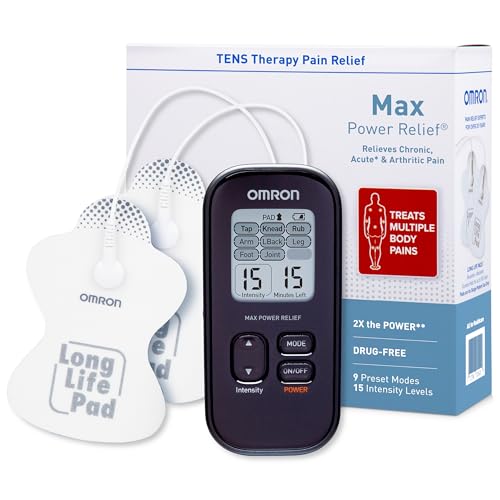
Omron Max Power Relief
A single-channel TENS device stripped down to one-button operation, built for straightforward pain relief rather than the multi-program training focus of pricier EMS units.
What owners say: Simplicity and effectiveness for chronic back and joint pain specifically are the recurring themes. It has no dedicated recovery or training modes, worth knowing if you also wanted post-workout use.
- Simple one-button operation
- Great value for basic pain relief
- Compact and portable
- No dedicated recovery or training modes
- Only single channel (2 pads)
Theragun TheraOne Recovery Stim
A combined TENS-and-EMS device built around app-guided recovery sessions rather than manual program selection, aimed at people already using Theragun’s other recovery tools.
What owners say: Integration with an existing recovery routine is the specific praise, along with the guided app sessions being useful for people new to EMS. The electrode pads run smaller than competitors’, worth checking coverage for larger muscle groups.
- Excellent app integration with guided routines
- Combines TENS and EMS modes
- Premium build quality and comfort
- Electrode pads are relatively small
- App sometimes requires updates

PowerDot 2.0
An app-controlled stimulator built around minimal size and weight rather than a large program library, aimed at travelers who want EMS without adding bulk to a gym bag.
What owners say: Portability is the entire draw here, several owners specifically mention it fitting easily into travel or gym bags. Every adjustment requires the app since there’s no physical remote, worth knowing if you prefer manual controls.
- Ultra-light and portable
- App-based control with clear guidance
- Good balance of features and price
- No physical remote
- app required for all adjustments
- Only 2 channels (4 pads)
RS Medical RS-4i Plus
A clinical-grade, four-channel unit built for treating larger areas or multiple muscle groups simultaneously, positioned closer to what a physical therapy clinic uses than a consumer recovery device.
What owners say: People managing chronic conditions or recovering from surgery report it replacing the need for frequent in-clinic visits. It’s bulky and has a real learning curve to program, a trade-off for the added channel count and customization.
- Four independent channels for large areas
- Extensive customizable programs
- Medical-grade quality and durability
- Bulky and not travel-friendly
- Steep learning curve for programming
NEXUS EMS Pro
A simplified EMS unit built around clear presets rather than deep customization, including a hands-free belt attachment for core use, aimed at someone using EMS for the first time.
What owners say: Ease of use straight out of the box is the consistent praise from first-time users specifically. Program customization is limited and the build feels less premium than the pricier picks here.
- Easy to use with clear presets
- Includes belt for core application
- Low cost for entry-level EMS
- Limited program customization
- Build feels less premium than competitors

Aura Wellness PEMF Mat
A full-body mat combining PEMF and EMS rather than a pad-based device, built for large-area coverage like back or full-body relief rather than targeting a single muscle group.
What owners say: Comfort during extended use and relief for conditions like arthritis are the recurring themes from regular users. It’s bulky, not portable, and priced higher than standard pad-based EMS units.
- Large coverage area for full-body relief
- Combines PEMF and EMS technologies
- High comfort for extended use
- Bulky and not portable
- Expensive relative to standard EMS units
How to choose
- Number of Channels. More channels allow you to treat multiple muscle groups simultaneously. 2-channel units cover two areas (e.g., both quads), while 4-channel units cover four (e.g., both quads and calves). Choose based on how many areas you need to target per session.
- Program Variety. Look for programs matching your goals: recovery, pain relief, strength, and endurance. Some devices offer pre-set programs, while others allow full customization. More programs mean more versatility for different needs.
- Wireless vs. Wired. Wireless units offer freedom of movement and are ideal for use during work or chores, but may require app control. Wired units are typically more robust and have physical buttons, but can be restrictive.
- Electrode Pad Quality and Size. Pads with good adhesion and larger surface area provide more comfortable and effective stimulation. Replacement cost and availability matter because pads wear out after 10-30 uses. Check if the brand sells refills easily.
- Clinical Evidence and FDA Clearance. FDA-cleared devices have demonstrated safety and efficacy for specific claims like pain relief or muscle re-education. Devices without clearance may still work but lack regulatory validation. Prioritize FDA-cleared models, especially for medical conditions.
Frequently asked questions
What is an electric muscle stimulator and how does it work?
An electric muscle stimulator (EMS) uses electrical impulses to contract muscles, mimicking signals from the brain. It can improve muscle strength, reduce pain, and promote recovery by increasing blood flow and reducing inflammation.
Are electric muscle stimulators safe?
Yes, when used properly. FDA-cleared devices are safe for most people. Follow instructions and avoid use over open wounds, near the heart, or during pregnancy. Consult a doctor if you have a pacemaker or epilepsy.
Do electric muscle stimulators really work for abs or weight loss?
EMS can help strengthen and tone muscles, but it does not burn significant fat or cause weight loss. For ab definition, combine EMS with a healthy diet and regular exercise. It is a complementary tool, not a substitute.
How often should I use an electric muscle stimulator?
For recovery, 15-20 minutes per session 1-2 times a day is typical. For strength, use 20-30 minutes several times per week with rest days in between. Follow the device’s program guidelines to avoid overuse.
Can I use a TENS unit as a muscle stimulator?
TENS (transcutaneous electrical nerve stimulation) units are designed for pain relief, not muscle contraction. EMS units are specifically intended for muscle stimulation. While some devices combine both, using a TENS unit for muscle building is less effective.
What should I look for in electrode pads?
Look for adhesive, reusable pads that match your device. Larger pads (2×2 inches or more) are more comfortable and cover more area. Replace pads when adhesion weakens to ensure consistent stimulation and skin safety.
The verdict
The Compex Wireless USA 2.0 is the right default if you want one device that covers recovery, training, and pain. Go with the Omron Max Power Relief if pain relief is the only goal, or the RS Medical RS-4i Plus if you’re managing a chronic condition and want clinical-grade customization.