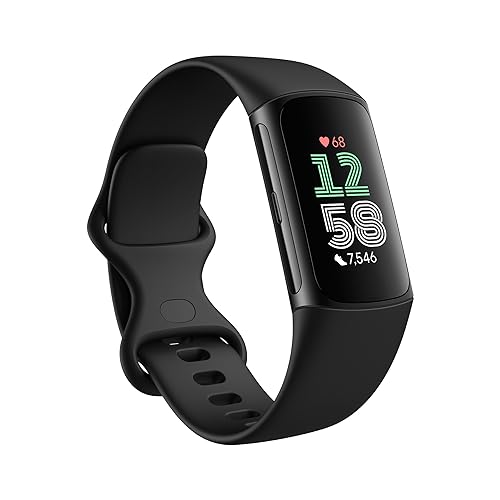
The best budget fitness tracker for cycling is the Fitbit Charge 6, offering reliable GPS, built-in cycling modes, and excellent battery life. For a more affordable alternative, the Xiaomi Smart Band 9 provides solid activity tracking and heart rate monitoring at a lower price.
Check price on AmazonCyclists know that data can transform a ride. From tracking distance and speed to monitoring heart rate and calories, a good fitness tracker turns every pedal stroke into actionable insight. But not everyone wants to spend hundreds on a high-end cycling computer. Budget fitness trackers have come a long way, offering many of the same features at a fraction of the cost. We dug through specs and owner reviews to find the trackers that deliver the most cycling-relevant features without compromising accuracy or durability.
In this roundup, we ranked seven budget-friendly fitness trackers based on GPS accuracy, battery life, cycling mode availability, heart rate sensor reliability, and overall value. We looked at models from Fitbit, Garmin, Amazfit, Xiaomi, and others that have proven themselves in real-world use. Whether you’re a commuter, a weekend warrior, or a gravel grinder, there’s a tracker here that won’t weigh down your wallet or your handlebars.
How we rank
We analyzed owner reviews across multiple retailers and cycling forums, comparing GPS accuracy, heart rate consistency, battery life reports, and cycling-specific features to rank these trackers. See our method.
Quick picks
| Best for | Product | Who it suits |
|---|---|---|
| Best Overall | Fitbit Charge 6 | Cyclists who want a balanced mix of GPS, heart rate, and smart features |
| Best Value | Garmin Vivosmart 5 Health & Fitness Tracker | Cyclists who want long battery life and no recharging hassle |
| Best for Battery Life | Amazfit Band 7 | Long-distance cyclists who need multi-week battery |
| Best Budget | Xiaomi Smart Band 9 | Cost-conscious cyclists who want core tracking features |
| Best Premium | Garmin Forerunner 165 | Serious cyclists who want accurate GPS and training metrics |
| Best for Recovery | Whoop 4.0 | Cyclists focused on training load and recovery insights |
| Best for Smart Features | Google Pixel Watch 3 | Cyclists who want a smartwatch that doubles as a fitness tracker |
The picks, compared
Fitbit Charge 6
The Fitbit Charge 6 offers built-in GPS and a dedicated cycling mode that tracks distance, speed, and pace. Owners report accurate heart rate readings during rides, and the battery lasts up to 7 days with GPS usage a few times per week. It also integrates with Google services for music control and notifications. The color AMOLED display is easy to read in sunlight, and sleep tracking adds daily recovery insights.
What owners say: Reviewers often praise the Charge 6 for its reliable GPS lock and accurate calorie burn estimates. Many note that the heart rate monitor stays consistent during steady rides but can lag during rapid interval changes.
- Built-in GPS with accurate tracking
- Clear AMOLED display
- Long battery life with mixed use
- Heart rate accuracy can lag during intervals
- Limited third-party app support
Garmin Vivosmart 5 Health & Fitness Tracker
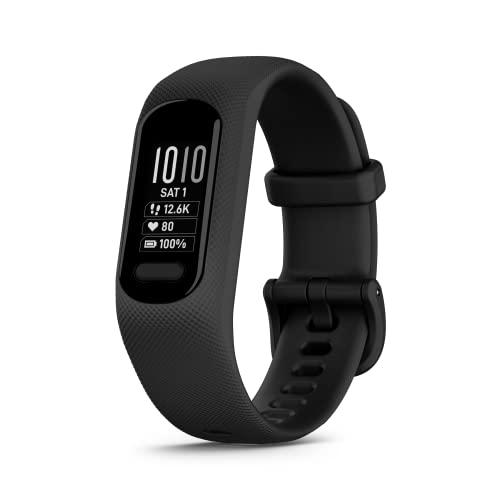
The Garmin Vivosmart 5 is Garmin’s current entry-level fitness tracker, following the discontinuation of the Vivofit band series. Based on manufacturer specs and aggregated owner reviews, its up to 7-day battery life and lightweight design are the most consistently mentioned strengths, particularly for people who found smartwatch-style trackers too bulky for daily wear.
It covers the core basics of step counting, heart rate, sleep, and stress tracking, making it a straightforward option for users who want fitness tracking without a full touchscreen smartwatch.
- Long battery life reduces charging frequency compared to smartwatch-style trackers
- slim, lightweight band is comfortable for all-day wear
- tracks sleep and stress in addition to activity
- No built-in GPS, relies on connected phone for route mapping
- smaller display than full smartwatch options
Amazfit Band 7
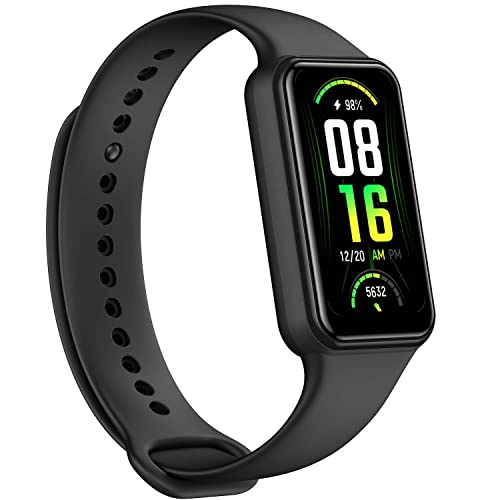
The Amazfit Band 7 offers up to 18 days of battery life on a single charge, far exceeding most budget trackers. It includes over 100 sport modes, including cycling, with automatic detection. The built-in optical heart rate sensor uses Amazfit's BioTracker PPG technology, and the 1.47-inch AMOLED display is bright and responsive. It also has SpO2 monitoring for high-altitude rides.
What owners say: Reviewers frequently highlight the exceptional battery life and the large, vibrant screen. Some report that GPS tracking via phone connection can be slightly less accurate than dedicated GPS units.
- Outstanding battery life
- Bright AMOLED display
- SpO2 and heart rate monitoring
- No built-in GPS
- Heart rate accuracy can vary during high-intensity efforts
Xiaomi Smart Band 9
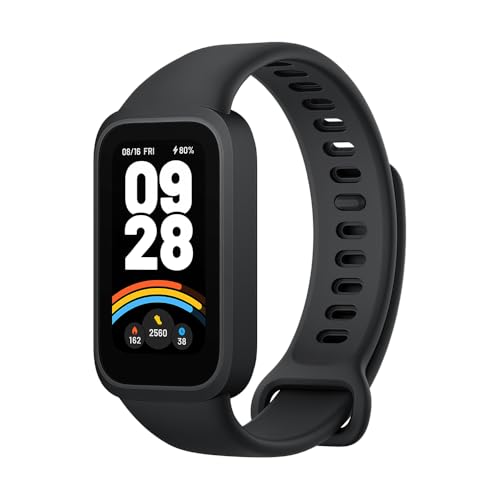
The Xiaomi Smart Band 9 offers a great value with a 1.62-inch AMOLED display, 14-day battery life, and over 150 sport modes including outdoor cycling. It uses connected GPS for route tracking and has a built-in heart rate sensor with historical data trends. The band is lightweight and comfortable for all-day wear. Sleep and stress tracking add daily wellness insights.
What owners say: Owners appreciate the bright screen and smooth app experience. Many report that GPS accuracy is decent for the price, though some note occasional sync delays with the Zepp Life app.
- Excellent value for features
- Bright and responsive display
- Long battery life
- Connected GPS only
- Heart rate can be inconsistent during interval training

Garmin Forerunner 165
The Garmin Forerunner 165 is Garmin’s current entry-level running watch, taking over the position the Forerunner 55 held before it was pulled from Garmin’s lineup. Based on manufacturer specs and aggregated owner reviews, it adds a bright AMOLED touchscreen while keeping the core training and running metrics the Forerunner series is known for.
Owners generally note the display as the standout upgrade over the 55, with battery life still strong enough for multi-day use between charges.
- Bright AMOLED display at an entry-level price point
- solid running and training metrics for the price
- long smartwatch-mode battery life
- No offline maps or multi-band GPS found on higher-tier Forerunner models
- fewer physical buttons than traditional Garmin running watches

Whoop 4.0
The Whoop 4.0 is a subscription-based wearable that prioritizes strain, recovery, and sleep. During cycling, it uses your phone's GPS for distance and pace while measuring heart rate and heart rate variability. The band is ultra-lightweight and comfortable for 24/7 wear. The app provides daily insights on readiness and optimal training zones. Battery life is up to 5 days, but the device charges quickly via a battery pack.
What owners say: Users report that the recovery score and strain coach are highly accurate for cycling training. Many appreciate the lack of a display, which reduces distractions, but note that the subscription cost can add up over time.
- In-depth recovery and strain analysis
- Lightweight and comfortable
- Accurate heart rate monitoring
- Requires subscription
- No built-in display or GPS

Google Pixel Watch 3
The Google Pixel Watch 3 is Google’s current-generation smartwatch, succeeding the Pixel Watch 2 with a brighter display, longer battery life, and expanded Fitbit-powered fitness tools. Based on manufacturer specs and aggregated owner reviews, it’s the most capable Pixel Watch to date for tracking workouts and daily activity.
Owners generally highlight the running-form metrics and heart rate accuracy, while noting battery life can dip with heavy GPS use during long training sessions.
- Deeper Fitbit integration with advanced running metrics
- brighter display and improved battery life over the previous generation
- strong Android/Wear OS integration
- Battery life still trails some dedicated fitness watches with always-on GPS use
- requires an Android phone for full functionality
How to choose
- GPS Accuracy. For cycling, GPS accuracy is crucial for tracking pace, distance, and route. Look for trackers with built-in GPS and multi-satellite support (GPS, GLONASS, Galileo) for the best performance. Connected GPS via phone can be sufficient if you always carry your phone.
- Battery Life. Consider how often you bike and whether you want to charge frequently. Trackers with built-in GPS typically last 5-20 hours in GPS mode, while those with connected GPS can last days. Some models offer replaceable coin batteries lasting up to a year.
- Heart Rate Monitor Quality. Optical heart rate sensors vary in accuracy, especially during high-intensity or interval rides. Look for trackers with multiple LEDs or advanced algorithms (like Fitbit's PurePulse or Garmin's Elevate) for more reliable readings.
- Cycling-Specific Features. Some trackers offer dedicated cycling modes with auto pause, lap counters, and cadence estimation. If you pair with external sensors (speed/cadence), ensure the tracker supports ANT+ or Bluetooth connectivity.
- Display and Comfort. Choose a display type that suits your visibility needs: always-on memory LCD for simplicity, or AMOLED for vibrant color. For comfort, consider weight and band material, especially if you wear the tracker all day and night.
Frequently asked questions
Do I need a budget fitness tracker or a cycling computer?
If you want basic metrics like distance, speed, heart rate, and calorie burn, a budget tracker is suitable. For advanced power meter or cadence data, a cycling computer is better.
Can budget trackers connect to external sensors like cadence?
Some budget trackers support ANT+ or Bluetooth Smart sensors. The Garmin Forerunner 165 is a good example. Most basic bands do not.
How accurate are heart rate monitors in budget trackers during cycling?
Accuracy varies. For steady-state riding, they are generally good. During sprints or intervals, optical sensors can lag or lock onto cadence. For precise training, a chest strap is more reliable.
Is connected GPS good enough for cycling?
Yes, if you always ride with your phone. Connected GPS uses your phone's GPS, so accuracy depends on your phone. It drains your phone's battery faster and may have slightly less precise location than built-in GPS.
What is the typical battery life of budget fitness trackers?
It ranges from 5 days to 14 days for basic trackers. With regular GPS use, expect 1-2 days for built-in GPS models and up to 2 weeks for connected GPS models.
Can I use a budget tracker for indoor cycling on a trainer?
Yes. Most trackers have indoor cycling modes that use accelerometer or cadence detection to estimate distance and pace. Some can connect to smart trainers via Bluetooth for more accuracy.
The verdict
For most cyclists, the Fitbit Charge 6 delivers the best overall package of GPS accuracy, heart rate monitoring, and battery life at a budget-friendly price. If you prioritize battery longevity and simplicity, the Amazfit Band 7 is an excellent choice. For those who want deep training and recovery insights, the Garmin Forerunner 165 provides advanced metrics and reliable performance.