 Related pick
Adjustable dumbbells are ideal for home gyms with limited space, offering weight versatility in one set. Fixed dumbbells provide quicker weight changes, better balance, and greater durability, making them better for heavy lifting and commercial gyms.
Choosing between adjustable and fixed dumbbells is one of the most common dilemmas for anyone building a home gym. Each type has its own strengths and weaknesses, and the best choice depends on your training goals, space, and budget. This guide breaks down the key differences to help you make an informed decision.
What Are Adjustable Dumbbells?
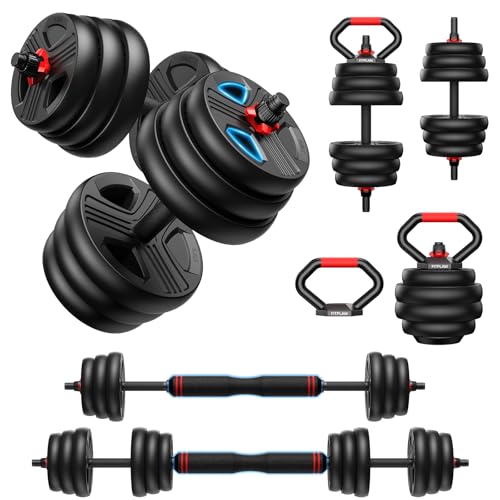
Adjustable dumbbells use a single handle with weight plates that can be added or removed, typically via a dial, pin, or sliding mechanism. Common styles include the classic spinlock (threaded collar), quick-change plate systems, and modern selectorized designs like those from Bowflex or PowerBlock. They replace an entire rack of fixed dumbbells with one compact unit.
The main advantage is space savings. A single adjustable set can cover weights from 5 to 50 pounds or more, taking up only the footprint of one dumbbell. This makes them popular for apartment gyms or anyone with limited floor space. Many also allow micro-loading in small increments for progressive overload.
However, adjustable dumbbells have trade-offs. They are often bulkier at the heaviest settings, affecting range of motion during exercises like flies or skull crushers. Weight changes can be slower than simply grabbing a different fixed dumbbell, and some mechanisms may fail over time, particularly with heavy drops.
What Are Fixed Dumbbells?
Fixed dumbbells have permanent, non-removable weight plates welded or secured to the handle. They come in pairs of each weight (e.g., 10 lb, 15 lb, 20 lb) and require a rack or stand for storage. These are the standard found in commercial gyms.
The primary benefit is durability and balance. Fixed dumbbells are built to withstand repeated drops and abuse. They offer a clean, balanced feel with no shifting plates or loose parts. The handle diameter is consistent across weights, making grip comfortable, and there are no moving parts to break.
The obvious downside is space and cost. To have a full range (e.g., 5-100 lbs in 5 lb increments), you need a large rack and significant investment. Changing weights requires setting down one dumbbell and picking up another, which is fast but can disrupt workout flow if you need to walk to a rack.
Space and Storage Considerations
If you live in a small apartment or have a shared space, adjustable dumbbells are the clear winner. A single adjustable set (often with a stand) can replace up to 20 pairs of fixed dumbbells. Some models even fold up or sit on a tray, taking up less than 2 square feet. Compact storage is their biggest selling point.
Fixed dumbbells require a dedicated rack or shelf for each pair. Even a basic set from 5 to 50 lbs in 5 lb increments needs a 6-foot wide rack. For heavier weights, a heavy-duty rack is needed, and the total footprint can be significant. Home gyms with a dedicated room can accommodate this, but for tight spaces, adjustable is often the only practical option.
Durability and Longevity
Fixed dumbbells are nearly indestructible. Commercial-grade fixed dumbbells use cast iron or rubber-coated heads welded to steel handles. They can be dropped, thrown, or slammed without failure. For heavy lifters and high-intensity workouts, fixed dumbbells are the standard because they last for decades with minimal care.
Adjustable dumbbells are more fragile. The mechanisms that hold plates (pins, dials, or collars) can wear out, bend, or break if dropped repeatedly. Even high-end models have a weight limit and may develop wobble or looseness. They are better suited for controlled exercises like curls, presses, and rows. If you drop weights often, stick with fixed dumbbells.
Also, adjustable dumbbells often have a lower maximum weight (typically up to 50-90 lbs per hand) compared to fixed sets that can go to 150+ lbs. Power users who need heavy loading will outgrow adjustables quickly.
Workout Experience and Usability
Fixed dumbbells offer the smoothest user experience. You simply grab the desired weight and go. No adjusting, no fumbling, no risk of plates loosening. The balance is perfect, and the handle length is uniform. This allows for seamless transitions in supersets, drop sets, or circuits. For fast-paced training, fixed dumbbells win.
Adjustable dumbbells require weight changes that can take 5-15 seconds per switch. Some models are quicker than others, but it still breaks the rhythm. During heavy sets, you may need to carefully place the dumbbell down to adjust, which isn’t ideal for drop sets. On the plus side, you can incrementally increase resistance by small amounts (e.g., 2.5 lbs), which is harder with fixed dumbbells unless you own fractional plates.
Range of motion: Adjustable dumbbells are often longer than fixed ones, especially at lighter weights. This can limit exercises like dumbbell flies or overhead triceps extensions where the dumbbell ends may hit each other or your body. Fixed dumbbells have a more compact shape.
Frequently asked questions
Are adjustable dumbbells worth it for beginners?
Yes, adjustable dumbbells are excellent for beginners because they allow you to start light and progress gradually without buying multiple sets. They save space and money upfront, making them a practical choice for home gyms.
Can adjustable dumbbells replace a full set of fixed dumbbells?
For most home users, adjustable dumbbells can replace a full set up to their maximum weight. However, they may not match the quick weight changes and balance of fixed dumbbells, and they are less durable for heavy drops.
Which type is better for heavy lifting?
Fixed dumbbells are better for heavy lifting because they offer higher maximum weights, better durability, and no risk of mechanical failure under load. Adjustable dumbbells typically max out at 50-90 pounds and may wobble at heavy weights.
Do adjustable dumbbells feel different from fixed dumbbells?
Yes, adjustable dumbbells often have a longer handle and may feel bulkier, especially at lighter settings. The weight distribution can be less balanced than fixed dumbbells, which affects exercises that require a compact shape.
Looking to buy? See our Dumbbells Weights guides for tested picks.