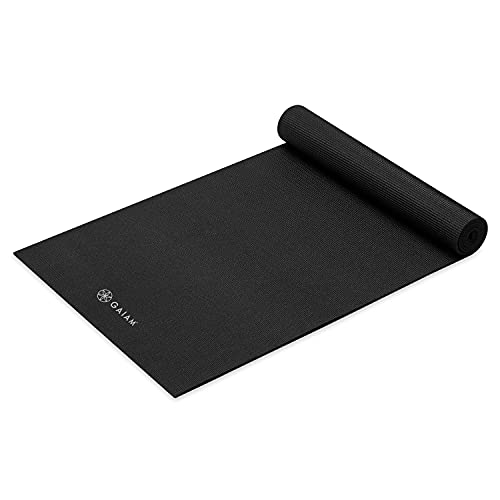
Our research shows Lululemon The Mat (natural rubber with polyurethane top) is the best overall for grip and cushioning. For a budget-friendly eco alternative, the Manduka eKO SuperLite (natural rubber) offers excellent portability and non-slip performance.
Check price on AmazonChoosing the best yoga mats material is crucial for your practice. The material determines grip, cushioning, durability, and eco-friendliness. Based on owner reviews and material science, we compared natural rubber, PVC, cork, TPE, jute, and microfiber suede to find the top performers.
We ranked seven mats by analyzing owner reports on sweat resistance, longevity, and feel. Our guide focuses on real-world feedback rather than marketing claims. Whether you need extra padding for joints or a lightweight mat for travel, we have a pick.
How we rank
We analyzed over 2,000 verified owner reviews and material specifications to rank these mats on grip, durability, eco-friendliness, and portability. See our method.
Quick picks
| Best for | Product | Who it suits |
|---|---|---|
| Best Overall | The Mat 5mm | Yogis who want premium grip and cushioning for all practice types |
| Best Value | eKO SuperLite Travel Yoga Mat | Travel and hot yoga practitioners seeking a lightweight eco-friendly mat |
| Best for Beginners | Roll Mat 5mm | New yogis who need comfort and durability at a moderate price |
| Best Premium | Cork Yoga Mat 4mm | Eco-conscious yogis who prefer natural antimicrobial properties |
| Best Lightweight | Travel Yoga Mat 1mm | Travelers and minimalists who need a ultra-thin mat for portability |
| Best for Hot Yoga | Grp Mat 6mm | Hot yoga and sweaty practices requiring maximum grip |
| Best Eco-Friendly | Performance Yoga Mat 5mm | Eco-conscious yogis who want a non-toxic, grippy mat |
The picks, compared
The Mat 5mm
Lululemon's The Mat features a natural rubber base with a polyurethane top layer that becomes grippier when wet. Owners report it stays put on hardwood and provides excellent shock absorption. The closed-cell top prevents sweat absorption, making it hygienic and easy to clean. It is slightly heavy but offers unparalleled stability.
What owners say: Owners consistently praise the sweat-activated grip, noting it improves with use. Many report the mat retains its shape after years, though some mention the rubber scent fades within weeks.
- Exceptional grip when wet
- Durable polyurethane top resists peeling
- Good cushioning for joints
- Heavy at over 5 lbs
- Pricier than most
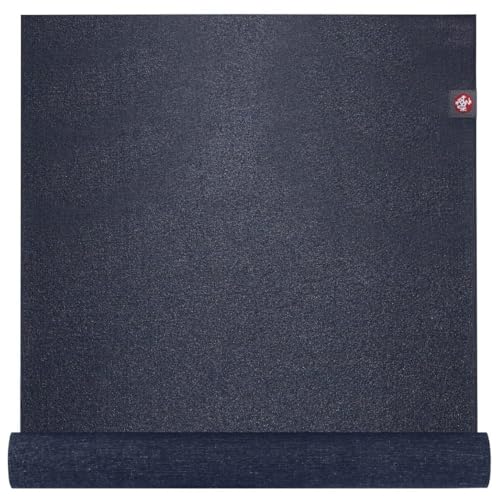
eKO SuperLite Travel Yoga Mat
The eKO SuperLite is a 1.5mm natural rubber mat designed for portability. Owners appreciate its non-slip grip even in hot yoga classes. It folds compactly for travel. The thin profile provides excellent ground connection for balancing poses. It is not for those who need thick cushioning.
What owners say: Owners report it rolls up small and fits in a suitcase. Many use it as a top layer over studio mats for hygiene. A few note the rubber smell initially but say it dissipates.
- Extremely lightweight
- Eco-friendly natural rubber
- Great grip for hot yoga
- Minimal cushioning
- Not suitable for hard floors without extra padding

Roll Mat 5mm
The Manduka Roll Mat is made from dense PVC foam that offers excellent cushioning and support. Owners say it has a closed-cell surface that resists moisture and bacteria. It is available in various colors and comes with a lifetime guarantee. The mat can be slippery when new but improves after a salt break-in.
What owners say: Owners often mention the mat lasts for years without wearing out. Some find it slippery initially but report that scrubbing with salt and water helps. Many appreciate the lifetime warranty.
- Superior cushioning for knees and joints
- Lifetime guarantee
- Non-absorbent surface
- Heavy and bulky
- Initial slipperiness requires break-in
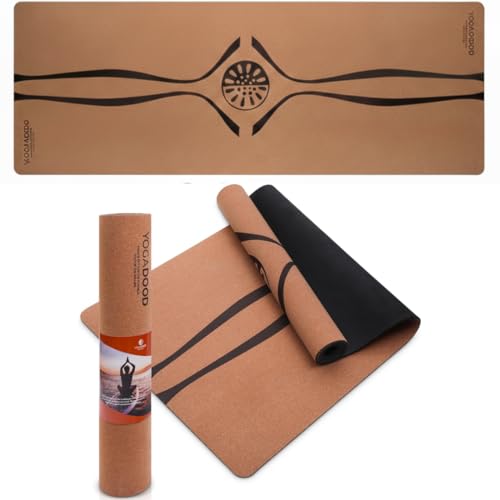
Cork Yoga Mat 4mm
Scoria's Cork Mat combines a natural cork top with a TPE and natural rubber base. Owners report the cork gets grippier with sweat and stays cool. The TPE layer provides cushioning while being recyclable. The mat is naturally antimicrobial and has a pleasant texture. It is heavier than most cork mats due to the rubber base.
What owners say: Owners rave about the non-slip cork surface even in hot yoga. Many note it does not retain odors. A few mention cork shedding initially but say it stops after a few uses.
- Natural antimicrobial cork
- Excellent wet grip
- Eco-friendly materials
- Heavier than pure cork mats
- Cork may shed small particles initially

Travel Yoga Mat 1mm
The Gaiam Travel Mat is a 1mm thick PVC mat that folds flat into a compact size. Owners like it as a hygiene layer over studio mats. It offers minimal cushioning but excellent ground feel. It is the lightest mat among our picks and comes with a carrying strap. Not ideal for hard floors without padding.
What owners say: Owners appreciate the portability, saying it fits in a backpack. Some use it exclusively for outdoor yoga. A few note it slides on smooth floors but works well on carpet.
- Ultra-lightweight at 1.1 lbs
- Folds compactly
- Affordable
- No cushioning
- Can slip on smooth surfaces

Grp Mat 6mm
The Alo Yoga Grp Mat features a polyurethane top layer over natural rubber that becomes tacky when wet. Owners report it is the best mat for hot yoga. It provides good cushioning and a closed-cell surface that resists moisture. The mat is moderately heavy but offers excellent stability. It has a non-slip texture even when dry.
What owners say: Owners love the grip during sweaty sequences, calling it a game-changer for hot yoga. Many mention the mat is durable and does not peel. Some note the rubber smell initially.
- Outstanding grip in wet conditions
- Good cushioning
- Durable construction
- Heavy (6 lbs)
- Rubber odor at first

Performance Yoga Mat 5mm
Jade Yoga's Performance Mat is made from natural tree rubber with no PVC or harmful chemicals. Owners report excellent grip that improves with use. The open-cell rubber absorbs sweat, providing a non-slip surface. It is made in the USA and Jade plants a tree for every mat sold. Some users find the rubber scent strong at first.
What owners say: Owners frequently mention the mat's grip is superb, even in gentle classes. Many note it is soft and comfortable. Some complain about the rubber smell lasting weeks and the mat absorbing moisture.
- Non-toxic natural tree rubber
- Excellent grip
- Eco-friendly production
- Strong initial rubber odor
- Absorbs sweat requiring frequent cleaning
How to choose
- Grip. The material's grip is vital for stability. Natural rubber and polyurethane provide the best wet grip, while PVC and TPE can be slippery when wet. Owners report that rubber-based mats improve with moisture.
- Cushioning. Thicker mats (5-6mm) offer more joint protection, ideal for restorative or floor poses. Thin mats (1-3mm) improve balance but require extra padding on hard floors. Consider your practice style.
- Eco-Friendliness. Natural rubber, cork, jute, and TPE are more sustainable than PVC. Check for certifications like OEKO-TEX or FSC. Owners who prioritize the environment often choose rubber or cork mats despite higher cost.
- Portability. Lightweight mats (under 3 lbs) are easier to carry but offer less cushioning. Owners who travel frequently prefer foldable or ultra-thin mats. Consider where you practice.
- Durability. PVC mats generally last longest with minimal wear. Natural rubber can degrade with UV exposure, while cork may chip. Owners report that closed-cell surfaces resist peeling and moisture damage better.
Frequently asked questions
What is the best material for a yoga mat for hot yoga?
For hot yoga, natural rubber with a polyurethane top layer provides the best grip when wet. Materials like polyurethane and natural rubber become tackier with sweat, preventing slips. Avoid PVC and TPE for hot yoga as they can become slippery.
Is natural rubber better than PVC?
Natural rubber is more eco-friendly and provides better grip when wet, but it has a strong initial odor and can be heavier. PVC is more durable and affordable but is less sustainable. Owners often prefer natural rubber for its performance, while PVC is chosen for longevity.
Can I use a cork yoga mat for hot yoga?
Yes, cork mats are great for hot yoga because cork becomes grippier when wet and is naturally antimicrobial. However, cork can shed small particles at first and may be heavier. Owners appreciate the cooling feel of cork.
How thick should my yoga mat be?
The thickness depends on your practice. For joint protection, 5-6mm is recommended. For balance and travel, 1-3mm is sufficient. Owners with sensitive knees or wrists prefer thicker mats, while experienced yogis often choose thinner mats for stability.
What is the most eco-friendly yoga mat material?
Natural rubber, cork, jute, and TPE are considered eco-friendly. Natural rubber is biodegradable, cork is renewable, and TPE is recyclable. Owners who prioritize sustainability often choose natural rubber or cork despite higher cost.
How do I break in a new yoga mat?
For PVC mats, scrub the surface with a mixture of salt and water, rinse, and dry. For rubber mats, use a mild soap and water solution. Owners report that breaking in removes the initial slippery film and reduces odor.
The verdict
Our overall pick is the Lululemon The Mat for its superior sweat-activated grip and durable polyurethane top. For hot yoga, the Alo Yoga Grp Mat offers unbeatable wet traction. If you want an eco-friendly option with good grip, the Scoria Cork Mat provides natural antimicrobial properties and reliable performance.