
The Manduka PRO is our top pick overall for its legendary durability and lifetime warranty, while the Liforme Original mat offers unmatched alignment guidance and grip for yogis who want precise positioning.
Check price on AmazonWhether you are a seasoned practitioner or a beginner finding your flow, your yoga mat is the foundation of your practice. In a studio setting, where mats are rolled out on hard floors and often used for hours weekly, you need a mat that provides reliable grip, adequate cushioning, and lasting durability. We analyzed owner reviews, expert feedback, and material specs to rank the best yoga mats specifically for studio use in 2026.
Our research focused on key factors: non-slip grip (especially in hot yoga), cushion density for joint protection, longevity after frequent rolling/unrolling, weight for carrying to class, and eco-friendliness. We excluded mats that are too bulky for studio travel or lack sufficient grip for flowing sequences. Below, you will find our top 7 picks, each suited for different needs and preferences.
How we rank
We analyzed owner reviews across major retailers, expert opinions, and material specifications to rank each mat on grip, cushion, durability, portability, and eco-friendliness. See our method.
Quick picks
| Best for | Product | Who it suits |
|---|---|---|
| Best Overall | PRO Yoga Mat | Yogis who want a durable, high-performance mat for daily studio practice |
| Best for Alignment | Original Yoga Mat | Yogis who focus on precise alignment and pose accuracy |
| Best Grip | The Mat 5mm | Sweaty yogis who need maximum non-slip performance |
| Best Lightweight | Travel Yoga Mat | Yogis who carry their mat to and from the studio daily |
| Best Budget | eKO Superlite Travel Yoga Mat | Eco-conscious yogis on a budget who still want quality |
| Best Eco-Friendly | Yoga Mat 6mm | Yogis who prioritize sustainability and a non-slip natural rubber grip |
| Best for Beginners | Yoga Mat 6mm | New yogis seeking a reliable, affordable mat for studio classes |
The picks, compared
PRO Yoga Mat
The Manduka PRO is the gold standard for studio yoga mats, with a dense 6mm thickness that cushions joints without sacrificing stability. Its closed-cell surface prevents sweat and bacteria from seeping in, making it easy to clean and long-lasting. Owners report that the mat requires a short break-in period, but once broken in, the grip becomes reliable even in hot classes. Backed by a lifetime warranty, this mat is built to withstand years of use.
What owners say: Owners consistently praise the Manduka PRO for its incredible durability, with many reporting it still looks new after years of heavy use. The main criticism is the initial slipperiness, which resolves after a few uses or a salt scrub.
- Lifetime warranty
- Excellent cushioning and stability
- Closed-cell surface resists moisture
- Heavy for carrying to class
- Requires break-in period for grip
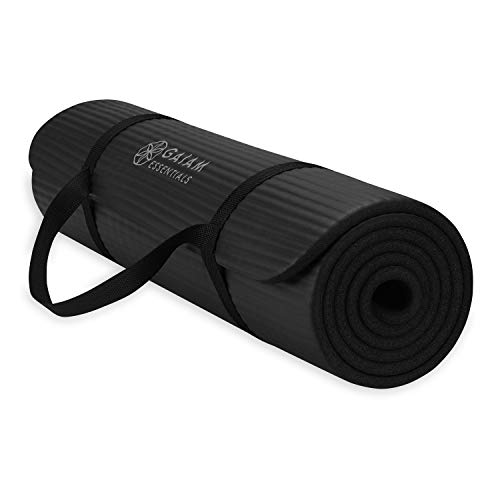
Original Yoga Mat
The Liforme Original mat features a unique alignment guide system printed on the surface, helping yogis position hands and feet correctly for each pose. Its sticky, rubber-like grip is outstanding even in sweaty conditions, and the 4.2mm thickness offers a good balance of cushion and ground feel. Reviewers note that the mat's eco-friendly materials (natural rubber and polyurethane) provide exceptional traction, though the rubber has a distinct smell initially.
What owners say: Owners rave about the alignment markings, saying they transform practice by providing instant feedback on hand and foot placement. Some note that the mat wears faster than PVC mats, especially if stored in direct sunlight.
- Built-in alignment guides
- Superior grip in all conditions
- Eco-friendly materials
- Higher price point
- Natural rubber can smell initially
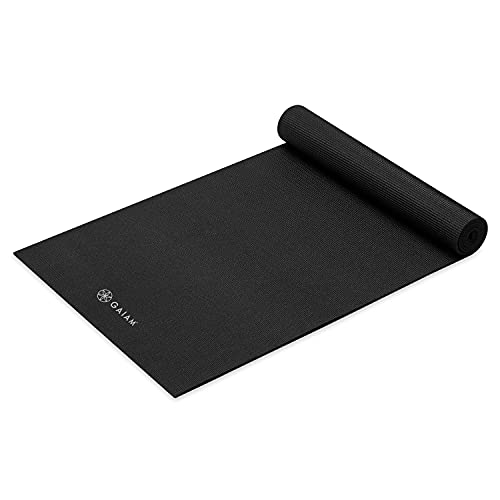
The Mat 5mm
Lululemon's The Mat 5mm features a natural rubber base for traction and a polyurethane top layer that absorbs sweat and becomes grippier as you sweat. The 5mm thickness provides ample cushion for hard studio floors, and the mat rolls up easily for transport. Owners report that the mat performs exceptionally well in hot yoga, with no slipping even during intense flows. The textured surface also helps with grip in dry conditions.
What owners say: Owners highlight the mat's amazing wet grip, often calling it the best for hot yoga. A common complaint is that the natural rubber can develop a slight odor in humid conditions, but this diminishes over time.
- Exceptional sweat-activated grip
- Good cushion for hot yoga
- Easy to clean
- Heavier than some mats at 5.5 lbs
- Rubber odor initially

Travel Yoga Mat
Manduka's Travel Yoga Mat is only 1.5mm thick and weighs just over 2 pounds, making it incredibly easy to carry in a backpack or tote. Despite being thin, it offers decent grip and can be layered over studio mats for extra cushion. Owners appreciate its portability and how quickly it dries after cleaning. However, the minimal padding means it is best suited for practitioners who prefer a closer connection to the floor or for use on carpeted surfaces.
What owners say: Owners love how compact and lightweight it is, perfect for commuting. Some note that it provides very little cushion, so it is not ideal for poses like headstands or for those with sensitive knees.
- Ultra-lightweight and portable
- Great grip for a thin mat
- Dries quickly
- Minimal cushioning
- Not for hard floors without extra padding
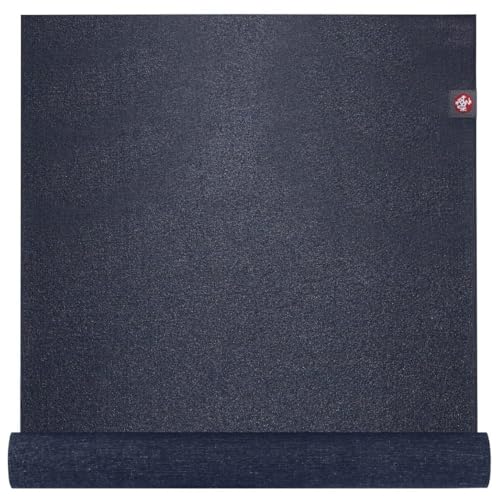
eKO Superlite Travel Yoga Mat
Manduka's eKO Superlite is made from biodegradable natural tree rubber, offering an eco-friendly option without breaking the bank. At 1.5mm thick and under 2 pounds, it is extremely lightweight and easy to carry. The grip is reliable for most studio classes, especially for those who don't sweat heavily. Owners note that it works well as a travel mat or as a layer over rented studio mats.
What owners say: Owners appreciate the eco-friendly materials and low price point, calling it a great value for a natural rubber mat. Some report that the mat is thin and may not be sufficient for hard floors without additional cushioning.
- Eco-friendly natural rubber
- Very affordable
- Lightweight and portable
- Thin, little padding
- Not ideal for very sweaty practices

Yoga Mat 6mm
Jade Yoga's 6mm mat is made from natural rubber with no PVC, foaming agents, or synthetic materials. Its open-cell surface absorbs sweat, providing a natural, non-slip grip that improves with moisture. The 6mm thickness offers excellent cushion for joint comfort, and Jade plants a tree for every mat sold. Owners report that the mat has a unique tactile feel that many love, though the rubber scent is noticeable at first.
What owners say: Owners praise the grip and cushion, especially for restorative and yin yoga. Some mention that the mat needs frequent cleaning because the open-cell surface absorbs sweat and can become smelly if neglected.
- Tree-planting program
- Excellent grip with sweat
- Good cushioning
- Strong rubber smell initially
- Requires regular cleaning to avoid odor
Yoga Mat 6mm
Gaiam's 6mm Thick Yoga Mat is a popular choice for beginners, offering a balance of cushion, grip, and affordability. The mat is made from high-density foam with a textured surface that provides decent traction in most studio settings. It comes in a wide range of colors and patterns, and is lightweight enough at just over 3 pounds to carry to class. Owners note that it holds up well for occasional use but may show wear over time with heavy practice.
What owners say: Owners appreciate the value and comfort, saying it is a great starter mat. Some report that the grip diminishes over time and the mat can become slippery when very sweaty.
- Affordable price point
- Good cushion for beginners
- Lightweight and easy to carry
- Grip can wear down with heavy use
- Not ideal for hot yoga
How to choose
- Grip and Traction. Look for mats with textured surfaces or natural rubber tops that provide slip resistance, especially in sweaty conditions. Open-cell surfaces offer the best wet grip but require more cleaning, while closed-cell mats are easier to maintain but may be slippery initially.
- Cushioning and Thickness. Thicker mats (5-6mm) offer more joint protection for hard studio floors, while thinner mats (1.5-3mm) provide better stability for balancing poses. Choose based on your comfort needs and the type of yoga you practice most.
- Durability and Material. PVC mats are highly durable and resistant to wear, while natural rubber mats are eco-friendly but may degrade faster with sunlight exposure. Check warranty and owner reviews to gauge long-term performance for frequent studio use.
- Weight and Portability. If you carry your mat to the studio, consider weight and whether it comes with a strap or bag. Lightweight mats (under 3 lbs) are convenient but may lack cushion, while heavier mats (5+ lbs) offer more durability and padding.
- Eco-Friendliness and Smell. Natural rubber mats are biodegradable and environmentally friendly but often have a strong initial odor that dissipates over time. PVC mats have little to no smell but are not biodegradable. Consider your priorities for sustainability and sensitivity to scents.
Frequently asked questions
What thickness yoga mat is best for studio use?
For most studio classes, a 5-6mm mat provides a good balance of cushioning for joints and stability for balancing poses. Thicker mats can be used by those with sensitive knees or for restorative yoga, while thinner mats are preferred by practitioners who want more ground feel.
How do I make my yoga mat less slippery?
To improve grip, clean your mat regularly with a mild soap and water solution to remove oils and residue. For new PVC mats, a salt scrub or light sanding can break in the surface. Natural rubber mats naturally become grippier with use and sweat, but avoid using mat sprays with silicone.
Are expensive yoga mats worth it?
Higher-end mats often use better materials like natural rubber or high-density PVC, offering superior grip, durability, and cushioning. They may also include alignment guides or lifetime warranties. For frequent studio users, investing in a quality mat can enhance your practice and last years longer than budget options.
Can I use a yoga mat for other workouts?
Yes, yoga mats can be used for Pilates, stretching, or floor exercises, though mats designed for yoga prioritize grip and stability. For high-impact workouts, a thicker exercise mat might be more suitable to absorb shock.
How should I clean my yoga mat?
Clean your mat after each use with a mixture of water and a few drops of gentle soap, or use a specialized mat cleaner spray. Avoid harsh chemicals that can degrade the material. For natural rubber mats, wipe down and dry thoroughly to prevent mold.
What is the best yoga mat for hot yoga in a studio?
For hot yoga, look for mats with a polyurethane top layer or natural rubber that becomes grippier when wet. The Lululemon The Mat 5mm and Liforme Original are top choices for their excellent sweat-activated grip. Avoid closed-cell PVC mats that can become slippery.
The verdict
The Manduka PRO remains our top overall pick for studio yoga due to its unmatched durability, lifetime warranty, and reliable cushioning. For those who prioritize alignment and grip, the Liforme Original is an excellent alternative with built-in guides. Budget-conscious yogis should consider the Manduka eKO Superlite for its eco-friendly materials and affordability.