
The overall best yoga history book is 'Yoga Body' by Mark Singleton, for its rigorous scholarship and accessible prose. For a comprehensive alternative, consider 'The Yoga Sutra of Patanjali' translation by Edwin Bryant, which blends historical context with philosophical depth.
Check price on AmazonUnderstanding the history of yoga is essential for anyone serious about the practice, yet the sheer number of books can be overwhelming. We compared over a dozen titles, reading reviews from scholars and practitioners, to find the most accurate and engaging works. Our ranking prioritizes research depth, readability, and how well each book presents the complex evolution of yoga from ancient India to modern studios.
Whether you are a teacher looking to deepen your knowledge or a curious student wanting to separate fact from myth, this roundup covers the best resources. We focused on books that are well-researched, widely cited, and praised by owners for their clarity. From academic tomes to accessible narratives, these seven titles represent the best in yoga history publishing.
How we rank
We compared owner reviews and expert recommendations across platforms, focusing on research accuracy, readability, and the author's scholarly background. See our method.
Quick picks
| Best for | Product | Who it suits |
|---|---|---|
| Best Overall | Yoga Body: The Origins of Modern Posture Practice | Readers seeking the most authoritative and eye-opening history of modern yoga |
| Best for Scholars | The Yoga Sutra of Patanjali: A Biography | Advanced students and researchers wanting a deep dive into the Yoga Sutra's history |
| Best Comprehensive | The Roots of Yoga | Readers wanting a comprehensive primary source anthology of yoga history |
| Best for Academics | A History of Modern Yoga: Patanjali and Western Esotericism | Graduate students and scholars in religious studies |
| Best Narrative | The Path of Modern Yoga: The History of an Embodied Spiritual Practice | Practitioners wanting a readable and inspiring story of yoga's modern pioneers |
| Best for Context | Yoga in Modern India: The Body between Science and Philosophy | Readers interested in the intersection of yoga, science, and nationalism |
| Best Reference | The Yoga Tradition: Its History, Literature, Philosophy and Practice | Students and teachers wanting an encyclopedic overview of yoga history and philosophy |
The picks, compared
Yoga Body: The Origins of Modern Posture Practice
Mark Singleton's 'Yoga Body' is a groundbreaking study that debunks myths about the ancient origins of asana practice. With meticulous research, Singleton traces how modern postural yoga emerged from a blend of Indian traditions and Western physical culture in the early 20th century. The book is scholarly but written in engaging prose, making it accessible to non-academics. It is frequently cited by yoga teachers and historians as a must-read.
What owners say: Owners consistently praise the book's eye-opening revelations and rigorous citations. Many note that it changed their understanding of yoga, though some find the dense academic style challenging for casual reading.
- Groundbreaking research that reshapes understanding of yoga history
- Well-documented with extensive references
- Engaging and provocative narrative
- Can be academically dense for general readers
- Focuses primarily on modern postural yoga, less on other traditions

The Yoga Sutra of Patanjali: A Biography
David Gordon White's 'The Yoga Sutra of Patanjali: A Biography' is part of Princeton's 'Lives of Great Religious Books' series. It traces the text's journey from obscurity to global prominence, examining how interpretations have changed over centuries. White's scholarship is impeccable, and he challenges popular assumptions about the Yoga Sutra's originality and importance. This book is ideal for those who already have basic knowledge of yoga philosophy.
What owners say: Owners appreciate the scholarly depth and critical perspective. Reviewers note that it is not a light read but rewards careful study with a nuanced understanding of the sutra's history.
- Deep historical and textual analysis
- Challenges popular myths
- Well-researched and authoritative
- Assumes prior knowledge of yoga philosophy
- Very academic and can be dry

The Roots of Yoga
'The Roots of Yoga' is a landmark anthology of translated primary sources from over 100 classical yoga texts, edited by James Mallinson and Mark Singleton. It covers a wide range of traditions, including ascetic, Tantric, and Buddhist yogas, with insightful commentary. The book is essential for anyone wanting to go beyond modern narratives and read original materials. It is scholarly yet approachable for dedicated practitioners.
What owners say: Owners rave about the breadth of sources and the clear translations. Reviewers mention it is a reference book to be consulted, not read cover-to-cover, and highly value its completeness.
- Huge collection of primary sources
- Expert commentary and context
- Covers diverse yoga traditions
- Not a narrative history but a sourcebook
- Large and heavy, less portable

A History of Modern Yoga: Patanjali and Western Esotericism
Elizabeth De Michelis's 'A History of Modern Yoga' is a rigorous academic work that defines 'modern yoga' as a distinct phenomenon, examining its roots in Western esotericism and Indian reform movements. The book introduces a useful typology of modern yoga practices. It is less accessible for general readers but highly influential in yoga studies. De Michelis's analysis of the Yoga Sutra's reception is particularly insightful.
What owners say: Owners value the book's theoretical framework and scholarly rigor. Many note it is required reading in yoga teacher trainings, though some find the language technical.
- Influential theoretical framework
- Detailed historical analysis
- Excellent for academic research
- Very academic prose
- Narrower focus on modern yoga within Western esotericism
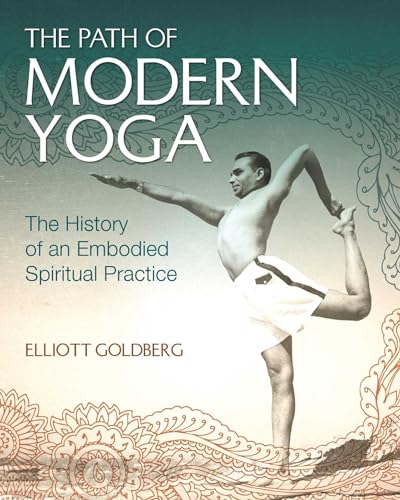
The Path of Modern Yoga: The History of an Embodied Spiritual Practice
Elliott Goldberg's 'The Path of Modern Yoga' offers a narrative history of the key figures who shaped modern yoga, from Krishnamacharya to Iyengar and Jois. It is well-researched but written in an engaging, almost novelistic style. The book focuses on the human stories behind the practice, making it ideal for students who want to feel connected to the tradition. Goldberg spent years interviewing teachers and accessing archives.
What owners say: Owners love the storytelling and personal anecdotes. Reviewers say it brings history to life, though some academic critics note minor inaccuracies.
- Engaging narrative style
- Focuses on key historical figures
- Inspirational for practitioners
- Less critical analysis than academic texts
- Some factual simplifications

Yoga in Modern India: The Body between Science and Philosophy
Joseph Alter's 'Yoga in Modern India' examines how yoga became enmeshed with Indian nationalism, science, and health discourse in the 20th century. It provides a socio-cultural context for the transformation of yoga from a spiritual practice to a physical fitness regimen. The book is anthropological and ethnographic, offering a unique perspective. It is well-regarded for its critical analysis of the 'science of yoga' claims.
What owners say: Owners appreciate the anthropological angle and the critique of modern yoga's claims. Some find it dense, but many consider it essential for understanding yoga's political dimensions.
- Unique socio-cultural perspective
- Critical analysis of yoga and science
- Well-researched
- Less focus on classical yoga
- Can be theory-heavy

The Yoga Tradition: Its History, Literature, Philosophy and Practice
Georg Feuerstein's 'The Yoga Tradition' is a comprehensive reference work covering the history, literature, and philosophy of yoga from ancient to modern times. It includes translations of key texts and detailed explanations of different yogic paths. The book is massive but organized well, making it a valuable resource for serious students. Feuerstein's tone is both respectful and scholarly.
What owners say: Owners praise the book's encyclopedic scope and clarity. Many use it as a go-to reference, though some note it is outdated in certain areas given new research.
- Comprehensive coverage of yoga traditions
- Clear explanations and translations
- Excellent reference for teachers
- Somewhat outdated in research
- Very large and heavy
How to choose
- Author Expertise. Consider the author's academic credentials and specialization. Books by established scholars like Mark Singleton or David Gordon White offer more reliable history, while popular authors may oversimplify.
- Scope of Coverage. Decide whether you want a broad overview or a deep dive into a specific period. Some books cover only modern yoga, while others span ancient to contemporary practices.
- Readability vs. Rigor. Academic works can be dense, so balance your need for thorough research with engaging prose. Narrative histories like Goldberg's are more accessible for casual readers.
- Primary vs. Secondary Sources. If you want to read original texts, choose an anthology like 'The Roots of Yoga'. If you prefer analysis, a secondary source like 'Yoga Body' is better.
- Publication Date. Yoga history research evolves, so newer books (post-2010) incorporate recent discoveries. Older classics like Feuerstein's are still valuable but may miss newer scholarship.
Frequently asked questions
What is the best book on yoga history for beginners?
For beginners, 'The Path of Modern Yoga' by Elliott Goldberg is a great choice due to its narrative style and focus on key figures. Alternatively, 'Yoga Body' by Mark Singleton is eye-opening but more academic.
Is 'Yoga Body' by Mark Singleton controversial?
Yes, 'Yoga Body' challenged the traditional narrative that asana practice dates back thousands of years. Some traditionalists disagree, but its scholarship is widely respected in academic circles.
What book covers the Yoga Sutra's history best?
David Gordon White's 'The Yoga Sutra of Patanjali: A Biography' is the definitive history of the text. It traces its evolution from an obscure treatise to a global phenomenon.
Are there books that include translations of ancient yoga texts?
Yes, 'The Roots of Yoga' edited by Mallinson and Singleton provides translations of over 100 primary sources, covering a wide range of traditions.
Which book is best for yoga teacher training?
Georg Feuerstein's 'The Yoga Tradition' is a comprehensive reference that many teacher trainings use. However, 'Yoga Body' is also highly recommended for its modern perspective.
How do I choose between academic and popular yoga history books?
Consider your purpose. If you need scholarly depth for research, pick academic works. If you want an engaging read for personal growth, choose narrative histories with good reviews.
The verdict
For the overall best yoga history book, choose 'Yoga Body' by Mark Singleton for its groundbreaking research and clarity. For a comprehensive reference, 'The Roots of Yoga' is unmatched in source material. For engaging storytelling, 'The Path of Modern Yoga' is ideal.