
The JumpSport 350 is the best overall rebounder for beginners due to its stable frame and quiet, low-impact bounce. For a budget-friendly option with solid performance, the Bionic Body 1125 is a top alternative.
Check price on AmazonStarting a rebounding routine as a beginner can feel overwhelming with so many mini trampolines on the market. We compared popular models based on stability, bounce quality, weight capacity, and value, analyzing hundreds of owner reviews to find which ones deliver a safe and enjoyable experience for newcomers.
Our research-backed ranking focuses on what matters most for beginners: a sturdy frame, comfortable mat, quiet springs or bungees, and easy assembly. Whether you’re working out at home or adding low-impact cardio to your routine, these rebounders stood out in user feedback for their durability and performance.
How we rank
We analyzed owner reviews from major retailers and fitness forums, comparing ratings on stability, bounce, noise, and assembly ease to rank these rebounders. See our method.
Quick picks
| Best for | Product | Who it suits |
|---|---|---|
| Best Overall | JumpSport 350 | Beginners seeking a stable, quiet rebounder for low-impact cardio |
| Best Value | Bionic Body 1125 | Budget-conscious beginners wanting good quality at a lower cost |
| Best for Beginners | BCAN 48 Inch Rebounder | Total beginners who want a large mat and easy setup |
| Best Lightweight | Maxus 39.5 Inch Folding Rebounder | Active users who need a portable rebounder for travel or small spaces |
| Best Premium | Aeon 40 Inch Fitness Rebounder | Serious beginners who want the best build quality and bounce |
| Best Budget | Marcy Foldable Mini Trampoline 40 Inch | Very tight budgets looking for a basic, functional rebounder |
| Best for Seniors | Stamina 36 Inch Folding Rebounder | Older beginners or those needing extra stability |
The picks, compared
JumpSport 350
The JumpSport 350 features a heavy-duty steel frame and a patented KOR 30-inch mat that provides a smooth, quiet bounce. Owners consistently praise its stability and lack of wobble even during intense workouts. The adjustable legs allow for different bounce intensities. This rebounder supports up to 300 pounds.
What owners say: Owners frequently mention the JumpSport 350 feels solid and safe, with minimal noise compared to spring rebounders. Many report it holds up well over time, with no sagging or frame issues after months of use.
- Extremely stable frame
- Quiet, low-impact bounce
- High weight capacity (300 lbs)
- Slightly higher learning curve for bounce
- Assembly requires two people

Bionic Body 1125
The Bionic Body 1125 offers a solid build with a 32-inch jumping surface and sturdy steel frame. It uses bungee cords instead of springs for a quiet, gentle bounce. Owners appreciate the included handlebar for extra balance. It supports up to 250 pounds.
What owners say: Reviewers note the Bionic Body is easy to assemble and provides a smooth, quiet experience. Many say it feels more expensive than its price suggests, though some mention bungees may stretch over time.
- Quiet bungee system
- Comfortable mat size
- Includes handlebar
- Bungees may require replacement every 1-2 years
- Not as durable as spring models for heavy use

BCAN 48 Inch Rebounder
The BCAN 48-inch rebounder offers a spacious jumping surface and a foldable frame for easy storage. It uses 8 bungee cords for a soft, quiet bounce. Owners love the stable X-frame design and the included foam handlebar. It supports up to 330 pounds.
What owners say: Owners report the BCAN feels very stable and easy to use, even for those with no prior rebounding experience. Many appreciate the large mat size and quiet operation.
- Large 48-inch mat
- Foldable for storage
- High weight capacity (330 lbs)
- Bungee cords may lose tension over months
- Slightly bulky when set up

Maxus 39.5 Inch Folding Rebounder
The Maxus 39.5-inch folding rebounder is lightweight and compact, with a carrying bag included. It features 8 adjustable bungee cords for customizable bounce. Owners find it easy to transport and store. It supports up to 250 pounds.
What owners say: Reviewers highlight the Maxus's portability and ease of folding. Many say the bounce is soft yet responsive, though some note the mat could be larger for taller users.
- Lightweight and foldable
- Carrying bag included
- Adjustable bungee tension
- Smaller mat size
- Bungee tension can be tricky to set
Aeon 40 Inch Fitness Rebounder
The Aeon 40-inch rebounder combines a high-quality mat with spring-based bounce for a responsive feel. It uses a cam-lock system for stable folding without tools. Owners rave about the smooth, quiet ride and sturdy construction. It supports up to 300 pounds.
What owners say: Owners frequently call the Aeon a premium product, noting its solid frame and excellent bounce. Many appreciate the easy fold and lock mechanism, though some find the mat a bit smaller than expected.
- Superb bounce quality
- Tool-free folding
- Durable construction
- Higher price
- Mat may feel small for some

Marcy Foldable Mini Trampoline 40 Inch
The Marcy 40-inch trampoline offers a basic spring design with a compact foldable frame. It supports up to 250 pounds and includes a simple setup. Owners say it works well for light bouncing but may lack the stability of higher-priced models.
What owners say: Reviewers note the Marcy is affordable and easy to set up, but some experience wobble during vigorous use. Many say it is sufficient for gentle bouncing and short sessions.
- Very affordable
- Folds for storage
- Easy assembly
- Less stable at high intensity
- Springs can be noisy
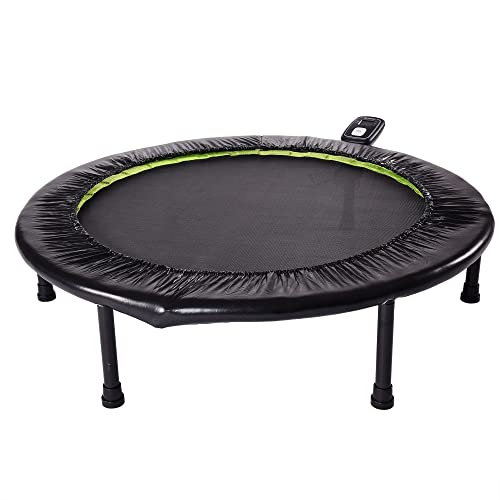
Stamina 36 Inch Folding Rebounder
The Stamina 36-inch rebounder features a low-profile design with included handlebar for balance support. It uses 8 bungee cords for a gentle, quiet bounce. Owners appreciate the easy step-through design and foam grip. It supports up to 220 pounds.
What owners say: Owners report the Stamina is very stable and easy on joints, making it ideal for seniors or those recovering from injury. Some wish the mat were larger for taller users.
- Low step-through frame
- Stable handlebar included
- Quiet bungee system
- Lower weight capacity (220 lbs)
- Small mat size
How to choose
- Stability and Frame Construction. A sturdy frame with a wide base prevents wobbling during use. Look for heavy-duty steel or aluminum frames and a design that keeps the rebounder planted on the floor.
- Bounce Mechanism: Springs vs. Bungees. Springs provide a more responsive bounce but can be noisy. Bungee cords offer a quieter, softer ride but may stretch or break over time. Beginners often prefer bungees for comfort.
- Mat Size and Jump Surface. A larger mat (40-48 inches) gives more room for movement, while smaller mats (30-39 inches) are more compact. Consider your height and intended exercises when choosing.
- Weight Capacity. Check the weight limit to ensure the rebounder can safely support you. Models with higher capacities (250-300 lbs) tend to have sturdier frames.
- Portability and Storage. If space is limited, look for a foldable rebounder with a carrying bag. Some models fold in half or come apart easily for storage.
Frequently asked questions
What is a rebounder and is it good for beginners?
A rebounder is a small trampoline used for low-impact cardio. It is excellent for beginners because the soft bounce reduces joint stress while improving lymphatic circulation and balance.
How do I choose the right rebounder as a beginner?
Prioritize stability, a weight capacity that suits you, and a bounce mechanism you find comfortable. A model with a handlebar can help with balance initially. Read owner reviews to gauge real-world performance.
Is a bungee or spring rebounder better for beginners?
Bungee rebounders are generally quieter and softer, making them ideal for beginners and joint-sensitive users. Spring models offer a more traditional bounce but can be noisier and require more coordination.
How long does a rebounder last?
With proper care, a quality rebounder can last 3-5 years or more. Bungee cords may need replacement every 1-2 years, while springs typically last longer. Frame durability is key.
Can I use a rebounder outdoors?
Most rebounders are designed for indoor use only, as outdoor surfaces may damage the frame and legs. Moisture can also rust metal parts. Use on a level, clean floor for safety.
Do I need special shoes for rebounding?
No, rebounding is typically done barefoot or in grip socks to feel the mat. Some users prefer lightweight athletic shoes, but avoid shoes with thick soles that reduce mat feedback.
The verdict
The JumpSport 350 earns our top spot for its unmatched stability and quiet bounce, making it ideal for beginners. For those on a budget, the Bionic Body 1125 offers great value without sacrificing quality. If portability is key, the Maxus folding rebounder is a lightweight choice that travels easily.
Video Guide
Video: Related tutorial from YouTube