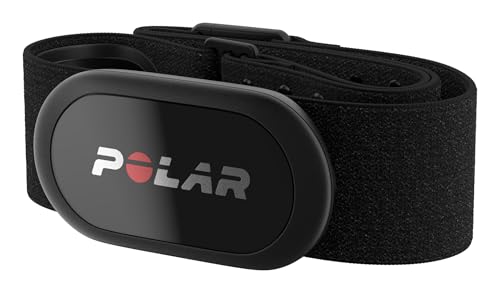
The Polar H10 is the safest starting point for most people: dual electrode sensing that holds up during intense intervals, with broad Bluetooth and ANT+ compatibility. If price is the deciding factor, the CooSpo H808S covers the same dual-band basics for less.
Check price on AmazonBefore picking a specific model, the real decision is chest strap versus armband, and that choice matters more than brand. A chest strap reads the heart’s actual electrical signal and holds up better during sudden intensity changes, an armband trades some of that precision for comfort during long, steady sessions.
We compared connectivity, accuracy, and comfort across seven monitors spanning both formats, prioritizing owner reports on real-world reliability, dropped connections, inconsistent readings, strap durability, over spec-sheet claims alone.
How we rank
We analyzed hundreds of owner reviews, expert ratings, and technical specifications to rank these heart rate monitors by accuracy, comfort, battery life, and value. See our method.
Quick picks
| Best for | Product | Who it suits |
|---|---|---|
| Best Overall | Polar H10 Heart Rate Sensor | Serious athletes and fitness enthusiasts who need maximum accuracy for training and recovery tracking. |
| Best Premium | Garmin HRM-Pro Plus | Garmin ecosystem users and triathletes who want running dynamics and swim tracking. |
| Best for Runners | Wahoo TICKR X | Runners and cyclists who want advanced metrics like cadence and ground contact time. |
| Best Lightweight | Scosche Rhythm24 Armband | Those who dislike chest straps and want a comfortable armband with optical sensor. |
| Best Value | Polar H9 Heart Rate Sensor | Budget-conscious athletes who want Polar accuracy without extra features. |
| Best Budget | CooSpo H808S Heart Rate Monitor | Beginners or casual users who want an affordable chest strap with solid performance. |
| Best for Gym | Wahoo TICKR Fit Armband | Gym goers who want an armband that pairs easily with gym equipment and apps. |
The picks, compared
Polar H10 Heart Rate Sensor
A dual-electrode chest strap built around accuracy rather than extra features, holding a stable connection across both Bluetooth and ANT+ even during intense efforts.
What owners say: Exceptional accuracy compared to optical sensors and a connection that rarely drops are the consistent, specific praise. There’s no onboard memory for standalone workouts, and the strap benefits from occasional washing to maintain conductivity.
- Excellent accuracy across all activity levels
- Comfortable and secure chest strap
- Long battery life with replaceable coin cell
- Strap may need occasional washing to maintain conductivity
- No built-in memory for standalone use

Garmin HRM-Pro Plus
A premium chest strap that captures running dynamics like cadence and ground contact time, and stores data during swims to sync with a Garmin watch afterward.
What owners say: Seamless integration with Garmin devices for both running and swim data is the specific praise. It costs more than a basic strap, and the fabric strap runs stiff until it’s been washed a few times.
- Running dynamics without extra devices
- Stores data for swim sessions
- Comfortable fabric strap
- Premium price
- Requires Garmin watch for full features

Wahoo TICKR X
A built-in accelerometer adds running form and cycling cadence data to standard heart rate sensing, with onboard memory for offline workout storage.
What owners say: Dual-protocol connectivity paired with the bonus running dynamics is what owners specifically point to. The battery door can be fiddly to open, and the strap loses some elasticity over extended use.
- Built-in running and cycling metrics
- Memory for offline workout storage
- Reliable dual connectivity
- Battery door can be tricky to open
- Strap may lose elasticity over time
Scosche Rhythm24 Armband
An optical armband built for people who specifically want to skip the chest strap, with a genuinely long 24-hour battery life and secure fit during vigorous movement.
What owners say: Comfort during long runs without chest-strap discomfort is the consistent theme. The optical sensor lags on quick heart rate changes, an inherent trade-off versus a chest strap during interval training.
- Comfortable armband design
- Long 24-hour battery life
- Stays secure during vigorous movement
- Optical sensor may lag on quick heart rate changes
- Fit may be tricky for very small or large arms
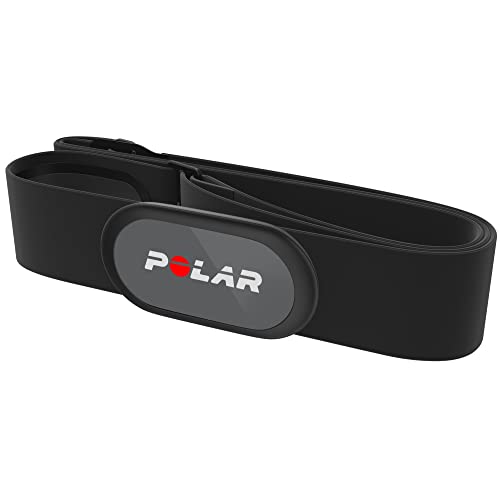
Polar H9 Heart Rate Sensor
The same core accuracy as the H10 in a simpler strap, without onboard memory or ANT+, built for people who want Polar’s sensing quality without paying for features they won’t use.
What owners say: Accuracy rivaling the pricier H10 at a lower cost is the recurring theme in reviews. Losing ANT+ connectivity is the specific trade-off, worth checking against your bike computer or gym equipment compatibility first.
- Accurate chest strap at a lower cost
- Comfortable strap design
- Works with Polar Beat and many apps
- No internal memory for workouts
- No ANT+ connectivity
CooSpo H808S Heart Rate Monitor
A genuinely affordable dual-band chest strap built for basic training needs rather than advanced metrics, positioned as a real entry point rather than a compromise.
What owners say: Low cost paired with consistent readings for steady-state cardio is the recurring theme. Occasional dropouts during genuinely high-intensity intervals are the known limitation at this price.
- Low cost with dual connectivity
- Comfortable strap
- Works with popular fitness apps
- Occasional dropouts during high-intensity intervals
- Strap may wear out after a few months

Wahoo TICKR Fit Armband
An optical armband built specifically for gym use, designed to pair quickly with treadmills and ellipticals rather than optimizing for outdoor running or cycling.
What owners say: Quick, reliable pairing with gym equipment specifically is what owners point to over general accuracy claims. It skips ANT+ entirely, and accuracy trails a chest strap during intense cardio, a fair trade-off for the gym-focused convenience.
- Slim and comfortable armband
- Pairs quickly with gym machines
- Good battery life for daily use
- Optical sensor may be less accurate than chest straps
- No ANT+ connectivity
How to choose
- Chest strap vs optical armband. Chest straps measure electrical signals from the heart, offering superior accuracy during high intensity intervals. Optical armbands use LEDs and are more comfortable for all day wear but may lag during rapid heart rate changes.
- Battery type and life. Most chest straps use replaceable coin cell batteries lasting up to 400 hours. Rechargeable armbands offer convenience but require periodic charging. Consider your usage frequency when choosing.
- Connectivity options. Bluetooth is standard for smartphones and tablets. ANT+ is needed for some bike computers and advanced sports watches. Dual connectivity ensures compatibility with the widest range of devices.
- Water resistance and durability. If you swim or sweat heavily, look for a water rating of at least IPX7 or 30 meters. A durable strap with washable fabric reduces skin irritation over time.
- Comfort and fit. A secure, adjustable strap or band prevents slipping during exercise. For chest straps, look for soft fabric with silicone grips. Armbands should be snug but not tight to avoid circulation issues.
Frequently asked questions
Which heart rate monitor is the most accurate?
Chest strap monitors like the Polar H10 are generally the most accurate because they measure electrical activity directly from the heart. Optical sensors on armbands can be less precise during interval training.
Can I use a heart rate monitor without a phone or watch?
Some models like the Polar H10 and Garmin HRM-Pro Plus store data internally for later syncing. Others require a live connection to a smartphone, watch, or gym equipment.
Are armband heart rate monitors as good as chest straps?
For steady state cardio, armbands like the Scosche Rhythm24 are very close in accuracy. However, during high intensity intervals or weightlifting, chest straps are more reliable.
Do I need a heart rate monitor for fitness?
It helps you train in specific heart rate zones for better efficiency and recovery. It is useful for anyone looking to optimize their workouts, from beginners to serious athletes.
How often should I replace the battery in my heart rate monitor?
Most coin cell batteries last 200 to 400 hours of use. Rechargeable models need charging every 20 to 30 hours. Replace or recharge when you notice erratic readings or failure to connect.
Can I swim with a heart rate monitor?
Only models with a water resistance rating of 30m or IP68 can be used for swimming. The Garmin HRM-Pro Plus and Polar H10 are suitable for swim tracking, while optical armbands may not.
The verdict
The Polar H10 is the right default for most people who want reliable accuracy without paying for features they won’t use. Choose the Garmin HRM-Pro Plus if you’re in the Garmin ecosystem and want running dynamics, or the Scosche Rhythm24 if a chest strap is a dealbreaker.