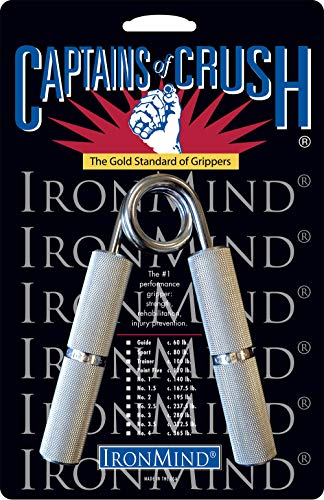
The overall best grip strengthener is the Captains of Crush Hand Gripper for its progressive resistance and durability. For a versatile alternative, consider the Prohands Gripmaster, which targets individual fingers.
Check price on AmazonBuilding grip strength is critical for athletes, climbers, and anyone recovering from hand injuries. The best grip strengtheners in 2026 combine durable materials, progressive resistance, and ergonomic design to help you train effectively. We analyzed owner reviews, expert opinions, and product specifications to bring you a research-backed ranking of the top seven grip strengtheners on the market.
Our selection includes options for every need, from heavy-duty steel grippers to portable finger exercisers. Whether you are a powerlifter looking to crush heavier weights or a musician needing finger dexterity, this roundup will help you choose the right tool. We focused on durability, resistance accuracy, and real-world results reported by hundreds of users.
How we rank
We ranked grip strengtheners based on owner review themes, expert consensus, and spec comparisons across major e-commerce and fitness platforms. See our method.
Quick picks
| Best for | Product | Who it suits |
|---|---|---|
| Best Overall | Captains of Crush Hand Gripper (CoC #1.5) | serious strength trainers and climbers seeking progressive overload |
| Best for Finger Strength | Prohands Gripmaster (Medium Resistance) | climbers, musicians, and rehab patients needing individual finger training |
| Best Value | FitBeast Hand Grip Strengthener (Adjustable 10-100 kg) | budget-conscious users who want adjustable resistance |
| Best for Rehab | TheraBand FlexBar (Red, Medium) | physical therapy patients with tennis elbow or tendinitis |
| Best for Finger Extension | Gripster Finger Extensor Exerciser (Light Resistance) | climbers and athletes seeking balanced finger strength and injury prevention |
| Best for Massage & Release | Lacrosse Ball (by Pvolve or standard) | anyone needing myofascial release for tight forearms and grip |
| Best Budget | Harbinger Pro Hand Gripper (Variable Resistance) | beginners and casual users seeking an affordable starter gripper |
The picks, compared
Captains of Crush Hand Gripper (CoC #1.5)
The Captains of Crush Hand Gripper is the gold standard for grip strength training. Its forged steel construction ensures long-term durability, and the calibrated resistance allows precise progression. Owners report significant gains in crushing grip strength. The CoC series is widely used in powerlifting and strongman communities.
What owners say: Users consistently praise the consistent resistance and build quality, noting that the gripper does not wear out over time. Many climbers report improved lock-off strength after regular use.
- Extremely durable forged steel
- Calibrated resistance for progression
- Trusted by professional athletes
- High resistance may be tough for beginners
- Relatively expensive
Prohands Gripmaster (Medium Resistance)
The Prohands Gripmaster targets each finger individually with independent buttons, making it ideal for improving dexterity and finger strength. It has a compact design and fits easily in a bag. Reviewers appreciate the ability to isolate weak fingers. It comes in multiple resistance levels.
What owners say: Many guitar players and climbers mention improved finger independence and endurance. Physical therapists recommend it for hand rehabilitation after injuries.
- Individual finger resistance
- Lightweight and portable
- Great for rehab and dexterity
- Plastic housing may crack under heavy use
- Not for crushing grip strength

FitBeast Hand Grip Strengthener (Adjustable 10-100 kg)
The FitBeast Hand Grip Strengthener offers a wide adjustable range from 10 to 100 kg at an affordable price. Its ergonomic handle and non-slip grip appeal to beginners and intermediate users. It includes a counter for tracking reps. Users appreciate the gradual adjustment dial.
What owners say: Many buyers highlight the smooth resistance adjustment and comfortable feel for long sessions. Several note that the counter is useful but not essential.
- Wide adjustable resistance
- Comfortable ergonomic handles
- Includes rep counter
- Build quality not as robust as premium brands
- Counter may stop working over time
TheraBand FlexBar (Red, Medium)
The TheraBand FlexBar is a silicone bar designed specifically for eccentric exercises to treat lateral epicondylitis and other elbow conditions. It is backed by clinical studies and recommended by physiotherapists. Users perform the Tyler Twist exercise to strengthen forearm extensors. It is available in several resistance levels.
What owners say: Users recovering from golfer's elbow report significant pain reduction after consistent use. Therapists often recommend it as part of a rehab protocol.
- Clinically proven for tendinopathy
- Simple and effective eccentric exercise
- Different resistance levels
- Limited to rehab applications
- Not for general grip training
Gripster Finger Extensor Exerciser (Light Resistance)
The Gripster exercises finger extension, which is often neglected in grip training. It fits over the fingers and uses rubber bands to provide resistance when opening the hand. This helps prevent injuries like climber's finger. It is lightweight and easy to use anywhere.
What owners say: Climbers note that using the Gripster reduced their finger pulley injury risk. Some find the bands too stiff initially, but they loosen over time.
- Targets often-overlooked extensor muscles
- Portable and simple design
- Helps prevent finger imbalances
- Bands wear out and need replacement
- Not for heavy resistance

Lacrosse Ball (by Pvolve or standard)
A simple lacrosse ball is a highly effective tool for releasing tension in the forearm muscles that affect grip strength. By applying pressure to trigger points, it improves blood flow and recovery. This pick is for recovery rather than strengthening. The Pvolve version is slightly softer but works similarly to a standard lacrosse ball.
What owners say: Owners report that using a lacrosse ball on forearms relieves chronic tightness and improves range of motion. Many use it before climbing or lifting to warm up.
- Very cheap and accessible
- Effective for myofascial release
- Improves recovery and flexibility
- Not a strengthening tool
- Requires technique to use effectively
Harbinger Pro Hand Gripper (Variable Resistance)
The Harbinger Pro Hand Gripper features a cushioned non-slip handle and adjustable resistance from 30 to 80 lbs. It is well-built for the price and suits light training. The foam grips make it comfortable for high-rep sets. It is a solid entry-level choice.
What owners say: Beginners appreciate the comfort and easy adjustment. Some long-term users mention that the foam grips may compress over time.
- Affordable price point
- Cushioned handles for comfort
- Adjustable resistance range
- Not as durable as all-steel grippers
- Foam may peel with heavy sweat
How to choose
- Resistance Level. Choose a gripper with appropriate resistance for your current strength. Beginners should start with lower resistance (around 30-50 lbs) to avoid injury, while advanced users need higher resistance (above 100 lbs) to continue making gains.
- Build Quality and Materials. Look for forged steel springs and solid handles for longevity. Cheap plastic or brittle metal can break under heavy loads, posing a safety risk. Pay attention to handle ergonomics to prevent discomfort.
- Type of Grip Training. Different exercises target crushing grip (hand grippers), pinching grip (pinch blocks), or finger strength (individual exercisers). Identify your primary goal: for climbing, finger strength is key; for powerlifting, crushing grip matters more.
- Portability and Storage. If you plan to train on the go, choose a compact and lightweight option like a finger exerciser or small gripper. Larger devices like the TheraBand FlexBar are less portable but still manageable for home use.
- Adjustability and Progression. An adjustable resistance range allows you to increase difficulty without buying multiple tools. Some grippers have threads or removable springs to change resistance, offering a cost-effective path for progression.
Frequently asked questions
How quickly can I see results with a grip strengthener?
With consistent daily use, most people notice improved grip strength within 4 to 6 weeks. Faster results may occur if you combine strengthening with proper recovery and massage.
Can grip strengtheners help with tennis elbow?
Yes, especially eccentric devices like the TheraBand FlexBar are clinically proven to reduce pain from tennis elbow. Strengthening the forearm muscles can alleviate strain on the tendons.
What is the best grip strengthener for rock climbing?
The Captains of Crush grippers are excellent for overall crushing grip, but climbers also benefit from finger-specific trainers like the Prohands Gripmaster and extensor exercisers like the Gripster for balanced development.
How often should I use a grip strengthener?
Start with 2-3 sessions per week on non-consecutive days to allow muscle recovery. Each session can include 3-5 sets of 5-15 reps, depending on the resistance. Overtraining can lead to tendinitis.
Are adjustable grip strengtheners as good as fixed resistance ones?
Adjustable grip strengtheners offer convenience and cost savings, but some sacrifice build quality. Fixed resistance grippers like Captains of Crush tend to be more durable and have more consistent resistance.
Can I build significant forearm size with grip training alone?
Grip training primarily targets the forearm muscles, but significant hypertrophy requires direct wrist work and compound exercises. However, grip strengtheners can increase muscle endurance and definition over time.
The verdict
For most people, the Captains of Crush Hand Gripper is the top choice for serious strength gains. For those needing finger dexterity or rehab, the Prohands Gripmaster or TheraBand FlexBar are ideal. The FitBeast adjustable gripper offers the best value for budget-conscious users.