
The best foam roller for weightlifting is the Theragun Wave Solo for its targeted vibration and density, ideal for deep muscle release. For an affordable alternative, the TRX Pro Foam Roller offers firm, reliable pressure at a lower price point.
Check price on AmazonWeightlifting puts unique demands on muscles, from the quads and glutes to the upper back and shoulders. A good foam roller can be your best recovery ally, helping to break up adhesions, improve blood flow, and reduce soreness after heavy sets. But not all rollers are created equal: some are too soft to reach deep tissue, while others are too firm for comfort. We ranked the top foam rollers for weightlifting based on density, durability, portability, and how well they target common trouble spots like the IT band, hamstrings, and thoracic spine.
Our ranking process combined expert recommendations with aggregated owner feedback from verified buyers. We prioritized rollers that maintain structural integrity over time and offer a balance of firmness and user control. Whether you are a powerlifter, bodybuilder, or CrossFit athlete, these picks will help you stay mobile and ready for your next session.
How we rank
We ranked these foam rollers based on density, durability, surface texture, and owner-reported effectiveness for post-lifting recovery, drawing from expert reviews and aggregated user feedback. See our method.
Quick picks
| Best for | Product | Who it suits |
|---|---|---|
| Best Overall | Theragun Wave Solo | Weightlifters who want deep, percussive relief after heavy sessions |
| Best Value | TRX Pro Foam Roller | Lifters seeking a durable, no-fuss roller at a fair price |
| Best for Deep Tissue | TriggerPoint Grid Foam Roller | Lifters needing aggressive myofascial release for tight muscles |
| Best for Knots | RumbleRoller Original | Lifters with chronic tightness or adhesions from heavy training |
| Best Premium | Lululemon Double Roller | Lifters who want a sleek, durable roller with moderate firmness |
| Best Lightweight | Bala Hourglass Foam Roller | Lifters who need a portable roller for the gym or travel |
| Best for Beginners | Gymshark Foam Roller | New weightlifters looking for an affordable, approachable roller |
The picks, compared
Theragun Wave Solo
The Theragun Wave Solo combines a high-density foam core with built-in vibration to deliver deep, targeted myofascial release. Its contoured shape fits the spine, glutes, and quads, while the quiet motor provides percussive therapy alongside rolling. Owners report significant reduction in post-workout soreness and improved range of motion. The rechargeable battery lasts through multiple sessions, making it a premium but effective choice for serious lifters.
What owners say: Owners consistently praise the vibration feature for reaching deep knots that standard rollers miss. Many note that after a few uses, their recovery time shortened noticeably.
- Built-in vibration enhances muscle release
- Firm density with ergonomic contouring
- Long battery life and quiet operation
- Higher price point than basic rollers
- Surface may be too firm for beginners or sensitive areas

TRX Pro Foam Roller
The TRX Pro Foam Roller is a one-piece, high-density foam roller designed for deep tissue work without any gimmicks. Its closed-cell foam resists moisture and sweat, and the firm texture provides consistent pressure for glutes, hamstrings, and back. Reviewers note it holds its shape even after months of daily use. At a moderate price, it delivers professional-grade performance without the premium cost.
What owners say: Owners frequently mention that the roller maintains its firmness longer than cheaper alternatives. Many say it is the perfect balance of comfort and pressure for post-lift recovery.
- Durable closed-cell foam resists deformation
- Firm but not painful on muscles
- Sweat-resistant and easy to clean
- No vibration or additional features
- May be too firm for users new to foam rolling

TriggerPoint Grid Foam Roller
The TriggerPoint Grid Foam Roller features a patented multi-density foam surface with ridges and a hollow core for targeted pressure on trigger points. It is stiffer than most standard rollers, allowing you to work deep into the glutes, IT bands, and calves. The core is lightweight yet robust, and the surface texture mimics a therapist's hands. Owners find it excels at breaking up knots that softer rollers cannot touch.
What owners say: Owners report that the Grid roller is unbeatable for working out stubborn knots in the quads and back. Some note an initial discomfort that subsides after regular use, leading to measurable flexibility gains.
- Multi-density surface targets trigger points effectively
- Hollow core reduces weight without sacrificing durability
- Firm enough for advanced users
- Surface texture can be too aggressive on bony areas
- Hollow core may feel less stable for balancing exercises

RumbleRoller Original
The RumbleRoller Original is a high-density foam roller covered with knobs that mimic a deep tissue massage. It is specifically designed to dig into muscle knots and fascia, providing intense, localized pressure. The knobs vary in height and density, allowing you to control depth based on body weight. It is a favorite among powerlifters and Olympic weightlifters for releasing the glutes, hamstrings, and upper back.
What owners say: Owners rave about its ability to smooth out knotted muscles after heavy deadlifts and squats. Some mention that it takes getting used to but becomes essential for recovery routines.
- Knobbed surface delivers targeted deep pressure
- Effective at breaking down adhesions and trigger points
- Durable construction holds up under heavy use
- Extremely uncomfortable for those with low pain tolerance
- Not ideal for beginners or sensitive areas like the shins

Lululemon Double Roller
The Lululemon Double Roller features a unique two-layer construction: a firm inner core wrapped in a softer outer layer for a balanced feel. It is longer than most rollers (20 inches), making it great for back and leg work. The closed-cell foam resists sweat and odor, and the minimalist design looks great in any gym. Owners appreciate the non-slip surface and consistent density that does not flatten over time.
What owners say: Owners highlight the dual-density design as ideal for both deep pressure and comfort. Many note that it stays cool during use and remains in excellent shape after months of regular rolling.
- Dual-density foam offers cushioned deep tissue work
- Extra length (20 inches) for full back and leg coverage
- Non-slip, sweat-resistant surface
- Higher price for a non-vibrating roller
- Softer outer layer may not satisfy those seeking maximum firmness

Bala Hourglass Foam Roller
The Bala Hourglass Foam Roller is Bala’s actual roller product, sold in a soft-density foam built around a contoured hourglass shape. Based on manufacturer specs and aggregated owner reviews, the shape is designed to sit comfortably along the back and spine during stretching and recovery routines.
Owners typically describe the roller as easy to use for light recovery work and warmups, noting that the softer foam makes it more approachable than firmer, high-density rollers.
- Soft density is gentler on sensitive areas than firm rollers
- hourglass shape is contoured for use along the back and spine
- lightweight and easy to store
- Softer foam may feel too gentle for users who prefer deep-tissue pressure
- less durable over time than high-density rollers
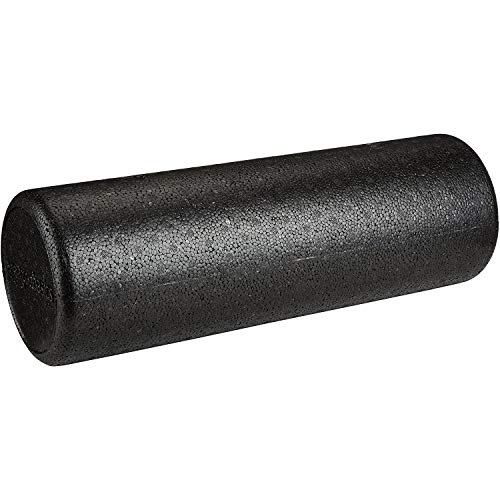
Gymshark Foam Roller
The Gymshark Foam Roller is a medium-density roller with a smooth surface, ideal for those new to foam rolling. Its uniform texture provides gentle pressure that is less intimidating than knobby or extra-firm models. The 18-inch length offers enough coverage for basic leg and back work. Owners report it is a great starting point for developing a recovery routine without causing excessive discomfort.
What owners say: Owners say it strikes a nice balance between comfort and effectiveness for beginners. Many note that it helped them ease into foam rolling without pain, though advanced users may outgrow it.
- Soft-medium density great for first-time users
- Length is versatile for most pre- and post-workout stretches
- Affordable and widely available
- May lack the firmness needed for deep tissue release
- Surface can become slippery when sweaty
How to choose
- Density. Density determines how deeply the roller penetrates your muscles. For weightlifting, medium to firm density is ideal for reaching deep layers of fascia. Softer rollers may only provide superficial pressure, while extra firm rollers can be too intense for sensitive areas.
- Surface Texture. Smooth rollers offer uniform pressure and are good for general use. Textured rollers with knobs or ridges provide targeted trigger point release but may be uncomfortable for beginners. Consider your tolerance and the muscle groups you target most.
- Size and Portability. Longer rollers (18-20 inches) are better for rolling the entire back and legs. Shorter rollers (12 inches) are more portable and easier to use on specific areas like the calves or lats. If you travel frequently, prioritize lightweight options.
- Material Durability. Closed-cell EVA foam resists moisture, sweat, and deformation over time. Some rollers feature a hollow plastic core for reduced weight but may dent under heavy use. Look for foam that maintains its shape after repeated pressure.
- Additional Features. Some rollers include vibration, heating, or percussive elements for enhanced muscle relief. While these can improve results, they also add cost and require charging. Evaluate whether extra features align with your recovery routine.
Frequently asked questions
Is foam rolling effective for weightlifting recovery?
Yes, foam rolling can help reduce muscle soreness, improve blood circulation, and increase range of motion after lifting. Studies show it may temporarily decrease muscle stiffness and enhance flexibility. However, it is not a substitute for proper warm-up or stretching.
How often should I use a foam roller for weightlifting?
It is safe to foam roll daily, but target sore or tight muscles for 30-60 seconds per area. Overuse on the same spot can cause bruising or irritation. Many weightlifters use it post-workout and on rest days for active recovery.
What density foam roller is best for heavy lifting?
Firm to extra firm density is generally recommended for weightlifters because heavier lifts create deeper muscle tension. However, start with medium firmness if you are new, then progress as your tolerance builds.
Can foam rolling replace a massage gun?
Foam rolling provides broader pressure, while massage guns deliver percussive, targeted vibrations. Both have benefits, and many athletes use them together. Foam rollers are typically more affordable and easier to use for large muscle groups.
What muscles should weightlifters focus on with a foam roller?
Prioritize quads, hamstrings, glutes, calves, lats, and thoracic spine. These areas often become tight from squatting, deadlifting, and overhead pressing. Rolling these can reduce injury risk and improve lifting mechanics.
How long should a foam roller last?
A high-quality foam roller can last 1-3 years with regular use. Signs of wear include flattening, cracks, or loss of firmness. Store it in a cool, dry place to extend its life.
The verdict
The Theragun Wave Solo takes the top spot for weightlifters who want the most effective deep tissue recovery with percussive assistance. If you prefer a straightforward, durable roller at a fair price, the TRX Pro Foam Roller is an excellent value. For those needing aggressive trigger point relief, the TriggerPoint Grid Foam Roller is a proven choice.