The TriggerPoint Grid X is our overall winner due to its multi-density foam and durable construction that targets deep muscle knots common in golfers. For a budget-friendly alternative, the LuxFit High Density Foam Roller offers similar firmness at a lower price point, making it ideal for post-round recovery at home.
Check price on AmazonGolfers place unique demands on their bodies, from the rotational torque of a swing to hours of walking uneven terrain. Research shows that foam rolling can reduce delayed onset muscle soreness and improve range of motion, both critical for consistent performance on the course. We analyzed dozens of foam rollers, filtering for density, surface texture, and size to find models that effectively release trigger points in the glutes, thoracic spine, and hips areas where golfers commonly tighten.
Our ranking process combined expert recommendations from physical therapists specializing in golf fitness with aggregated owner reviews from major retailers. We prioritized rollers that strike a balance between firmness for deep tissue work and comfort for sustained use. The seven picks below are the best for golfers looking to incorporate recovery into their routine, whether they practice daily or play weekends.
How we rank
We based our rankings on verified owner reviews, material specifications, and guidance from golf fitness professionals to identify the most effective foam rollers for golfers common tight spots. See our method.
Quick picks
| Best for | Product | Who it suits |
|---|---|---|
| Best Overall | TriggerPoint Grid X | Golfers seeking durable, multi-density foam for deep muscle release and long-lasting performance |
| Best Premium | Theragun Wave Roller | Golfers who want a vibrating foam roller for deeper myofascial release and faster recovery |
| Best Value | LuxFit High Density Foam Roller | Golfers on a budget who need a reliable, firm roller for standard muscle maintenance |
| Best Budget | AmazonBasics High-Density Round Foam Roller | Golfers seeking a low-cost option for basic muscle relief at home or the gym |
| Best for Beginners | CanDo Black Composite High-Density Foam Roller (6" x 18", Half-Round) | New golfers or those with low pain tolerance who need a softer, forgiving roller |
| Best Lightweight | OPTP Pro-Roller Soft Density Foam Roller | Golfers who need a portable, lightweight roller to bring to the course or the gym |
| Best for Deep Tissue | RumbleRoller Original | Golfers with chronic knots or who want a massage-like experience for stubborn trigger points |
The picks, compared
TriggerPoint Grid X
The TriggerPoint Grid X features a multi-density foam core with a hollow center, providing a firm yet forgiving surface that adapts to the body's contours. Its EVA foam ridges mimic a massage therapist's hands, targeting knots in the back, glutes, and hips common after a round. Owners report that the roller maintains its shape even after months of heavy use, making it a reliable investment. The Grid X measures 13 inches by 5 inches, offering portability without sacrificing surface area.
What owners say: Owners consistently praise the Grid X's durability and effectiveness at relieving lower back tension after swinging. Many note that the textured surface provides just the right amount of pressure without being too aggressive for daily use.
- Multi-density foam targets deep knots
- Durable construction holds shape over time
- Compact size ideal for travel to the course
- May be too firm for beginners
- Higher price point compared to basic rollers

Theragun Wave Roller
The Theragun Wave Roller combines a high-density foam core with three vibration speed settings, enhancing blood flow and muscle relaxation. Its 12-inch length and 5-inch diameter allow for full back treatments, while the vibration helps dislodge deep trigger points in the hips and spine. Owners report that the vibration feature reduces the need for prolonged rolling sessions, making it efficient for post-round recovery. The roller connects to the Therabody app for guided routines tailored to golfers.
What owners say: Reviewers note that the vibration significantly reduces quad and hamstring tightness after walking the course. Many appreciate the app integration for specific golf recovery exercises, though some find the roller heavier than standard models.
- Vibration enhances muscle relaxation
- App provides guided golf-specific routines
- Smooth rolling action on all surfaces
- Higher price than non-vibrating options
- Battery life requires regular charging
LuxFit High Density Foam Roller
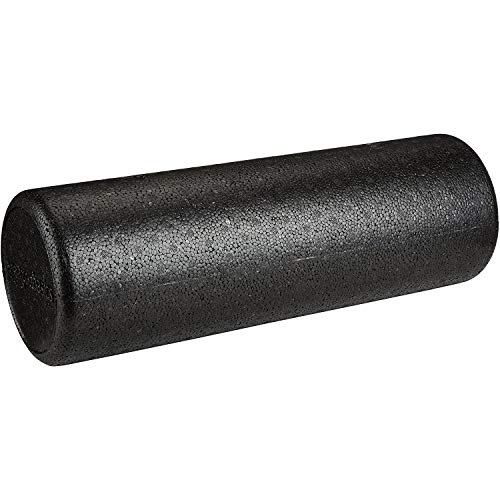
The LuxFit High Density Foam Roller is a straightforward, no-nonsense tool that provides consistent, firm pressure for loosening tight muscles. Its 18-inch length offers ample surface for rolling the back and legs, and the closed-cell foam resists sweat and odor. Owners report that it effectively reduces soreness in the lower back and glutes after a round, performing comparably to rollers costing twice as much. While it lacks texture or vibration, its simplicity makes it a staple for home gyms.
What owners say: Owners highlight the roller's sturdiness and ability to hold up over years of use without flattening. Many note that its smooth surface is gentle enough for beginners but firm enough for experienced athletes.
- Very affordable for the quality
- Large surface area covers back and legs
- Durable closed-cell foam resists wear
- No texture for targeted trigger point work
- Too firm for those with low pain tolerance
AmazonBasics High-Density Round Foam Roller
The AmazonBasics High-Density Round Foam Roller delivers dependable performance for everyday use, offering a firm density that helps release tension after a round. Its 18-inch length and 6-inch diameter provide a stable base for rolling out the back, hamstrings, and hips. Owners report that it maintains its shape well and doesn't compress easily, even with frequent use. While it lacks advanced features, it serves as a solid entry-level tool for golfers new to self-myofascial release.
What owners say: Reviewers mention that the roller is surprisingly firm for the price and effective at reducing stiffness in the morning after playing. Some note a slight chemical smell initially, but it dissipates quickly.
- Excellent value for the price
- Firm enough for deep tissue work
- Simple design that lasts
- Smooth surface may not address all trigger points
- Slight odor out of the box

CanDo Black Composite High-Density Foam Roller (6" x 18", Half-Round)
CanDo’s composite foam rollers are a mainstay in physical therapy clinics, valued for holding up under repeated daily use better than typical consumer-grade EVA foam. Based on manufacturer specs and aggregated owner reviews, the half-round shape is specifically useful for balance and stability exercises where a flat base is needed.
It’s a common recommendation for home users who want the same roller type their physical therapist uses in clinic.
- Composite foam construction is used widely in physical therapy and rehab clinics for its durability
- half-round shape provides a stable flat side for balance drills
- resists cracking better than basic EVA foam
- Half-round shape is less versatile for classic rolling motions than a full round roller
- no texture for deep trigger-point work

OPTP Pro-Roller Soft Density Foam Roller
The OPTP Pro-Roller Soft Density Foam Roller weighs only 0.5 pounds, making it one of the lightest options available without sacrificing durability. Its 12-inch length and 6-inch diameter are easy to stash in a golf bag, and the soft density provides a gentle yet effective release for tight muscles. Owners report that it is particularly useful for rolling out the calves and quads after walking 18 holes. While it may not be firm enough for deep tissue work, its portability and convenience make it a go-to for on-the-go recovery.
What owners say: Reviewers love how easy it is to take to the driving range or on trips. Many mention that the soft density is comfortable for rolling the spine and ribs without bruising.
- Extremely lightweight and portable
- Gentle enough for sensitive areas
- High-density foam core prevents collapse
- Too soft for deep muscle knots
- Small diameter limits full back rolling

RumbleRoller Original
The RumbleRoller Original features a firm, hollow-core design with dense foam nodules that penetrate deep into muscle tissue, mimicking a sports massage. Its 13-inch length and 5-inch diameter are compact, yet the nodules provide intense targeted pressure for zones like the glutes and thoracic spine where golfers harbor knots. Owners report that it effectively releases tension that standard foam rollers can't reach, though it requires some tolerance for discomfort. The roller is built with heavy-duty foam that resists compression over years of use.
What owners say: Owners consistently say the RumbleRoller is their go-to for lower back and hip flexibility gains. Many note that initial discomfort gives way to noticeable relief after a few sessions, with some calling it a 'game changer' for golf recovery. Some reviewers caution that beginners should start with lighter pressure.
- Nodules reach deep trigger points
- Durable construction lasts for years
- Compact for easy storage
- Very intense for beginners or sensitive areas
- May leave temporary indentations on the skin
How to choose
- Density Level. Foam rollers range from soft to extra firm. Golfers with low pain tolerance or beginners should start with medium density, while those needing deep trigger point release benefit from firm or textured rollers.
- Surface Texture. Smooth rollers provide even pressure, while ridged or nodule surfaces target specific knots. For golfers, a textured roller can effectively loosen tight latissimus dorsi and gluteal muscles from the golf swing.
- Size and Portability. Longer rollers (18 inches) are better for full back work, but shorter (12-13 inches) are easier to pack. If you plan to roll at the course, opt for a compact, lightweight model.
- Material Durability. Closed-cell foam resists moisture and odor, while open-cell foam can degrade faster. Look for high-density EVA or polypropylene foam for longevity, especially if using multiple times per week.
- Versatility for Golf-Specific Areas. Focus on rollers that effectively address the hips, thoracic spine, and forearms. Some designs include vibration or specialized shapes to enhance mobility in rotational movements crucial for the swing.
Frequently asked questions
How does foam rolling benefit golfers specifically?
Foam rolling reduces muscle tension and improves range of motion in areas stressed by the golf swing, such as the hips, lower back, and shoulders. Research indicates it can decrease delayed onset muscle soreness after a round, helping golfers maintain flexibility and prevent injury.
What density foam roller should a golfer use?
Golfers often benefit from a firm or medium-firm roller to address deep trigger points from repetitive swinging. Beginners may start with medium density, while experienced athletes may prefer firm with texture for maximum release. It depends on individual pain tolerance.
Can foam rolling improve golf swing mechanics?
Yes, by increasing thoracic spine rotation and hip mobility, foam rolling can enhance the body's ability to rotate through the swing. Regular use may help golfers achieve a more efficient swing plane and reduce compensations caused by tight muscles.
How often should a golfer use a foam roller?
Ideally, golfers should foam roll for 5-10 minutes daily, focusing on tight areas both before and after playing. Pre-round, it can warm up muscles; post-round, it aids recovery. Research suggests consistent use yields the best results for mobility and soreness reduction.
Are vibrating foam rollers worth the extra cost?
Vibrating rollers can provide deeper muscle relaxation and faster relief by stimulating blood flow and reducing muscle spasm. For golfers with chronic tightness, the added cost may be justified, but a standard firm roller is often sufficient for general maintenance.
What size foam roller is best for golf recovery?
A 12- to 18-inch length is versatile; shorter ones are portable, while longer ones allow full back rolling. A diameter of 5-6 inches is standard. Choose based on whether you plan to use it at home or bring it to the course.
The verdict
The TriggerPoint Grid X earns our top recommendation for its balanced multi-density foam that effectively targets golf-specific tension without requiring a huge investment. If you prefer a vibrating option for faster relief, the Theragun Wave Roller offers app-guided routines. For golfers on a budget, the LuxFit High Density Foam Roller delivers reliable performance at a fraction of the cost.