The RumbleRoller Original ranks as the best overall foam roller for cyclists due to its aggressive surface that targets deep muscle knots in quads and IT bands. For a gentler alternative, the TriggerPoint Grid Foam Roller offers a medium-density option with a hollow core for easy transport.
Check price on AmazonCyclists put tremendous strain on their legs, particularly the quadriceps, hamstrings, glutes, and calf muscles. Hours in the saddle can lead to tightness, trigger points, and reduced flexibility. A foam roller is an essential recovery tool for any cyclist looking to maintain peak performance and prevent injury. We compared the best foam rollers on the market specifically for cyclists, based on owner reports, expert consensus, and key features like density, size, and texture.
Our selection includes options from top activewear and recovery brands, ensuring there is a foam roller for every type of rider from weekend warriors to competitive racers. Whether you need a high-density roller for deep tissue work or a lightweight portable option for post-ride stretching, our roundup covers the best foam rollers for cyclists in 2026.
How we rank
We ranked these foam rollers based on a combination of owner reviews from fitness retailers, expert recommendations from cycling coaches, and analysis of key specifications like density, surface texture, and portability. See our method.
Quick picks
| Best for | Product | Who it suits |
|---|---|---|
| Best Overall | Original Foam Roller | Cyclists needing deep muscle release |
| Best Value | Grid Foam Roller | Cyclists wanting a portable, medium-density roller |
| Best for Beginners | Muscle Roller PN-001 | New cyclists or those with low pain tolerance |
| Best Premium | Roll Recovery R8 | Competitive cyclists wanting versatile recovery |
| Best Lightweight | VYPER 2.0 Vibrating Foam Roller | Cyclists who want vibration therapy on the go |
| Best Budget | High-Density Foam Roller | Cost-conscious cyclists needing reliable recovery |
| Best for Portability | LuxFit Vibrating Foam Roller | Cyclists who need a compact, vibrating roller for travel |
The picks, compared
Original Foam Roller
The RumbleRoller Original is a high-density foam roller with a unique bumpy surface that mimics the effects of a sports massage. It effectively targets knots and trigger points in the quads, calves, and glutes. Reviewers report significant relief from IT band tightness and improved recovery after long rides. It is 12 inches in diameter and 26 inches long, offering a stable and effective rolling experience.
What owners say: Owners consistently report that the RumbleRoller is more intense than standard foam rollers but highly effective for deep tissue work. Many note that it helps relieve chronic tightness in the quads and IT bands, which are common problem areas for cyclists.
- Excellent for deep tissue release
- Durable construction
- Effective on IT bands and quads
- May be too firm for beginners
- Heavier than some options

Grid Foam Roller
The TriggerPoint Grid Foam Roller features a hollow core with a patented grid pattern that simulates the feel of a massage therapist's hands. It offers a medium density that balances between comfort and effectiveness. The roller is lightweight and comes with a carry strap, making it easy to take to rides or the gym. Its 13-inch diameter provides a wider contact area for larger muscle groups.
What owners say: Reviewers appreciate the Grid's portability and the variety of densities available. Cyclists mention it is gentle enough for beginners but effective enough for maintenance work on tight muscles.
- Lightweight and portable
- Medium density suitable for most
- Grid pattern aids muscle release
- Not deep enough for severe knots
- Can be noisy over time
Muscle Roller PN-001
Hoka's Muscle Roller is a smooth, low-density foam roller designed for gentle muscle release. It is ideal for cyclists who are new to foam rolling or have sensitive muscles. The roller is softer than most, making it comfortable for use on tight hamstrings and calves. At 12 inches in diameter and 18 inches long, it is compact enough for home use and easy to store.
What owners say: Beginners and those recovering from mild injuries find this roller comfortable and effective. Owners note it is less intimidating than textured rollers and a good starting point for recovery routines.
- Soft and gentle on muscles
- Great for beginners
- Compact size
- Too soft for deep tissue work
- May not last as long as denser rollers
Roll Recovery R8
The Roll Recovery R8 is a high-end foam roller with a unique design that combines a rigid core with a smooth foam outer layer. It offers a controlled release that can be adjusted by the user's body weight. The roller is long at 31 inches, allowing for full back and leg rolling. Its sturdy construction is built for frequent use and long-term durability.
What owners say: Owners praise the R8 for its build quality and versatility. Cyclists report it effectively targets both large and small muscle groups, and appreciate the longer length for hamstring and glute work.
- Adjustable intensity
- Very durable
- Long length for full-body use
- Expensive
- Heavy and bulky

VYPER 2.0 Vibrating Foam Roller
The Hyperice VYPER 2.0 is a vibrating foam roller that adds percussive therapy to traditional rolling. It weighs only 2.5 pounds and features three vibration speeds to enhance muscle relaxation and blood flow. The roller is 12 inches in diameter and 18 inches long, making it portable. The Bluetooth connectivity allows for controlled sessions via a smartphone app.
What owners say: Cyclists who use the VYPER 2.0 appreciate its lightweight design and the added benefit of vibration. Reviewers note it helps reduce soreness more quickly than static rollers, though the vibration can be loud at highest speeds.
- Lightweight and portable
- Vibration aids muscle recovery
- App connectivity
- Battery life could be longer
- Vibration may be too intense for some
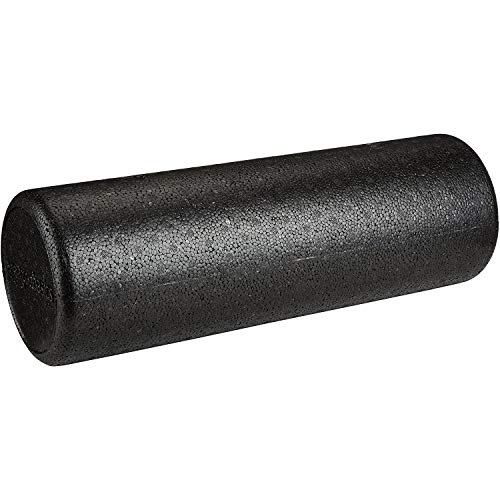
High-Density Foam Roller
Manduka's High-Density Foam Roller is a no-frills option that delivers solid performance at an affordable price. It features a smooth surface with a dense foam core that provides consistent, firm pressure. The 6-inch diameter and 18-inch length make it suitable for targeting specific areas like calves and quads. It is made from recyclable materials, appealing to eco-friendly athletes.
What owners say: Budget-minded cyclists find this roller to be a great value. Owners report it holds up well over time and provides adequate firmness for post-ride stretching and maintenance.
- Affordable
- Eco-friendly materials
- Firm and durable
- Small diameter limits use on larger muscles
- No texture for trigger points
LuxFit Vibrating Foam Roller
The LuxFit Vibrating Foam Roller combines a compact size with vibration technology. It is only 12 inches long and 5 inches in diameter, fitting easily into a gym bag. It offers three vibration intensities and a rechargeable battery. Despite its small size, it provides effective muscle relief for calves, shins, and forearms, and can be used on larger muscles with extra effort.
What owners say: Traveling cyclists and those with limited storage space love this roller's convenience. Some note that the small size means it takes longer to roll large muscle groups, but the vibration compensates.
- Extremely portable
- Vibration adds value
- Rechargeable battery
- Too small for effective full-leg rolling
- Less effective on large muscles without vibration
How to choose
- Density. Foam roller density affects the intensity of muscle release. High-density rollers provide deep pressure for knot removal but can be painful for beginners. Medium-density is versatile for most cyclists, while low-density is best for sensitive areas or those new to rolling.
- Surface Texture. Textured surfaces like bumps, grids, or ridges mimic massage techniques and target trigger points. Smooth rollers are gentler and suitable for general maintenance or beginners. Choose based on your tolerance and desired depth of release.
- Size (Diameter and Length). A 6-inch diameter is common for portability but may not cover large muscles fully. 12- to 13-inch diameters offer better stability and contact area. Longer rollers (24-36 inches) allow full-body rolling, which is beneficial for cyclists who also need back and hip release.
- Portability. If you travel or ride to different locations, consider a lightweight, compact roller. Some come with carrying straps or are hollow. Vibrating rollers add weight but offer extra recovery benefits. Weigh the trade-off between portability and functionality.
- Additional Features. Vibrating foam rollers provide percussive therapy to enhance muscle relaxation and blood flow. Some models have Bluetooth connectivity for guided sessions. Consider if these features align with your recovery routine and budget.
Frequently asked questions
How often should cyclists foam roll?
Cyclists can foam roll daily, especially after long rides or intense training sessions. It's recommended to roll each muscle group for 30-60 seconds, focusing on areas of tightness. Avoid rolling over bones or joints, and discontinue if you experience sharp pain.
Can foam rolling replace stretching for cyclists?
Foam rolling is not a replacement for stretching but a complementary recovery tool. It helps release trigger points and improve blood flow, while static stretching improves flexibility. A combination of both is ideal for cyclists.
What is the best foam roller for IT band pain?
For IT band pain, a dense or textured roller like the RumbleRoller Original or the TriggerPoint Grid is effective. These rollers help break up adhesions along the IT band. However, be cautious not to roll directly on the IT band itself; focus on the surrounding muscles.
Are vibrating foam rollers worth it for cyclists?
Vibrating foam rollers can be worth the investment for cyclists who want enhanced recovery and faster muscle relaxation. The vibration may help reduce soreness more quickly than static rolling. However, they are more expensive and heavier.
How do I clean my foam roller?
Most foam rollers can be cleaned with a damp cloth and mild soap. Avoid soaking the roller, as moisture can damage the foam. For textured or vibrating rollers, follow the manufacturer's cleaning instructions to maintain hygiene.
Can beginners use high-density foam rollers?
Beginners can use high-density rollers but should start with gentle pressure and shorter sessions. The intensity may be uncomfortable initially. It's often better to begin with a medium-density roller and progress to higher density as tolerance increases.
The verdict
For most cyclists, the RumbleRoller Original is the best overall foam roller due to its aggressive texture that effectively releases deep muscle knots common in cycling. If portability is key, the Hyperice VYPER 2.0 offers vibration therapy in a lightweight package. Budget-conscious riders should choose the Manduka High-Density Foam Roller for reliable, simple recovery.