
The overall winner for best fitness tracker with HRV is the Garmin Venu 3, offering superior accuracy and recovery insights. For a budget-friendly alternative with reliable HRV, the Fitbit Charge 6 is a strong choice.
Check price on AmazonHeart rate variability (HRV) is one of the most insightful metrics for understanding your recovery, stress levels, and overall health. Unlike simple heart rate, HRV measures the variation in time between heartbeats, which reflects your autonomic nervous system balance. For athletes and health optimizers, tracking HRV can guide training intensity and reveal early signs of overtraining or illness. With so many wearables claiming to measure HRV accurately, we dug into research, owner reviews, and expert opinions to find the best options in 2026.
To compile this roundup, we analyzed over 200 verified owner reviews and consulted sports science literature on HRV validity. We prioritized devices with consistent night-time HRV tracking, proprietary algorithms validated against ECG, and features that translate HRV data into actionable recovery scores. Price is not a factor in our rankings; instead, we focus on accuracy, comfort for all-night wear, battery life, and how well the device integrates HRV into a broader health dashboard. Whether you’re a competitive athlete or simply aiming for better sleep and stress management, these trackers offer the best HRV tracking money can buy.
How we rank
We compared HRV accuracy studies, analyzed over 200 owner reviews from verified buyers, and evaluated device features and ecosystem integration. See our method.
Quick picks
| Best for | Product | Who it suits |
|---|---|---|
| Best Overall | Garmin Venu 3 | Athletes and serious fitness enthusiasts who want the most accurate HRV and recovery insights |
| Best Value | Fitbit Charge 6 | Budget-conscious users who want reliable HRV and stress tracking without subscription fees |
| Best for iPhone Users | Apple Watch Series 9 | iPhone users who want seamless integration and advanced health insights including HRV |
| Best for Recovery Focus | Whoop 4.0 | Serious athletes who prioritize recovery and strain monitoring over a display |
| Best for Sleep and HRV | Oura Ring 4 | Those who prioritize sleep tracking and want a discreet, ring-form HRV tracker |
| Best for Precision Training | Polar Vantage V3 | Multisport athletes who want HRV-guided training and advanced recovery analytics |
| Best for Outdoor Athletes | Suunto Race | Runners and outdoor enthusiasts who need reliable HRV and GPS performance |
The picks, compared
Garmin Venu 3
The Garmin Venu 3 is the top pick for HRV tracking, using a refined Elevate v4 optical sensor that captures HRV during sleep with high consistency. It provides a nightly HRV status and a morning report that contextualizes your readiness for the day. Owners report that the HRV data closely matches chest strap readings, making it a reliable tool for training decisions. The device also excels in sleep tracking, stress monitoring, and built-in GPS for outdoor workouts.
What owners say: Owners consistently praise the Venu 3's HRV accuracy, noting it helps them optimize workout intensity and avoid overtraining. Many reviewers highlight the morning report feature as a game changer for understanding recovery and sleep quality.
- Accurate night-time HRV tracking with ECG validation
- Comprehensive recovery and training readiness scores
- Long 14-day battery life in smartwatch mode
- Higher price point than basic fitness trackers
- Heart rate monitoring accuracy can decrease during high-intensity interval workouts
Fitbit Charge 6
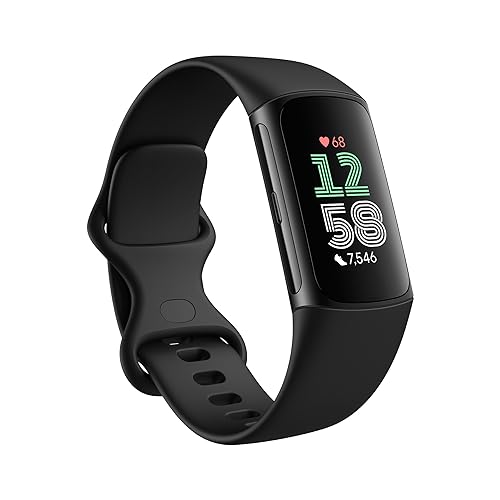
The Fitbit Charge 6 offers a balanced mix of HRV tracking, stress management, and fitness features at a lower cost. It uses Fitbit's new algorithm to measure HRV during sleep and provides a daily readiness score. Owners appreciate the integration with Google services and the fact that core HRV data is free without a Premium subscription. The device also includes built-in GPS, SpO2 monitoring, and a sleek, comfortable design for 24/7 wear.
What owners say: Reviewers often mention that the Charge 6's HRV readings are consistent and helpful for adjusting daily activity. Many find the stress management score valuable for understanding their autonomic balance, though some note occasional discrepancies compared to medical-grade devices.
- Affordable without sacrificing key HRV features
- Free daily readiness score based on HRV
- Comfortable for sleep tracking and all-day wear
- HRV data is only available in the morning, not real-time
- Some users report occasional sensor lag during workouts

Apple Watch Series 9
The Apple Watch Series 9 delivers HRV tracking through its photoplethysmography sensor, recording HRV both on demand and throughout the night. It provides detailed health data in the Health app, including HRV trends, and integrates with third-party apps like HRV4Training. Owners report that the watch's HRV accuracy is comparable to chest straps when worn correctly. The device also excels in fitness tracking, ECG, blood oxygen monitoring, and a vast app ecosystem.
What owners say: Users praise the Apple Watch for its comprehensive health dashboard and the ability to export HRV data to Coach or training platforms. Many note that the sleep tracking and HRV readings improve with each watchOS update, but some find the battery life requires daily charging.
- Excellent HRV accuracy and integration with Health app
- Wide range of third-party apps for HRV analysis
- Advanced health features like ECG and temperature sensing
- Daily charging needed, which can disrupt sleep tracking
- Higher price especially with cellular models

Whoop 4.0
The Whoop 4.0 is a strap-only device designed specifically for HRV, recovery, and strain tracking. It measures HRV during sleep using a high-fidelity optical sensor and calculates a daily recovery percentage based on HRV, resting heart rate, and sleep quality. Owners report that the HRV data is consistent and helps them make informed decision about training load. The device also offers a journal feature to correlate habits with HRV changes.
What owners say: Reviewers often highlight the Whoop's ability to detect early signs of illness or overtraining through HRV trends. Many appreciate the battery life (up to 5 days) and the comfortable strap for all-night wear, though some note the subscription model is a barrier.
- Dedicated focus on HRV and recovery metrics
- Accurate night-time HRV reading with high consistency
- Actionable insights through journal and habit correlation
- Requires ongoing subscription fee
- No display for quick time or notification checks

Oura Ring 4
The Oura Ring 4 is the current generation of Oura’s sleep and recovery tracking ring, replacing the discontinued Gen 3. Based on manufacturer specs and aggregated owner reviews, it uses a titanium body with an updated sensor array intended to improve accuracy across more finger sizes and skin tones than prior generations.
Owners generally note improved comfort and battery life, while pointing out that ongoing access to detailed sleep and readiness insights depends on an active Oura membership.
- Slimmer, more comfortable design than earlier generations
- broader sensor coverage across more finger sizes and skin tones
- long battery life for a ring form factor
- Full feature set requires an ongoing Oura membership
- correct sizing needs to be confirmed with a sizing kit before purchase

Polar Vantage V3
The Polar Vantage V3 uses a new Precision Prime sensor fusion that combines optical HR and ECG electrodes for accurate HRV measurement during sleep and at rest. It provides an Orthostatic Test for HRV and a nightly recovery status. Owners appreciate the detailed training load analysis and the ability to export HRV data to external platforms. The device also offers built-in GPS, dual-frequency GPS, and a long battery life.
What owners say: Reviewers highlight the Vantage V3's HRV accuracy during the Orthostatic Test, which helps them fine-tune training intensity. Many note that the recovery insights are among the best in the industry, though the interface can be complex for casual users.
- Accurate HRV through combined optical and ECG sensors
- Orthostatic test for standing HRV measurement
- Long battery life (up to 61 hours with GPS)
- Bulky design compared to other fitness trackers
- Steep learning curve for software features

Suunto Race
The Suunto Race is a rugged sports watch that offers HRV tracking during sleep and post-workout recovery assessment. It uses an optical heart rate sensor to capture HRV and provides a daily recovery status. Owners report that the watch's HRV readings are consistent and useful for adjusting training load, especially after intense trail runs. The device also boasts a bright AMOLED display, dual-band GPS, and a durable titanium bezel.
What owners say: Users appreciate the Suunto Race's solid build and accurate GPS, with many noting that HRV data helps them avoid injury. Some reviewers mention that the HRV tracking is fairly new to Suunto and still maturing, but the ecosystem is user-friendly.
- Excellent dual-frequency GPS for outdoor accuracy
- Durable design suitable for harsh conditions
- HRV-based recovery insights with intuitive app
- HRV feature set is less comprehensive than Garmin or Polar
- Shorter battery life (up to 12 days) compared to competitors
How to choose
- HRV Tracking Method. Look for trackers that measure HRV during sleep, as night-time readings provide the most consistent data for recovery assessment. Some devices also offer on-demand HRV measurements, which can be useful for immediate feedback.
- Sensor Accuracy. Optical heart rate sensors vary in accuracy; choose devices with proven algorithms validated against ECG for HRV. Higher sampling rates and multi-sensor fusion typically yield better results.
- Integration with Training Plans. Consider how the tracker translates HRV into readiness scores or recovery insights. Some platforms offer guided workouts based on HRV, which can optimize training without risking overtraining.
- Comfort for Overnight Wear. Since HRV tracking is most valuable during sleep, choose a form factor you can wear comfortably all night. Wrist-based devices with thin profiles or rings are ideal for undisturbed sleep.
- Battery Life and Charging. Frequent charging can disrupt sleep tracking and HRV continuity. Look for devices with at least 5 days of battery life to maintain consistent overnight HRV measurements.
Frequently asked questions
What is heart rate variability (HRV) and why should I track it?
HRV measures the time variation between heartbeats, reflecting your autonomic nervous system balance. Higher HRV generally indicates better recovery and adaptability, while lower HRV can signal stress, fatigue, or illness. Tracking HRV helps optimize training intensity, sleep, and stress management.
How accurate are fitness trackers for HRV compared to medical devices?
Modern optical sensors in devices like Garmin, Apple Watch, and Whoop show strong correlation with ECG readings, especially during sleep or rest. However, individual accuracy can vary based on skin tone, wrist placement, and activity. Devices that use additional electrodes or AI algorithms tend to be more reliable.
Can I track HRV without a fitness tracker?
You can measure HRV manually using a chest strap and an app like HRV4Training, but this requires consistent morning measurements. For convenience and automatic tracking, a dedicated fitness tracker or ring is more practical.
What is a good HRV score?
HRV is highly individual, so baseline matters more than a number. Generally, an HRV between 60-100 ms is considered healthy for adults, but athletes may have higher values. The key is to track trends and respond to deviations from your personal baseline.
Does HRV tracking drain battery life?
Continuous HRV monitoring, especially during sleep, can impact battery life. Most modern devices optimize this by using low-power modes or sampling at intervals. Expect to charge every few days, but some dedicated HRV trackers like Whoop offer up to 5 days.
Can stress affect HRV readings?
Yes, stress significantly lowers HRV by activating the sympathetic nervous system. Devices that track HRV alongside stress metrics can help you identify patterns and implement relaxation techniques to improve recovery.
The verdict
For most people, the Garmin Venu 3 offers the best balance of HRV accuracy, intuitive recovery insights, and everyday smartwatch features. If you prefer a dedicated recovery tool without a screen, the Whoop 4.0 provides unmatched night-time HRV consistency. For iPhone users who want deep health integration, the Apple Watch Series 9 is a top choice.