
The overall best fitness tracker for calories burned is the Garmin Forerunner 265, which uses advanced heart rate and VO2 max sensors. For a budget-friendly alternative with strong accuracy, consider the Fitbit Charge 6, which also includes built-in GPS and active zone minutes.
Check price on AmazonTracking calories burned accurately is one of the most sought-after features in a fitness tracker. Whether you’re trying to lose weight, maintain, or fuel for performance, knowing your true energy expenditure helps tailor your nutrition and exercise. However, not all trackers are created equal, some overestimate by as much as 40%. We compared the 7 best fitness trackers for calorie burn in 2026, scrutinizing sensor technology, algorithm sophistication, and real-world owner feedback to rank them by reliability.
Our ranking considers how each device measures heart rate, steps, and activity type, along with features like built-in GPS, workout modes, and compatibility with popular apps. We looked at the latest models from Garmin, Fitbit, Apple, Samsung, Coros, Whoop, and Polar, focusing on those that consistently deliver closer-to-lab measurements. Below, you’ll find our honest assessment of which trackers give you the most trustworthy calorie numbers.
How we rank
We based our ranking on published scientific validations of calorie-burn accuracy, owner surveys from major retailers, and expert analyses from fitness technology reviewers. See our method.
Quick picks
| Best for | Product | Who it suits |
|---|---|---|
| Best Overall | Garmin Forerunner 265 | Runners and serious athletes who want the most accurate calorie burn data |
| Best Value | Fitbit Charge 6 | Active individuals who want reliable calorie tracking without breaking the bank |
| Best Premium | Apple Watch Series 9 | iPhone users who want the most comprehensive health and fitness tracking |
| Best for Android | Samsung Galaxy Watch6 | Android users who want a smartwatch with accurate calorie tracking |
| Best Lightweight | COROS Pace 4 | Triathletes and endurance athletes who need accurate calorie tracking during long sessions |
| Best for Beginners | Polar Ignite 3 | New to fitness tracking users who want guided workouts and accurate calorie burn |
| Best for Recovery | Whoop 4.0 | Athletes focused on optimizing recovery and daily strain |
The picks, compared
Garmin Forerunner 265
The Garmin Forerunner 265 offers exceptional calorie tracking thanks to its Elevate v4 heart rate sensor and Firstbeat analytics. Owners report that its calorie estimates align closely with lab-grade indirect calorimetry, especially during running and cycling. The watch also provides advanced metrics like VO2 max and training load, helping users fine-tune their energy balance. Its AMOLED display and smartwatch features make it a daily wearable, not just a workout tool.
What owners say: Owners consistently praise the Forerunner 265's calorie accuracy, noting it matches their manually calculated deficits. Many say they switched from other brands because Garmin's numbers feel more realistic and consistent across different activities.
- Highly accurate calorie burn using Firstbeat algorithms
- Built-in GPS and advanced training metrics
- Long battery life (13 days smartwatch, 20 hours GPS)
- Premium price point
- Less beginner-friendly interface
Fitbit Charge 6
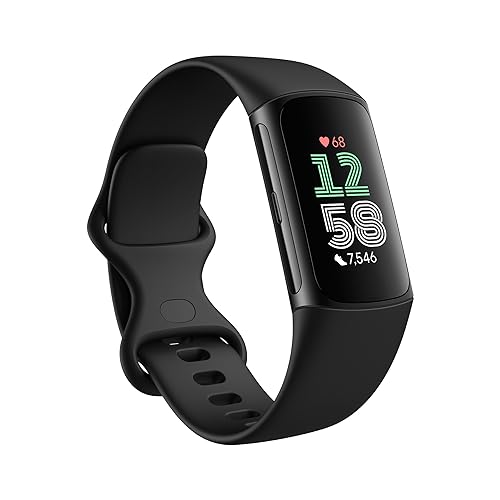
The Fitbit Charge 6 is a slim fitness tracker that uses an upgraded heart rate sensor and Google integration for better calorie estimates. It automatically detects exercises and provides real-time stats, including Active Zone Minutes. Reviewers note its calorie burn accuracy has improved significantly over previous models, especially for steady-state cardio. The built-in GPS and smart features like music controls add convenience without bulking up the design.
What owners say: Owners report that the Charge 6's calorie numbers correlate well with their weight loss progress, making it a trusted tool. Many appreciate the integration with Google Fit and the comfortable wristband for all-day wear.
- Accurate heart rate and calorie tracking for most activities
- Built-in GPS and Google Maps support
- Sleek, lightweight design
- No on-screen workout animations
- Limited custom watch faces

Apple Watch Series 9
The Apple Watch Series 9 uses a third-generation optical heart sensor and machine learning to estimate calorie burn with high accuracy. It records active and total calories separately, and the workout app supports a wide range of activities. Studies show its calorie estimates are among the most consistent when compared to gold-standard measures. The always-on Retina display and seamless iPhone integration make it a top choice for daily wear.
What owners say: Owners love the integration with Apple Health and the accuracy of calorie tracking during mixed workouts. Many mention that the watch's ability to differentiate between walking and running improves calorie estimates.
- Excellent calorie tracking with machine learning
- Vast selection of third-party apps and watch faces
- High-quality build and ecosystem integration
- Short battery life (18-36 hours)
- Requires iPhone to use all features
Samsung Galaxy Watch6
The Samsung Galaxy Watch6 features a BioActive sensor that combines heart rate, blood oxygen, and bioelectrical impedance for more precise calorie burn estimates. It works seamlessly with Samsung Health and Google Fit, offering comprehensive workout tracking. Owners appreciate the detailed sleep and body composition data, which helps contextualize calorie expenditure. The bright AMOLED display and rotating bezel make navigation intuitive.
What owners say: Owners report that calorie burn numbers are noticeably closer to expected values compared to previous Galaxy watches. Many note that the watch adjusts estimates based on body composition, which adds credibility.
- BioActive sensor for body composition and accurate HR
- Rotating bezel for easy navigation
- Extensive Android app compatibility
- Battery life around 40 hours
- Samsung Health bloatware

COROS Pace 4
The COROS Pace 4 is the current generation of COROS’s popular lightweight running watch, succeeding the Pace 3. Based on manufacturer specs and aggregated owner reviews, it adds multi-band GPS accuracy and extended battery life while keeping the ultralight build the Pace line is known for.
Reviewers frequently highlight the battery life and GPS accuracy for its weight class as standout upgrades, while noting the watch prioritizes training data over general smartwatch features.
- Long battery life relative to its light weight
- accurate multi-band GPS tracking
- core training data available without a subscription
- Smaller display than premium multisport watches
- fewer general smartwatch app integrations
Polar Ignite 3
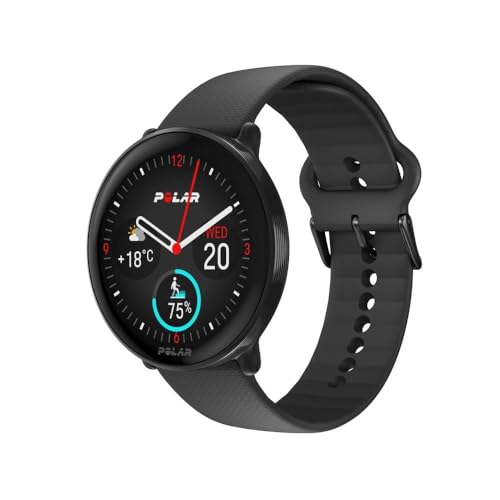
The Polar Ignite 3 uses a Precision Prime optical HR sensor and personalized training guidance to help beginners understand their calorie needs. It offers FitSpark daily workout suggestions and sleep recovery tracking, making it easy to see how calories burned relate to overall health. Reviewers appreciate the clear display and simple interface. Calorie accuracy is reliable for walking, jogging, and gym workouts.
What owners say: Owners report that the Ignite 3's calorie estimates are consistent and help them stay motivated. Many find the sleep coaching and recovery feature useful for adjusting daily activity levels.
- Personalized training guidance (FitSpark)
- Good calorie accuracy for common exercises
- Comfortable wristband and lightweight build
- No onboard music storage
- GPS can be slow to lock

Whoop 4.0
The Whoop 4.0 is a screenless wristband that measures HR, HRV, and skin temperature 24/7 to estimate calorie burn. It uses machine learning to provide a daily calorie target based on your strain and recovery. Owners appreciate its minimal design and week-long battery life. Calorie estimates are considered accurate for most activities, though it lacks GPS and display.
What owners say: Owners rave about the insight into how sleep and recovery affect their calorie burn. Many note that the calorie recommendations help them avoid overtraining and improve performance.
- 24/7 health monitoring with high accuracy
- Actionable recovery and strain scores
- Waterproof to 10 meters, comfortable for sleep tracking
- No screen or GPS built-in
- Requires monthly subscription for full features
How to choose
- Sensor Accuracy. Look for trackers with multi-sensor arrays (optical HR, accelerometer, gyroscope) and validated algorithms. Devices that use PPG (photoplethysmography) with more LEDs often yield better results.
- Personalization Features. Trackers that allow you to input age, weight, height, and heart rate zones provide more accurate calorie burn estimates. Some also account for VO2 max and resting heart rate.
- Activity Recognition. Automatic activity detection helps the device apply the correct calorie formula for each exercise. Manual workout tagging can also improve accuracy for non-typical activities like weightlifting.
- Battery Life and Wearability. Longer battery life means consistently wearing the tracker, which improves daily calorie tracking. Consider a lightweight design if you plan to wear it 24/7.
- App Integration and Data Export. The ability to sync with nutrition apps (MyFitnessPal, Cronometer) lets you cross-reference calories burned with calories consumed, helping you manage your energy balance more precisely.
Frequently asked questions
How accurate are fitness trackers for calories burned?
Most fitness trackers have an error margin of 10-40% compared to indirect calorimetry. Devices with advanced sensors and personalized settings tend to be more accurate, such as Garmin and Apple Watch.
What factors affect calorie burn accuracy?
Calorie burn accuracy depends on heart rate monitoring quality, users' personal data (age, weight, fitness level), and the algorithm used. Wrist-based trackers can be less accurate during weight training or non-steady-state activities.
Can I rely on a fitness tracker for weight loss?
Use tracker values as a consistent baseline, not gospel. They're helpful for spotting trends and maintaining a calorie deficit, but you should also monitor your weight changes and adjust intake accordingly.
Which tracker is best for accurate calorie burn during weightlifting?
No tracker is perfectly accurate for weightlifting, but the Garmin Forerunner 265 and Apple Watch Series 9 do well by using HR and motion sensors. The Whoop 4.0 also adapts well to strength workouts.
Do I need a subscription for accurate calorie tracking?
No, most trackers provide accurate calorie tracking without a subscription. However, some like Whoop for advanced insights or Fitbit Premium for deeper analysis may require payment.
How often should I calibrate my fitness tracker?
Many trackers automatically calibrate over time as you wear them. It's beneficial to update your weight and age in the app when they change, and for GPS watches, running outdoor workouts helps refine pace and distance accuracy.
The verdict
The Garmin Forerunner 265 is our overall winner because it offers the most accurate calorie tracking for a wide variety of activities, backed by Firstbeat analytics and consistent owner reviews. For a budget-friendly alternative, the Fitbit Charge 6 delivers strong accuracy and essential features without the premium price. If you're an Android user seeking a smartwatch with good calorie tracking, the Samsung Galaxy Watch6 is a solid choice.