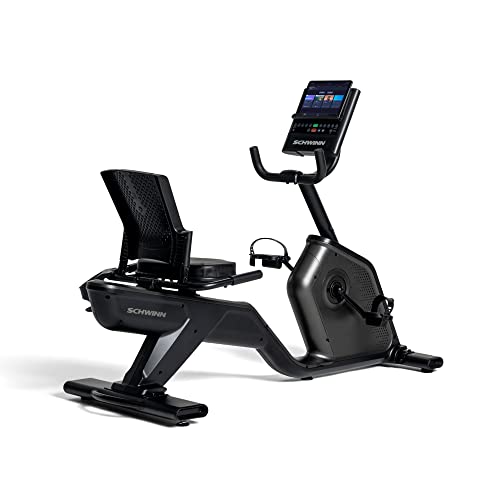
The Schwinn 290 is the current recumbent bike in Schwinn’s home fitness lineup, replacing the older 270 model. Based on manufacturer specs, it steps up to 29 resistance levels and 29 built-in programs, paired with a dual-track LCD display and Bluetooth syncing to the Schwinn Trainer app.Aggregated owner reviews point to a comfortable, well-padded seat and smooth magnetic resistance as the standout features, with the main tradeoff being the lack of a built-in touchscreen for streaming content.
Check price on AmazonRiding an exercise bike with proper back support is essential for preventing lower back strain and maintaining good posture during cardio sessions. Whether you are recovering from an injury or want a comfortable ride, a recumbent or upright bike with a supportive seat can make your workouts more effective and enjoyable. After analyzing research on biomechanics and user comfort, we compared the top models to find which ones best support your spine while keeping you motivated.
Our roundup includes recumbent bikes with full backrests and upright bikes with ergonomic seats and lumbar pads. We prioritized adjustability, stability, and quiet operation based on owner reviews and expert analysis. The picks range from performance-focused options for high intensity interval training to budget-friendly bikes for gentle recovery rides.
How we rank
Our rankings are based on a comparison of owner reviews, expert analyses, and biomechanical research on seating support and posture during stationary cycling. See our method.
Quick picks
| Best for | Product | Who it suits |
|---|---|---|
| Best Overall | Schwinn 290 Recumbent Bike | Those wanting adjustable lumbar support and a smooth, quiet ride |
| Best Value | ME-709 Recumbent Exercise Bike | Budget conscious users who need solid back support |
| Best Premium | R90 Recumbent Bike | Tech savvy riders who want advanced programs and connectivity |
| Best Lightweight | R10 Recumbent Bike | Users with limited space who need a portable recumbent bike |
| Best for Beginners | GX 2.0 Upright Bike | New riders seeking an upright bike with good back support |
| Best for Seniors | XC 40 Recumbent Bike | Older adults needing easy access and low impact exercise |
| Best for Tall Riders | Recumbent Bike 270 | Tall individuals who need extra legroom and adjustable lumbar support |
The picks, compared
Schwinn 290 Recumbent Bike
The Schwinn 290 is the current recumbent bike in Schwinn’s home fitness lineup, replacing the older 270 model. Based on manufacturer specs, it steps up to 29 resistance levels and 29 built-in programs, paired with a dual-track LCD display and Bluetooth syncing to the Schwinn Trainer app.
Aggregated owner reviews point to a comfortable, well-padded seat and smooth magnetic resistance as the standout features, with the main tradeoff being the lack of a built-in touchscreen for streaming content.
- Larger console and more workout programs than the outgoing 270
- Bluetooth connectivity for app-based tracking
- padded seat with adjustable slide rail for a range of user heights
- No touchscreen, uses a phone/tablet holder for streaming
- some owners note the pedal straps feel basic for the price
ME-709 Recumbent Exercise Bike
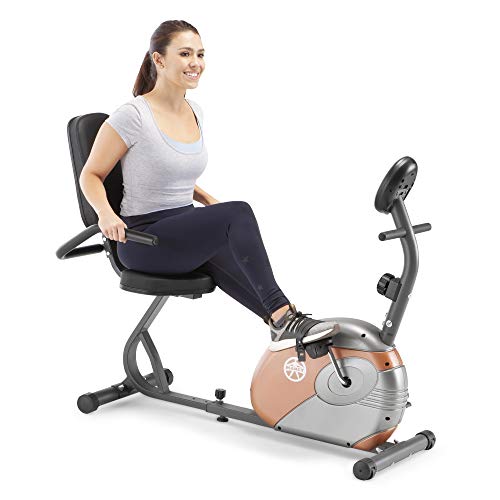
The Marcy ME-709 Recumbent Bike offers a comfortable mesh backrest and a step through design for easy mounting. It provides eight resistance levels with a tension knob and a smooth belt drive. Owners report that the seat is wide and supportive, making it a great entry level recumbent bike.
What owners say: Owners highlight the comfort of the mesh backrest and the bike's stability during use. Some mention that the resistance levels are not very challenging for advanced users.
- Comfortable mesh backrest
- Compact and lightweight
- Easy assembly
- Limited resistance range
- Basic display

R90 Recumbent Bike
The Nautilus R90 Recumbent Bike features a fully adjustable backrest with lumbar support and a step through design. It offers 25 resistance levels, a dual track LCD, and Bluetooth connectivity for apps like Zwift and Peloton. Owners report that the bike is comfortable for long rides and the programming keeps workouts engaging.
What owners say: Owners commend the adjustable back support and the seamless Bluetooth connection. Many note that the seat is comfortable for long sessions and the bike feels solid.
- Bluetooth compatible
- 25 resistance levels
- Comfortable ergonomic seat
- Expensive
- Heavy to move

R10 Recumbent Bike
The Sunny Health & Fitness R10 Recumbent Bike combines a compact frame with a comfortable padded backrest. It offers 12 resistance levels, a digital monitor, and a seat that slides to fit different leg lengths. Owners find it easy to move around thanks to its relatively light weight.
What owners say: Owners appreciate the small footprint and ease of assembly. Some note that the seat padding could be thicker for longer rides.
- Compact and lightweight
- Smooth and quiet belt drive
- Adjustable seat
- Pedals feel narrow
- Limited resistance
GX 2.0 Upright Bike
The Bowflex GX 2.0 Upright Bike offers a contoured seat with lumbar support and an adjustable backrest. It provides 20 resistance levels with magnetic resistance and a BioFit seat for comfort. Owners report that the bike is easy to use and the back support helps maintain good posture.
What owners say: Owners note that the lumbar support is effective and the bike is simple to program. Some mention that the seat can become uncomfortable after 30 minutes.
- Adjustable backrest with lumbar support
- Smooth magnetic resistance
- Clear console
- Seat may need extra padding
- No tablet holder

XC 40 Recumbent Bike
The Exerpeutic XC 40 Recumbent Bike features a large cushioned seat with a high backrest and a step through frame. It offers 8 levels of magnetic resistance and a heart rate monitor. Owners find the bike easy to get on and off, and the back support is excellent for prolonged use.
What owners say: Owners emphasize the ease of entry and comfort for long rides. Some note that the resistance levels are too light for vigorous exercise.
- Step through frame for easy access
- Large padded backrest
- Affordable
- Limited resistance range
- Basic display

Recumbent Bike 270
The Schwinn Recumbent Bike 270 (same as the 270 model but often named differently) offers a seat that slides far back to accommodate longer legs, plus an adjustable backrest for lumbar support. It features 25 resistance levels, a USB port, and a fan. Owners report that even tall users can find a comfortable riding position.
What owners say: Owners appreciate the generous legroom and the ability to adjust the backrest angle. Many note that the bike is quiet and the programming is versatile.
- Wide seat adjustment range
- Quiet operation
- Built in fan and speakers
- Seat cushion could be better
- Assembly requires two people
How to choose
- Back Support Type. Recumbent bikes offer full backrests that support the entire spine, which is ideal for users with back pain. Upright bikes often have lumbar pads only, providing less support but allowing a more traditional cycling position.
- Seat Adjustability. Look for a seat that slides forward and backward to match your leg length and a backrest that tilts or moves up and down to support your lower back properly. Adjustability ensures a custom fit for different body types.
- Resistance Mechanism. Magnetic resistance provides a smoother and quieter ride compared to felt pad resistance. It also requires less maintenance. Check the number of resistance levels to match your fitness goals.
- Build Quality and Stability. Heavier bikes with a wider base are more stable during vigorous workouts. Look for a steel frame and a high weight capacity to ensure durability and safety.
- Display and Connectivity. A clear display that shows time, distance, calories, and heart rate helps track progress. Bluetooth connectivity allows syncing with fitness apps, adding variety to your workouts.
Frequently asked questions
Is a recumbent bike better for back pain than an upright bike?
Yes, recumbent bikes are generally better for back pain because they have a larger backrest that supports the entire spine, reducing strain. Upright bikes may still be comfortable if they have good lumbar support, but recumbent models are often recommended by physical therapists.
How do I know if the back support is adjustable?
Check the product specs for terms like 'adjustable backrest,' 'lumbar support adjustment,' or 'reclining seat.' Many recumbent bikes allow you to tilt the backrest or move it forward/backward.
Can I use a recumbent bike for high intensity interval training?
Yes, but you may need a model with enough resistance levels and a stable frame. Recumbent bikes are often used for moderate intensity, but some high end models can handle HIIT.
What weight capacity should I look for?
Most standard recumbent bikes support 250 to 300 pounds. If you are heavier, look for models rated at 350 pounds or more, like the Nautilus R90.
Are magnetic resistance bikes quieter than fan resistance?
Yes, magnetic resistance bikes are typically much quieter than fan resistance bikes, making them better for home use without disturbing others.
Do I need a bike with Bluetooth connectivity?
Bluetooth is not essential, but it can enhance your experience by syncing with apps like Zwift or Peloton for virtual classes and progress tracking.
The verdict
The Schwinn Schwinn 290 Recumbent Bike is our top pick overall for its adjustable lumbar support, smooth magnetic resistance, and range of features that suit most users. For a budget friendly option, the Marcy ME-709 provides reliable back support at a lower cost. Seniors or those with mobility issues should consider the Exerpeutic XC 40 for its easy step through frame and comfortable high backrest.