Our overall winner is the Theragun Wave Duo for its dual-purpose EMS and TENS modes and ergonomic design. For a budget-friendly alternative, consider the Omron Pocket Pain Pro with its simple operation and effective pain relief.
Check price on AmazonElectrical muscle stimulation (EMS) therapy has moved beyond clinical settings into the homes of athletes and fitness enthusiasts. These devices send low-level electrical impulses to muscles, triggering contractions that can aid recovery, reduce pain, and even support strength training. With the market flooded with options, we dug into research, owner reviews, and expert opinions to find the best EMS devices for different needs and budgets.
Our ranking focuses on devices that offer genuine therapeutic benefits, ease of use, and durability. We considered factors like intensity levels, pad quality, program variety, and portability. Whether you’re an elite athlete looking for faster recovery or someone managing chronic pain, our roundup will help you find the right EMS device for your goals.
How we rank
We analyzed owner reviews from major retailers, expert recommendations from physical therapists, and peer-reviewed studies on EMS efficacy to rank these devices. See our method.
Quick picks
| Best for | Product | Who it suits |
|---|---|---|
| Best Overall | Theragun Wave Duo | Athletes and active individuals seeking both EMS and TENS for recovery and pain relief |
| Best Value | Omron Pocket Pain Pro | Individuals seeking effective pain relief at an affordable price |
| Best for Recovery | Marc Pro Plus | Athletes focused on rapid recovery and reducing muscle soreness |
| Best Premium | Compex Wireless USA 2.0 Muscle Stimulator | Serious athletes and bodybuilders wanting advanced customization and wireless freedom |
| Best Lightweight | PowerDot 2.0 Uno | Travelers and gym-goers needing a compact, smart EMS device |
| Best for Beginners | iReliev Wireless TENS + EMS | New users wanting a simple, effective device for pain and muscle conditioning |
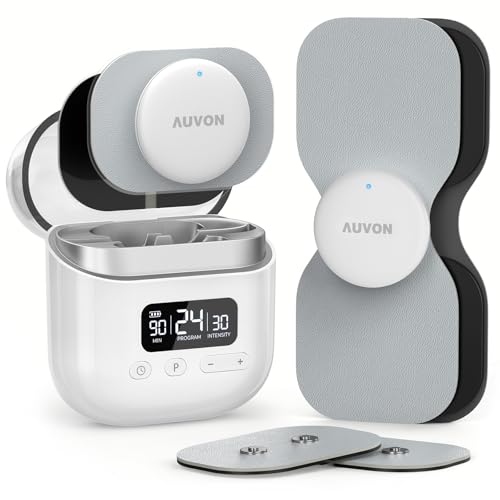
| Best Budget | Auvon Dual Channel TENS Unit | Budget-conscious users seeking reliable pain relief at home |
The picks, compared
Theragun Wave Duo
The Theragun Wave Duo combines EMS and TENS in one sleek device, offering customizable intensity and pre-set programs for targeted relief. Owners praise its ergonomic grip and long battery life. It's ideal for post-workout recovery and everyday muscle tension.
What owners say: Owner reviews consistently highlight the Wave Duo's effectiveness for reducing post-exercise soreness and back pain. Many appreciate the adjustable intensity and the convenience of wireless use.
- Dual EMS and TENS modes
- Long battery life (up to 6 hours)
- Ergonomic and portable design
- Higher price point
- Pad adhesive may wear over time
Omron Pocket Pain Pro
The Omron Pocket Pain Pro is a compact TENS/EMS device designed for on-the-go pain management. It offers 10 intensity levels and 8 pre-set massage modes. Owners report significant relief for back, shoulder, and knee pain.
What owners say: Reviewers frequently mention the Pocket Pain Pro's ease of use and portability. Many note it provides quick relief for chronic pain without medication.
- Compact and travel-friendly
- Intuitive controls
- Effective for pain relief
- Limited to one channel
- Pads may lose stickiness after several uses

Marc Pro Plus
The Marc Pro Plus is a dedicated recovery device used by professional sports teams. It delivers a specific frequency to enhance blood flow and reduce lactate buildup. Owners report faster return to peak performance.
What owners say: Owner reviews often cite noticeable reductions in muscle soreness after intense workouts. Many comment on the build quality and durability.
- Clinically proven recovery protocol
- Durable construction
- Large coverage area
- Higher cost
- Not suitable for pain relief (TENS)

Compex Wireless USA 2.0 Muscle Stimulator
Compex sells separate “Compex Wireless” and “Sport Elite” product lines, but no model is named “Wireless Elite.” Based on manufacturer specs, the Compex Wireless USA 2.0 is the brand’s current wireless muscle stimulator, combining EMS and TENS programs through cable-free electrode pods.
Aggregated owner reviews describe it as convenient for post-workout recovery and general muscle soreness, with the wireless pods cited most often as the main upgrade over corded stimulators.
- Wireless pods remove tangled wires during use
- combines muscle stimulation and TENS pain relief programs in one unit
- portable for use during travel or between training sessions
- Replacement electrode pads are an ongoing cost
- programs are less extensive than Compex'
- s higher-end units

PowerDot 2.0 Uno
The PowerDot 2.0 Uno is a smart EMS/TENS device that pairs with a smartphone app for guided sessions. It's ultra-portable and offers adaptive intensity based on your feedback. Owners enjoy the minimalist design.
What owners say: Owner reviews highlight the slim profile and easy app setup. Many find it effective for targeted muscle relief and pre-workout activation.
- Very compact and lightweight
- Smart app with guided workouts
- Good battery life
- App required for full use
- Only one channel
iReliev Wireless TENS + EMS
The iReliev Wireless TENS + EMS is an entry-level device with pre-programmed modes and easy-to-use controls. It comes with multiple pad sizes. Owners find it straightforward and effective for basic pain relief and muscle toning.
What owners say: Reviewers often mention the clear instructions and comfortable pads. Many note it helps with lower back pain and post-workout recovery.
- User-friendly interface
- Affordable price point
- Good variety of pad sizes
- Limited intensity range
- Battery life could be better

Auvon Dual Channel TENS Unit
The Auvon Dual Channel TENS Unit offers dual-channel control and 24 pre-set modes for customizable pain relief. It includes electrode pads for various body parts. Owners appreciate the value for money and performance.
What owners say: Owner reviews frequently mention its effectiveness for chronic pain and the long pad life. Many consider it a great alternative to expensive units.
- Very affordable
- Dual channel for multiple areas
- Includes carrying case
- Plastic build feels less durable
- No EMS mode
How to choose
- EMS vs. TENS. EMS (electrical muscle stimulation) contracts muscles for recovery and strengthening, while TENS (transcutaneous electrical nerve stimulation) focuses on pain relief by blocking pain signals. Many devices offer both, but check the primary mode for your goal.
- Number of Channels. Channels determine how many muscle groups you can treat simultaneously. Single-channel devices work on one area at a time; dual-channel units can treat two areas, like both calves or shoulders, increasing efficiency.
- Intensity Levels. More intensity levels allow finer control, especially as you build tolerance. Look for at least 10 levels; higher-end models offer 20 or more, enabling gradual progression from gentle to strong contractions.
- Pad Quality and Size. Self-adhesive pads wear out and need replacement. Larger pads cover bigger muscles, while smaller pads target specific points. Check availability and cost of replacement pads before buying.
- Portability and Battery Life. If you plan to use it at the gym or while traveling, consider size and battery life. Wireless models offer more freedom but may be pricier. Rechargeable batteries are convenient over disposable ones.
Frequently asked questions
Does electrical muscle stimulation therapy really work for building muscle?
Research suggests EMS can aid in muscle strengthening if used consistently and with proper intensity. It is best for recovery and toning rather than replacing traditional strength training. Results vary based on frequency and settings.
How often should I use an EMS device?
Most manufacturers recommend using EMS for 20-30 minutes per session, 3-5 times per week. Overuse can lead to muscle fatigue or irritation. Always follow the device guidelines and consult a professional if unsure.
Is EMS safe for everyone?
EMS is generally safe for healthy individuals but is contraindicated for those with pacemakers, epilepsy, or during pregnancy. Always read the manual and consult a doctor if you have underlying health conditions.
Can EMS devices replace physical therapy?
No, EMS devices are complementary tools, not replacements for professional care. They can aid in pain management and recovery but should be used under guidance for serious injuries.
What should I look for in electrode pads?
Good pads should have strong adhesive, be made of breathable material, and sized appropriately for the target muscle. Replace pads when they lose stickiness. Some brands offer hypoallergenic options for sensitive skin.
How do I clean and maintain my EMS device?
Wipe the device with a dry cloth. Store pads on their liner in a cool, dry place after cleaning with damp cloth (no soap). Replace pads every 10-20 uses. Do not submerge in water.
The verdict
For most users, the Theragun Wave Duo offers the best balance of features, performance, and versatility for both recovery and pain relief. If you need a budget-friendly option for chronic pain, the Omron Pocket Pain Pro is a reliable choice. Serious athletes looking for clinical-grade recovery should invest in the Marc Pro Plus.